
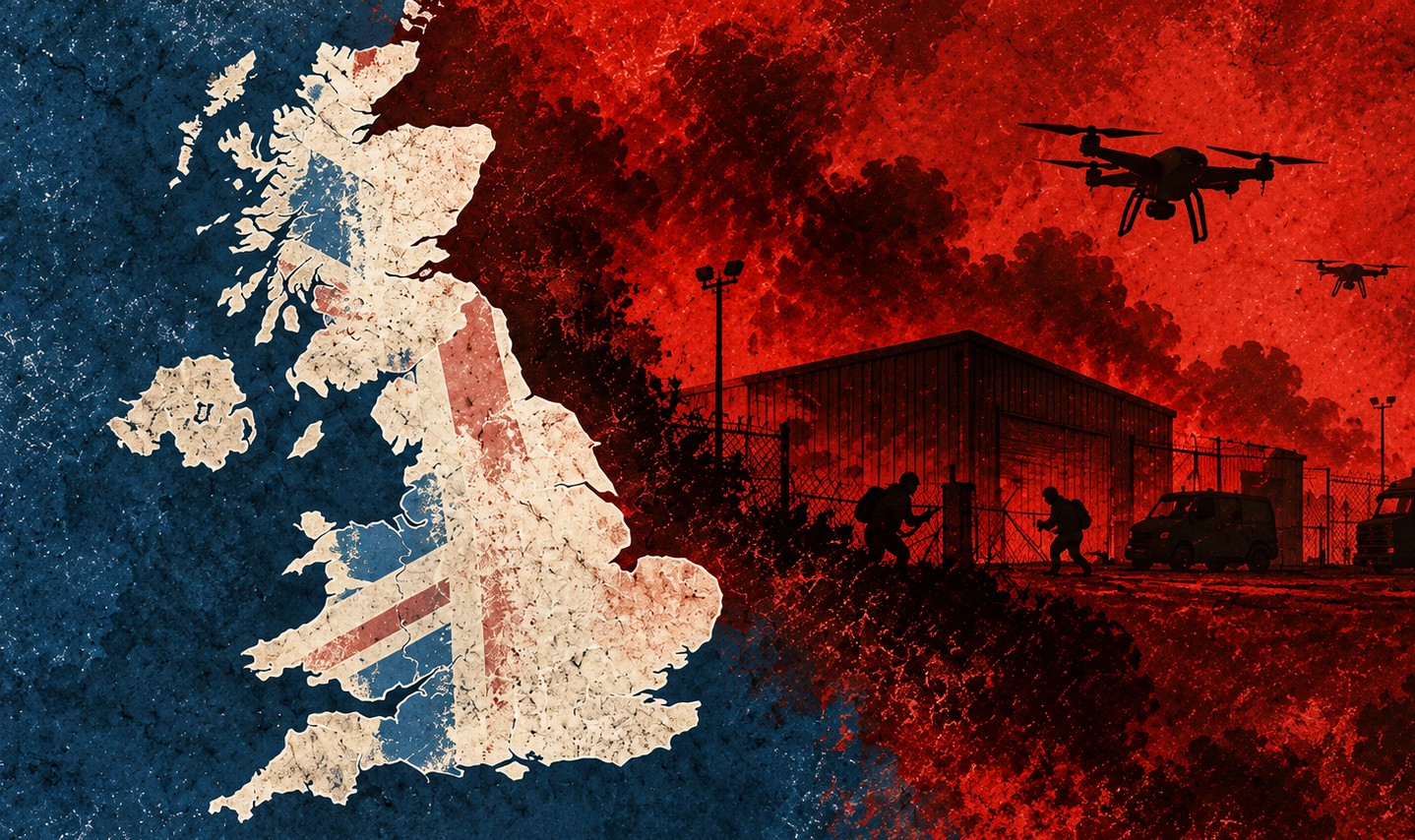
UK Navigates ‘Short of War’ Reality Amidst Escalating Russian Hybrid Attacks Across Europe
The United Kingdom acknowledges that Russia is actively engaged in a widespread campaign of hybrid attacks and sabotage across Europe, an ongoing effort that includes persistent probing and testing of British defenses. Despite this sustained pressure, the British government maintains that the two nations are not at war and the UK does not seek confrontation with Moscow. This nuanced position was articulated in Parliament, prompting discussions on the precise classification of Russia’s aggressive activities.
Richard Holden, the Conservative Member of Parliament for Basildon and Billericay, specifically questioned whether the official description of Russia’s actions as “short of war” reflected a political assessment or a military analysis. In response, Louise Sandher-Jones, the Minister for the Armed Forces, affirmed the government’s stance. “Russia is conducting a campaign of hybrid attacks and sabotage across Europe,” she stated, elaborating that “Russia is constantly probing and testing us, including through military posturing.”
Minister Sandher-Jones underscored the UK’s diplomatic position: “We are not at war with Russia, nor do we seek confrontation.” However, she also emphasized a clear shift in Britain’s defense posture in light of rising threats. “With an increase in threats, the UK will increase its warfighting readiness and meet its NATO commitments,” she declared. This commitment extends to domestic security, with the government “acting against threats on our own shores.” The Minister concluded with an unequivocal message to Moscow: “Russia should be in no doubt that we are ready to defend every inch of NATO territory and will not be deterred in our unwavering support for Ukraine.”
The term “hybrid attacks” encompasses a broad spectrum of hostile activities that fall below the threshold of conventional armed conflict, often designed to destabilize adversaries without triggering a full military response. These can include sophisticated cyberattacks, disinformation campaigns, economic coercion, electoral interference, and acts of sabotage. The deliberate ambiguity surrounding their origin and nature often complicates attribution and response, creating a “grey zone” of conflict that challenges traditional notions of warfare and peace.
While the parliamentary statement maintained a cautious tone, other government publications have provided more explicit details regarding Russian threats. The UK government’s Arctic Policy Framework, released recently, highlighted a specific concern: the threat posed to critical national infrastructure (CNI) by Russia’s Main Directorate for Deep-Sea Research (GUGI). This specialized unit is believed to operate an array of advanced underwater vessels capable of interfering with subsea cables and pipelines, essential arteries of global communication and energy supply. The Framework affirmed that Britain has successfully exposed some of GUGI’s operations and has demonstrated a capability to respond effectively to such threats.
Furthermore, the Arctic Policy Framework identified Russia’s “shadow fleet” as a systemic risk. This clandestine network of older, often poorly maintained, and minimally insured vessels, frequently operating under flags of convenience, is primarily used to circumvent international sanctions, particularly those related to oil exports. Beyond its economic implications, this fleet poses significant environmental hazards and raises security concerns, as its presence could obscure illicit activities or provide cover for military-related operations.
In response to the growing vulnerability of undersea infrastructure, the UK has strengthened its international partnerships. The Lunna House Agreement, signed with Norway, commits the two nations’ navies to enhanced cooperation in protecting vital undersea cables and pipelines across the North Atlantic. This region is critical for global communications and energy security, making the safeguarding of its subsea networks a paramount concern for NATO allies.
The practical difficulties inherent in responding to hybrid threats have been a recurring theme in expert analysis. Paul Downie of Cyjax, a cybersecurity firm, recently observed that the attribution of Russian activity often takes too long, creating response delays. He also pointed out that British defense suppliers remain exposed to cyber intrusions and other forms of sabotage, highlighting vulnerabilities within the supply chain crucial for national security. The question of where acts like sabotage, cyber intrusion, and cable cutting sit on the spectrum of conflict – and specifically, whether they might trigger Article 5 of the NATO treaty – has been repeatedly raised by Members of Parliament.
Article 5, the collective defense clause of the North Atlantic Treaty, states that an attack against one member shall be considered an attack against all. However, its application in the context of hybrid warfare, where the aggressor’s identity might be obscured and the “attack” itself non-kinetic, remains a complex legal and strategic challenge. The distinction between an act of sabotage and an act of war is often blurred, making consensus on a proportional response difficult.
The description of Russia’s actions as “short of war” primarily addresses the adversary’s stated intention, rather than the actual effect of their actions. This distinction presents a significant practical dilemma for targeted nations. A cut undersea cable, a warehouse destroyed by arson, or a disabled logistics network produces the same disruptive and damaging consequences regardless of whether any formal declaration of war has been made. The real-world impact on critical services, economic stability, and public safety remains consistent, irrespective of the legal or political classification of the act. This evolving landscape necessitates a robust and adaptable defense strategy that can effectively deter and respond to threats that deliberately operate below the threshold of conventional warfare.
Why This Matters
This parliamentary exchange and the broader context of Russia’s hybrid activities underscore a critical shift in global security dynamics. The concept of “short of war” highlights the ongoing challenge for nations, particularly NATO members, in defining and responding to aggression that deliberately avoids traditional military confrontation. This ambiguity provides adversaries like Russia with a strategic advantage, allowing them to sow discord, disrupt critical infrastructure, and test defensive capabilities without risking an all-out war, which carries immense costs and risks.
The targeting of critical national infrastructure, such as undersea cables and energy pipelines, poses an existential threat to modern societies. These networks are the backbone of global communication, finance, and energy supply. Their disruption, even if not an act of declared war, could cause widespread economic paralysis, societal chaos, and potentially endanger lives. The UK’s focus on GUGI and the “shadow fleet” indicates a serious recognition of these vulnerabilities and a proactive stance in addressing threats that could originate in the deep sea or through maritime operations.
Furthermore, the debate surrounding attribution and the threshold for invoking NATO’s Article 5 is crucial for the future of collective defense. If hybrid attacks, like cyber sabotage or infrastructure disruption, cannot definitively be classified as an “armed attack,” it creates a grey area where allies might hesitate to act collectively, potentially weakening the alliance’s deterrent posture. The need for faster attribution and a more agile response mechanism is paramount to counter these evolving threats effectively.
The UK’s commitment to “warfighting readiness” and unwavering support for Ukraine is not merely about defending its own territory but about upholding the international rules-based order. Ukraine stands as a frontline against Russia’s expansionist ambitions, and continued support for Kyiv is seen as essential for deterring further aggression across Europe. This situation demands a delicate balance: avoiding direct confrontation while demonstrating robust capability and an unyielding will to defend democratic values and strategic interests. The clarity, or lack thereof, in defining the nature of these attacks will shape international law, defense policies, and the very concept of peace and conflict in the 21st century.