
In a significant move to enhance the self-sufficiency of U.S. military installations, the Pentagon is accelerating efforts in energy resilience and independence, a core component of Defense Secretary Pete Hegseth’s recently announced “FORTRESS America” program. This initiative builds on several years of groundwork already undertaken by the Air Force in this critical area.
Secretary Hegseth publicly introduced FORTRESS—an acronym standing for Federal Operations for Resilience, Troop Resources, Energy, Supply, and Survivability—during his “State of the Force” address on September 30. A subsequent memo from the Secretary outlined five primary pillars for the program: energy independence; supply chain and defense industrial base resilience; a strategic defense reserve; installation hardening and cyber resilience; and resilience in space and spectrum.
During an October 20 Defense Writers Group roundtable, a senior U.S. defense official indicated that the first pillar, energy independence, is an immediate priority for the department. “That’s absolutely what we’re moving on, is on the energy side of that, comprehensively,” the official stated, emphasizing the urgency: “This is not a wait-and-see kind of a thing. We want to move out pretty quickly to get to that energy [resilience]. Those solutions can include investments in microgrids, battery backup storage.”
The official acknowledged that other pillars of FORTRESS America might require several years to fully implement. For instance, another of Secretary Hegseth’s initiatives, the “Next Great American Base” project, which involves constructing a new military base from scratch, is expected to serve as a pilot program, generating ideas and best practices that can inform the broader FORTRESS America effort.
However, the immediate focus is clear. “First and foremost, it’s doing the assessments of the installations to make sure we understand power generation and where we’re going to go with that, and then getting those deployed,” the official reiterated.
The urgency stems from long-standing concerns regarding military bases’ reliance on civilian infrastructure for essential services like electricity and water. Officials have recognized that adversaries have demonstrated capabilities to disrupt or attack these critical civilian grids. Notable incidents include the 2021 ransomware attack on the Colonial Pipeline, which led to significant fuel shortages across the East Coast, and U.S. intelligence warnings in 2024 about Chinese hackers seeking to establish footholds in the cyber networks of vital infrastructure. Furthermore, ongoing conflicts, such as those in Ukraine and involving Iran, have featured numerous attacks targeting energy infrastructure, underscoring the real-world vulnerability.
“The attack, as we know it, will not look like an attack,” explained Ravi Chaudhary, former Air Force Assistant Secretary for Energy, Installations, and the Environment, in an interview with Air & Space Forces Magazine. “It will look like a systematic shutdown of community capabilities. Our adversaries are going to start with making it hard to get on base, and they’ll go for the softest targets they can, which won’t be military. It will be public works.”
Concerns about prolonged power disruptions have been a focus for the Department of the Air Force for several years. In 2021, its Installation Energy Strategic Plan warned of potential power outages lasting 30 or more days due to severe weather or cyberattacks. Around the same period, Congress mandated that the Pentagon achieve 99.9 percent energy resilience for critical missions. In response, Air Force bases initiated Energy Resilience Readiness Exercises, which involve simulating power outages to assess how units, commanders, and backup systems respond.
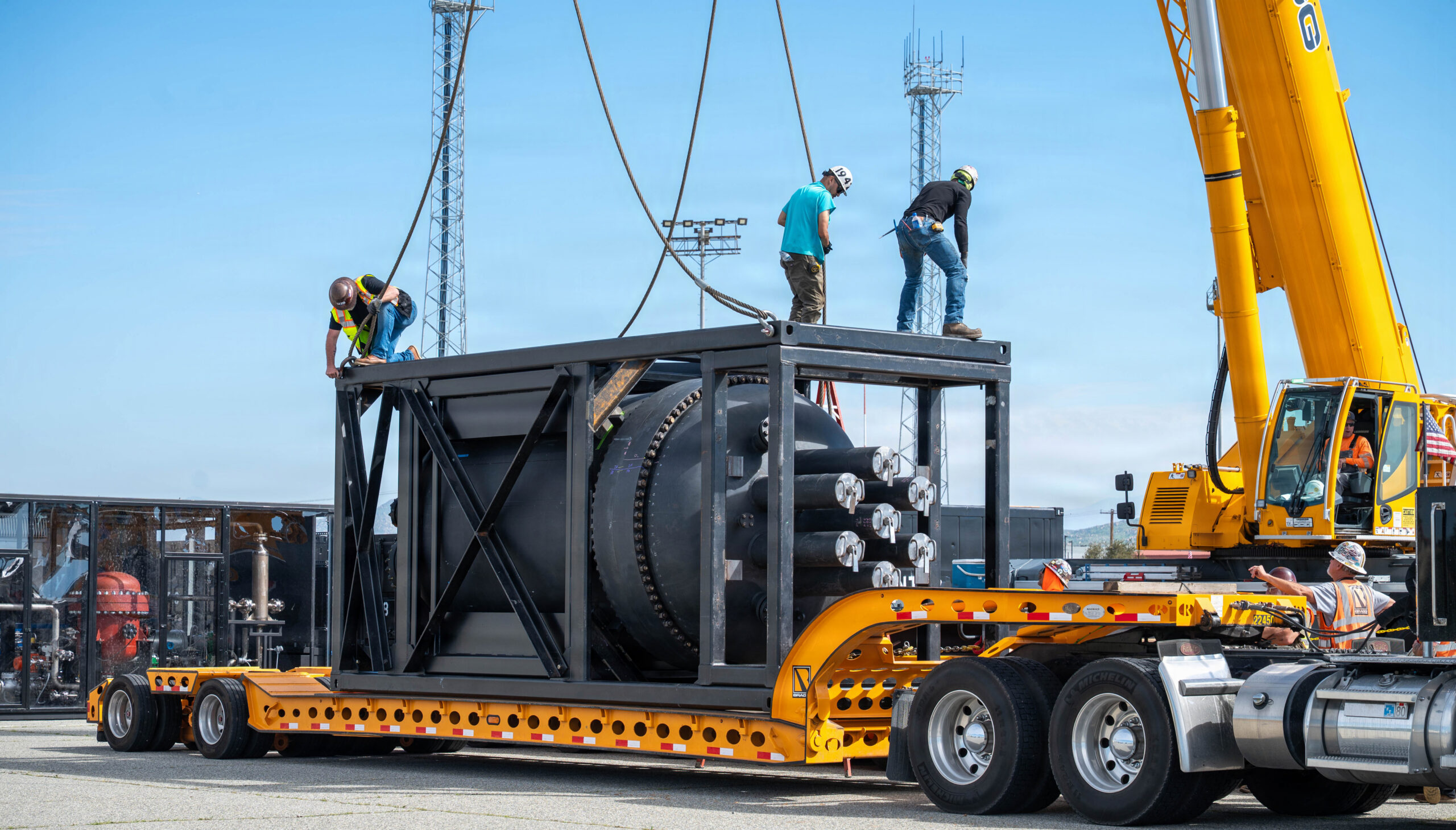
A key strategy emerging from these efforts has been the development of “microgrids”—localized power sources designed to operate independently of the larger civilian energy grid. In 2022, the Air Force began a project to build a nuclear microreactor at Eielson Air Force Base, Alaska. Kadena Air Base in Japan successfully deployed a microgrid combining generators and solar power in 2023. Further nuclear microreactors are under consideration for Buckley Space Force Base, Colo., and Malmstrom Air Force Base, Mont., as part of a program with the Defense Innovation Unit.
Mr. Chaudhary, who served in the Biden administration and helped author the Department of the Air Force’s 2024 Installation Infrastructure Action Plan, played a role in guiding these initiatives. The plan includes a directive to install microgrids at two Space Force bases and 14 Air Force bases by fiscal year 2030.
The scope of FORTRESS America, however, is significantly more ambitious. Secretary Hegseth stated in his speech that “every major military installation in America is going to generate its own power, independent of the civilian grid.”
The Secretary did not provide a specific timeline for achieving this extensive goal or detail the financial resources that would be allocated. The senior U.S. defense official noted on October 20 that the specific details are still being developed, as officials consider the diverse needs of approximately 500 bases within the continental United States. “The assessment timeline that we’re in right now is trying to determine what is this going to cost,” the official confirmed.
The assessment is complex; a uniform solution, such as multiplying the cost of a nuclear microreactor by 500, is not feasible. Full achievement of the objective could span decades. To expedite progress, the Pentagon plans to implement a variety of tailored solutions, utilizing renewable options like geothermal and solar energy, alongside conventional sources such as natural gas, based on each base’s specific requirements, the official explained.
Mr. Chaudhary supports this diversified approach. “We need to acknowledge this reality that our bases are not a monolith, and they’re vulnerable in different ways, and our adversaries have demonstrated the capability and intent to attack our installations in kinetic and nonkinetic ways,” he remarked.
While no two bases are identical, Tyndall Air Force Base, Fla., offers a potential model for elements of the FORTRESS America effort. After Hurricane Michael caused catastrophic damage to the base in 2018, the Air Force opted to rebuild Tyndall as its “Base of the Future.” This extensive reconstruction incorporated infrastructure hardened against severe storms, alongside a microgrid, advanced facilities, and other resilient systems. Mr. Chaudhary views Tyndall as a blueprint. “My general thought is that in some way, shape, or form, the Base of the Future of Tyndall is going to be replicated in this new strategy by the Department of Defense,” he stated.
The senior U.S. defense official commended Tyndall’s “thoughtful design work” and indicated that the “Base of the Future” concept would indeed influence the new program. “They are incorporating a lot of the things that we ask them: microgrids, smart systems, their ability to do preventative maintenance by a centralized hub, so they can see across all their facilities and know when things are going to go down,” the official concluded. “Those are technologies and things that we want to invest into all of our installations.”
Why This Matters
The “FORTRESS America” program represents a profound strategic shift in how the U.S. military safeguards its domestic installations and ensures operational continuity. At its core, the initiative addresses critical vulnerabilities exposed by increasing geopolitical tensions, sophisticated cyber threats, and the growing impact of climate change.
National Security and Readiness:By aiming for energy independence, FORTRESS America directly enhances national security. Military bases are vital hubs for training, logistics, and power projection. Their reliance on the civilian power grid creates a single point of failure that adversaries could exploit, potentially crippling military operations at home. Energy resilience ensures that critical missions can continue uninterrupted, even if civilian infrastructure is compromised by cyberattacks, natural disasters, or kinetic strikes. This reduces strategic risk and strengthens overall military readiness.
Economic and Technological Impact:The scale of this initiative—aiming for energy self-sufficiency across hundreds of bases—will necessitate massive investment in new infrastructure and technologies. This will likely spur innovation in microgrid development, renewable energy sources (solar, geothermal), advanced battery storage, and small modular nuclear reactors. Such investment could create new jobs, foster technological advancements, and potentially lead to spillover benefits for civilian applications of these resilient energy solutions. The “assessment timeline” for determining costs will be crucial for understanding the program’s economic footprint.
Deterrence and Strategic Autonomy:A military that is demonstrably resilient to external disruptions projects strength and reduces incentives for adversaries to target critical infrastructure. The ability of U.S. bases to operate autonomously from potentially vulnerable civilian networks enhances strategic autonomy, allowing the military to make decisions and conduct operations without being constrained by external dependencies.
Climate Resilience:While primarily driven by national security concerns, the program’s emphasis on installation hardening and decentralized energy sources also contributes significantly to climate resilience. Bases like Tyndall Air Force Base, rebuilt to withstand extreme weather events and operate with independent power, serve as a model for how the military can adapt to an era of more frequent and intense natural disasters. This dual-purpose benefit underscores the foresight of the program.
Evolution of Warfare:The focus on protecting against “systematic shutdown of community capabilities” rather than traditional kinetic attacks highlights a recognition of the evolving nature of warfare, which increasingly targets critical infrastructure and societal vulnerabilities. FORTRESS America is an acknowledgment that future conflicts may begin not with a bang, but with a blackout, and the U.S. military must be prepared to withstand such non-kinetic assaults.
In essence, FORTRESS America is not merely an infrastructure project; it is a foundational transformation designed to secure the operational bedrock of the U.S. military against a complex array of modern threats, ensuring its ability to defend the nation and project power in an uncertain global landscape.
U.S. Military Seeks Billions in Private Capital for Resilient Infrastructure Under “FORTRESS America” Initiative
The United States Department of Defense is embarking on a multi-billion dollar initiative, dubbed “FORTRESS America,” aimed at modernizing and hardening its domestic military installations against increasingly severe natural disasters and other threats. This ambitious undertaking, estimated to cost scores, if not hundreds, of billions of dollars, is pushing defense officials to explore innovative financing mechanisms, particularly public-private partnerships (PPPs), to leverage external capital for critical infrastructure projects.
The effort comes in the wake of significant damage to military bases from extreme weather events, highlighting the vulnerability of existing infrastructure. A key example driving this strategic shift is the extensive reconstruction of Tyndall Air Force Base in Florida, which was devastated by Hurricane Michael in 2018. The base, once severely damaged, is now being rebuilt as a blueprint for future resilient installations.
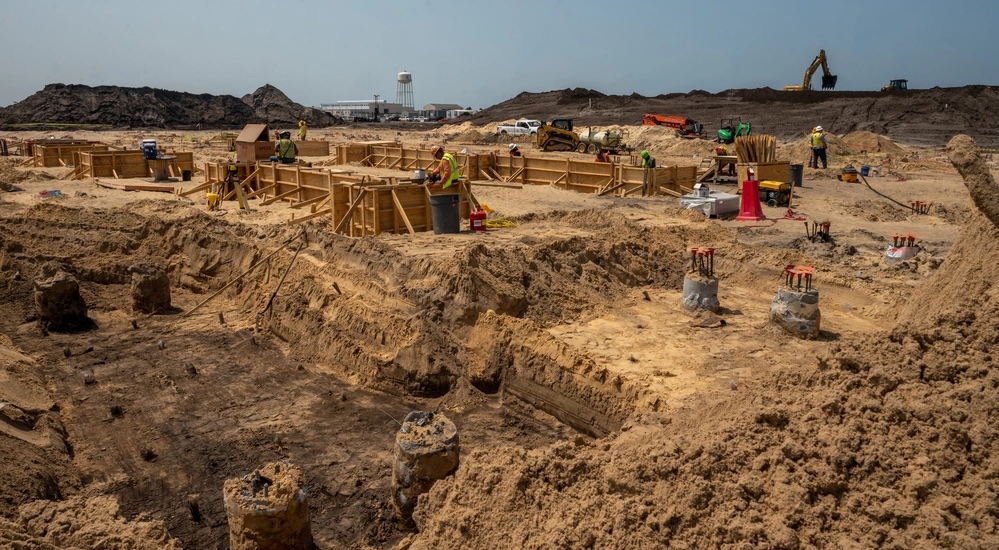
Tyndall Air Force Base, located on Florida’s Gulf Coast, sustained catastrophic damage when Hurricane Michael, a Category 5 storm, made landfall in October 2018. The storm destroyed or severely damaged nearly all structures on the base, necessitating a complete overhaul. Rather than simply repairing the existing infrastructure, the Air Force opted for a transformative rebuilding effort, envisioning Tyndall as the “Installation of the Future.” This forward-thinking approach integrates advanced design principles, sustainable construction materials, and smart technology to enhance operational readiness and withstand future environmental challenges. The reconstruction aims for greater efficiency, reduced long-term maintenance costs, and increased facility longevity, ensuring a more robust and adaptable base for critical military operations. The U.S. Air Force has invested approximately $5 billion in this comprehensive restoration project, setting a precedent for resilient military construction.
The lessons learned from Tyndall are being applied across the wider “FORTRESS America” initiative. This comprehensive program seeks to address vulnerabilities in military installations nationwide, ranging from coastal bases threatened by rising sea levels and storm surges to inland facilities susceptible to wildfires, extreme heat, and drought. The objective is to proactively upgrade and construct infrastructure that is more resistant to these evolving environmental threats, thereby safeguarding national security assets and ensuring continuous operational capability. The financial scale of this endeavor is immense, with projections indicating potential costs reaching into the hundreds of billions of dollars, far exceeding the current annual military construction budgets.
Given the significant financial outlay required for “FORTRESS America,” defense officials are actively pursuing alternative funding strategies. Deputy Assistant Secretary of the Air Force for Environment, Safety, and Infrastructure, Ravi Chaudhary, has emphasized the need to leverage national capital to support defense requirements. Chaudhary stated, “We are focused on how we design and build our installations, so that we can not only reduce costs, but more importantly, it increases the life of the facility, so that we’re making better investments in the time frame to keep those.”
Both Chaudhary and a senior defense official have highlighted public-private partnerships as a crucial mechanism to bridge the funding gap. Chaudhary explained, “We’re a capital-intensive country. How do we leverage that capital to best serve our national security needs? And that really lends itself to public-private partnerships.” These partnerships typically involve collaboration between a government entity and a private company for the financing, design, construction, operation, and maintenance of public infrastructure projects. For the military, this could mean private entities investing in, building, and managing facilities like housing, utilities, energy grids, or even specialized operational infrastructure on military bases.
The senior defense official further articulated the ongoing exploration of these models: “Are there other partnerships, other ways to make these investments that they’re valid and viable… Are there other means by which I can do private investment, other public things?… All of that is what we’re working on right now through the FORTRESS team to get that assessment.” This inquiry indicates a comprehensive review by the “FORTRESS team” to identify the most effective and secure ways to integrate private sector involvement into defense infrastructure development. While PPPs offer potential benefits such as access to private capital, expertise, and efficiency, they also necessitate careful consideration of security implications, contractual complexities, and long-term oversight to ensure alignment with national security objectives.
***
Why This Matters
The “FORTRESS America” initiative and the reliance on public-private partnerships represent a significant strategic shift for U.S. national security. In an era of increasing climate volatility and evolving geopolitical threats, the resilience of military installations is paramount. Damaged infrastructure can severely impede military readiness, disrupt critical operations, and incur massive rebuilding costs, diverting resources from other defense priorities. Investing in resilient bases ensures that the U.S. military can maintain its operational capabilities globally, respond effectively to crises, and protect its personnel and assets.
Furthermore, the exploration of public-private partnerships underscores a broader challenge facing governments worldwide: how to fund essential, large-scale infrastructure projects amid budgetary constraints. If successful, this model could become a template for other nations grappling with similar challenges in maintaining vital public services and infrastructure in the face of climate change and economic pressures. It also highlights the growing recognition within defense establishments that climate change is not merely an environmental issue, but a direct threat to national security, requiring proactive and substantial investment to mitigate its impacts on military readiness and strategic positioning.