
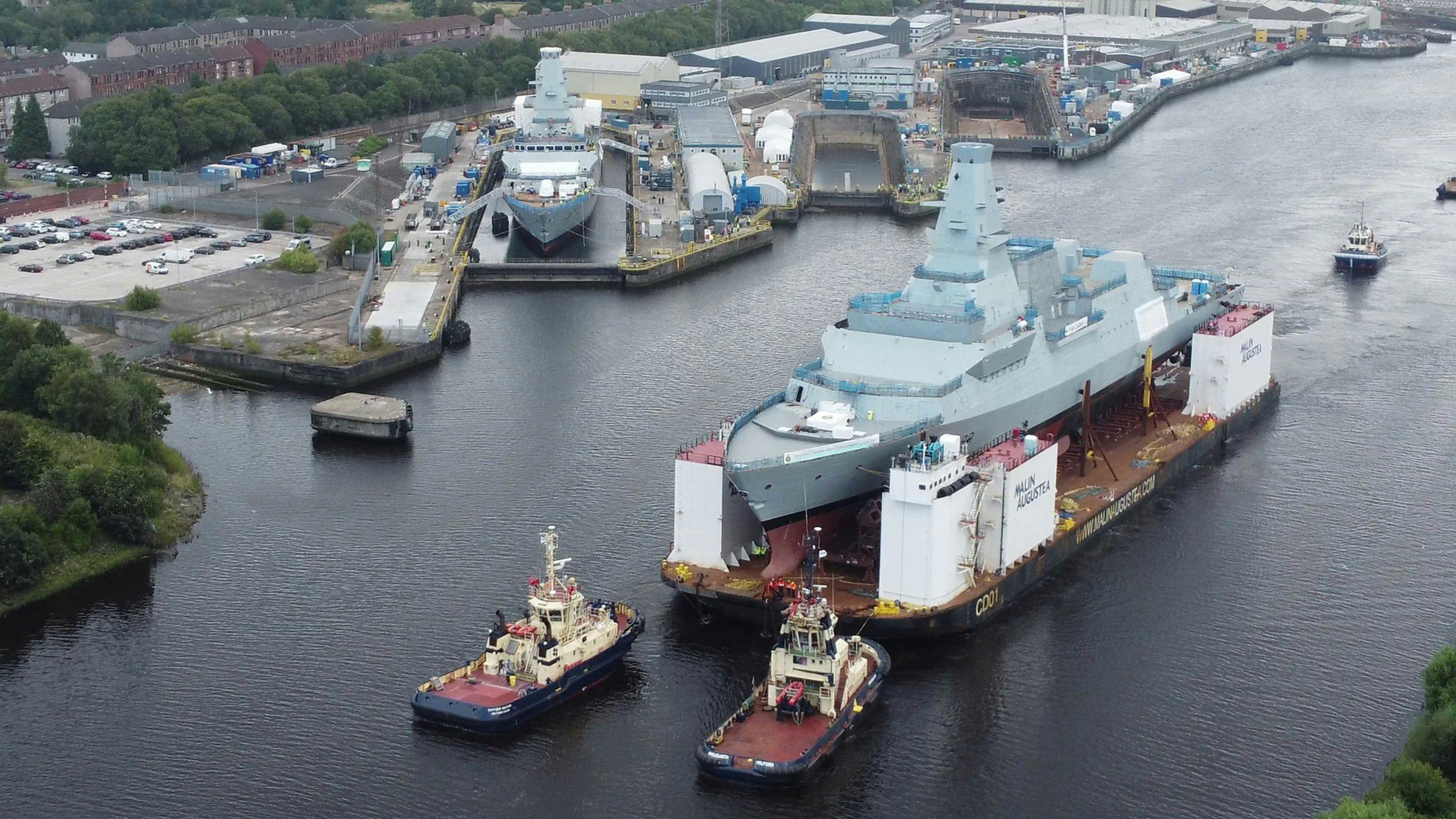
Liberal Democrats Propose Six New Frigates and Shipbuilding Expansion to Counter Russian Threat
The Liberal Democrats have unveiled a defence package calling for the order of six additional Royal Navy frigates and a significant expansion of British shipbuilding capacity. The proposal, detailed in plans published by the party, aims to bolster the United Kingdom’s naval capabilities and respond to what it describes as an intensifying threat from Russia.
Proposed Fleet Expansion
Under the party’s defence strategy, the Royal Navy would see the acquisition of three additional Type 26 anti-submarine warfare frigates and three additional Type 31 general-purpose frigates. These vessels are projected for delivery by the mid-2030s.
If implemented in addition to the government’s existing procurement plans, this proposal would increase the planned Type 26 fleet from eight ships to a total of eleven. Similarly, the Type 31 fleet, currently set to comprise five vessels, would expand to eight. The government’s current strategy intends for these two classes to form the backbone of the Royal Navy’s future frigate force, alongside at least six Common Combat Vessels designed to replace the ageing Type 45 destroyers.
Investment in Shipbuilding Infrastructure
Beyond the new frigates, the Liberal Democrats also propose a substantial investment in British shipbuilding infrastructure. A sum of £370 million would be allocated from the party’s proposed Defence Bonds scheme specifically for this purpose. The party describes this policy as providing funding for four new shipyards. However, the detailed costing accompanying the announcement clarifies that the £370 million figure is based on constructing two further facilities, estimated at approximately £185 million each, using BAE Systems’ Janet Harvey Hall on the Clyde as a benchmark for cost estimation.
Estimated Costs and Funding Mechanisms
The Liberal Democrats have provided detailed cost estimates for their proposals. They calculate that the three additional Type 31 frigates would cost approximately £1.2 billion, based on an assumed unit cost of around £400 million in 2025/26 prices. For the three additional Type 26 frigates, the estimated cost is £2.85 billion, using an estimated cost of approximately £950 million per ship. The combined capital spending for the frigate orders and the shipbuilding infrastructure allocation amounts to approximately £4.42 billion, according to the party’s published assumptions.
To finance these significant investments, the Liberal Democrats propose increasing the Digital Services Tax from its current 2 per cent to 10 per cent. The party states that a portion of the additional revenue generated from this tax increase would be used to cover the ongoing personnel and maintenance costs associated with the expanded fleet.
Regarding through-life operating costs, the party acknowledges that no official estimates are currently available for the Type 26 and Type 31 fleets. Their own calculations assume annual running costs of £20 million for each additional ship by 2034/35. This would result in an estimated annual operating cost of £120 million for all six additional vessels once they are fully operational.
Rationale Behind the Proposal
James MacCleary MP, the Liberal Democrat Defence Spokesperson, emphasized the urgency of the proposed measures. “We cannot afford to sit on our hands while Putin’s aggression intensifies and our national security weakens,” he stated. MacCleary added that the plan aims to instill confidence in British industry and empower manufacturers to contribute to the nation’s long-term security. He asserted that “By investing now in six new warships and by expanding our ship-building capacity with four new British shipyards, we can regenerate our fleet, protect our vital underwater infrastructure, and ensure Britain has the defence capabilities we need to stand up to the Kremlin.”
The party’s announcement follows a Defence Committee report published on 22 October, which highlighted “serious capability gaps” affecting British operations, particularly in the High North. The committee’s report warned that publicly available evidence of low availability among frigates, destroyers, and attack submarines raised questions about the UK’s capacity to meet its commitments in the region. Furthermore, it underscored the risks posed by Russian submarine and sabotage activity to undersea infrastructure and crucial North Atlantic reinforcement routes.
The Liberal Democrats also referenced a Savanta poll conducted between 29 May and 1 June 2026, involving 2,234 UK adults. Commissioned by the party, the poll indicated that 60 per cent of respondents believed the government was either probably or definitely not doing enough to protect critical infrastructure from Russian attacks. In contrast, 26 per cent felt the government was doing enough, while 14 per cent reported they did not know.
The party further argues that the additional frigate orders would provide a more extended and predictable workload for the British shipbuilding industry. This increased stability, they contend, would enable yards and their suppliers to invest in workforce development and infrastructure improvements with greater confidence, fostering long-term growth and expertise in the sector.
Current Government Defence Strategy
The government’s existing shipbuilding programme includes orders for eight Type 26 frigates and five Type 31 frigates. Its broader “Hybrid Navy” plan envisages a future force operating both new crewed and uncrewed vessels in concert. The 2025 Strategic Defence Review placed particular emphasis on the Type 26 frigates as a critical component of “Atlantic Bastion,” the Royal Navy’s strategic approach to countering the growing submarine threat in the North Atlantic. The Liberal Democrat proposal directly challenges these numbers by advocating for six additional crewed frigates, arguing they should be ordered during the next Parliament and delivered within the mid-2030s timeframe.
Why This Matters
The Liberal Democrats’ proposal for six new frigates and expanded shipbuilding capacity carries significant implications across several critical areas, from national security to economic policy and the broader geopolitical landscape.
Firstly, from a **national security perspective**, this plan directly addresses concerns about the Royal Navy’s operational capabilities in an increasingly complex and contested global environment. The explicit focus on countering the “threat from Russia” and protecting “vital underwater infrastructure” highlights the perceived urgency of enhancing anti-submarine warfare and general-purpose naval presence. If implemented, it would substantially increase the UK’s frigate fleet, potentially improving its ability to project power, protect sea lanes, and contribute to NATO operations, particularly in the North Atlantic and High North where Russian activity has intensified.
Secondly, the proposal has considerable **economic ramifications**. The estimated £4.42 billion in capital spending, coupled with sustained through-life costs, represents a substantial investment. The commitment to expanding British shipbuilding capacity with new facilities could provide a significant boost to coastal communities and the wider defence industry, creating jobs and fostering specialized skills. This aligns with a broader national strategy often referred to as “levelling up” and industrial policy, aiming to support high-value manufacturing within the UK. However, such large-scale expenditure also raises questions about affordability, fiscal priorities, and potential trade-offs with other public spending areas, especially given the proposed increase in the Digital Services Tax.
Thirdly, this policy shapes the **political debate** surrounding defence. As an opposition party, the Liberal Democrats are setting out a distinct vision for national security, putting pressure on the incumbent government to justify its current defence spending and procurement plans. In the lead-up to potential future elections, defence capabilities and national security are likely to be key campaigning issues, and this proposal provides a clear point of difference. It also reflects public sentiment, as indicated by the Savanta poll, suggesting a perceived shortfall in government action to protect critical infrastructure.
Finally, the proposal underscores the UK’s **long-term defence strategy and international role**. By advocating for a larger, more capable surface fleet, the Liberal Democrats are signaling a commitment to maintaining the UK’s position as a significant naval power and a key ally within NATO. The emphasis on anti-submarine warfare and the protection of undersea infrastructure reflects a recognition of evolving threats and the importance of maritime security in global trade and communication. This plan could influence how the UK is perceived by allies and adversaries alike, potentially strengthening its diplomatic leverage and operational effectiveness in an era of heightened geopolitical tensions.