
Heritage Foundation Chief Economist EJ Antoni discusses the USDA’s $57 million meatpacking investment and JD Vance’s comments on the market. He also analyze rising family health insurance premiums.
**Key Takeaways for Investors:**
1. **Healthcare Price Transparency: A Double-Edged Sword:** While advocating for consumer choice, enhanced price transparency could exert significant downward pressure on provider profit margins and shift market power towards patients, influencing valuations across the healthcare services sector.
2. **ACA’s Enduring Market Influence:** The Affordable Care Act (ACA) continues to shape the insurance landscape, impacting payer profitability, provider reimbursement models, and employer benefit costs. Policy debates around it introduce regulatory uncertainty for major health insurers and healthcare systems.
3. **Single-Payer Risks to Healthcare Capital Markets:** Proposals like “Medicare for All” represent a fundamental restructuring of the U.S. healthcare economy, posing existential threats to private insurers and potentially leading to widespread revenue compression for pharmaceutical companies, medical device makers, and private hospital systems.
The U.S. healthcare sector, a behemoth representing nearly one-fifth of the nation’s GDP, is once again at the center of a heated economic debate, with policy discussions increasingly framed by their potential market ramifications. Heritage Foundation chief economist EJ Antoni recently joined FOX Business’ Taylor Riggs on “Big Money in the Morning” to dissect the escalating costs burdening American families and businesses, arguing for systemic reforms that could fundamentally reshape market dynamics.
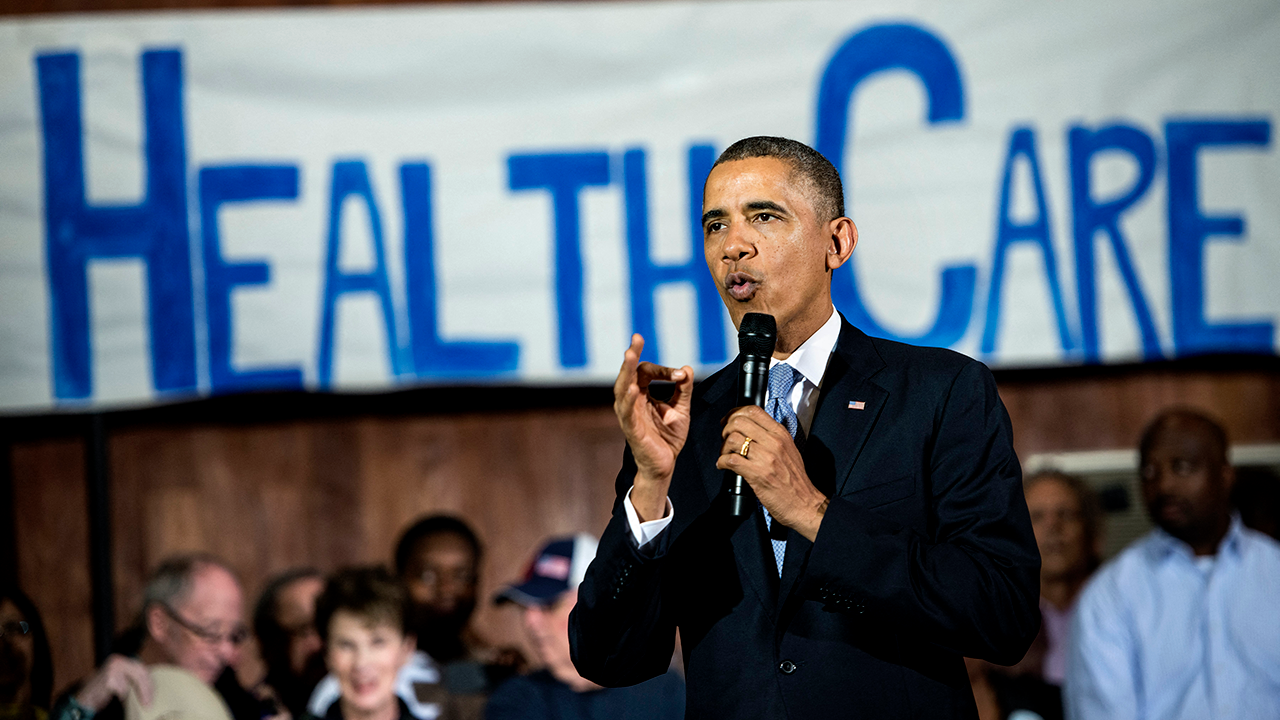
Former President Barack Obama’s healthcare legacy faces renewed scrutiny as Americans grapple with rising insurance costs.(Brendan Smialowski/AFP via Getty Images)
“You cannot have competition, and therefore you cannot have that downward pressure on consumer prices if you don’t have price transparency. That’s the first thing we need to do,” Antoni asserted, pinpointing a critical market mechanism. His remarks underscore a long-standing contention that the opaque pricing structures within healthcare distort market efficiency, prevent true consumer-driven competition, and ultimately contribute to inflated costs. For investors, this discussion is crucial: genuine price transparency could introduce significant volatility for healthcare providers and insurers. Companies that have historically thrived on information asymmetry might see margin compression, while innovative platforms facilitating cost comparison could emerge as new market leaders. However, the operational complexities of implementing meaningful transparency across myriad services, negotiated rates, and emergency scenarios remain a formidable challenge.
Existing mandates, such as the Hospital Price Transparency Rule and the No Surprises Act, have aimed to address this, yet their impact on aggregate consumer behavior and market pricing has been modest. Antoni’s call for more robust measures suggests a potential future regulatory push that could force a reckoning for traditional healthcare business models. The financial implications for publicly traded hospital chains, outpatient clinics, and even diagnostic labs could be profound, as they would be compelled to compete more directly on cost, potentially shifting market share and profitability profiles.
WHY MILLIONS OF SENIORS ARE GETTING CHECKS FROM THE GOVERNMENT
Ret. Lt. Col. James Carafano shares harsh criticism of former President Barack Obama’s handling of Iran on ‘The Evening Edit.’
The Affordable Care Act (ACA), a cornerstone of former President Barack Obama’s legacy, expanded insurance coverage to millions, but its market impact remains hotly debated. Antoni echoed widespread criticism, arguing the law fundamentally “broke the healthcare system,” leading to higher premiums and a perceived decrease in the quality of care. From a market perspective, the ACA significantly reshaped the payer landscape. Major health insurers initially faced new regulatory burdens, including medical loss ratio requirements and the elimination of pre-existing condition exclusions, which impacted profitability. However, the expansion of the insured pool also represented a substantial growth opportunity, leading to consolidation within the insurance sector as players sought scale and efficiency to navigate the new environment. Companies like UnitedHealth Group (UNH) and Elevance Health (ELV) have demonstrated robust performance, largely by adapting their business models and leveraging diversified healthcare services.
The ACA also influenced provider economics. While increased patient volume was a benefit, providers faced ongoing pressures on reimbursement rates and a shift towards value-based care models, which often required significant investment in technology and infrastructure. For employers, rising family health insurance premiums continue to be a significant line item, impacting labor costs and overall profitability, particularly for small and medium-sized enterprises. This sustained cost pressure on employers indirectly affects broader economic indicators, such as wage growth and job creation, as businesses allocate more resources to benefits rather than direct compensation or investment.
BESSENT COMPARES OBAMA LIBRARY TO ‘DARTH VADER’S TOMB’ AFTER EX-PRESIDENT CRITICIZED WHITE HOUSE RENOVATIONS
Fox Business’ Connor Hansen reports from Washington, D.C., on a new study from the Paragon Health Institute showing that 9.2 million Obamacare expansion enrollees did not meet federal requirements in 2024.
The policy debate extends to more radical proposals, such as Senator Bernie Sanders’ “Medicare for All,” which envisions a national single-payer health insurance system. Antoni warned that seniors, ironically, “stand to lose the most from this because they’re going to be forced off of plans that they actually like, typically.” While the social implications are significant, the market ramifications of such a system would be seismic. Private health insurers, a multi-trillion-dollar industry, would face an existential threat, potentially leading to widespread industry consolidation, asset divestitures, and massive job losses. For pharmaceutical and medical device companies, a single-payer system would centralize purchasing power, likely leading to aggressive price negotiations and significant reductions in drug and device costs. This could severely impact R&D investment, profit margins, and the overall competitiveness of these sectors on a global scale.
Healthcare providers, particularly hospitals and specialized clinics, would face government-mandated reimbursement rates, which could be lower than current private insurance rates, thereby compressing margins and potentially limiting capital investment in infrastructure and technology. The shift to government as the sole payer would also fundamentally alter the capital structure of healthcare, impacting everything from municipal bond markets (for public hospitals) to private equity investments in healthcare services. The sheer scale of such a transition would introduce unparalleled uncertainty for investors across the entire healthcare ecosystem.
CLICK HERE TO GET FOX BUSINESS ON THE GO
**Market Impact:**
The ongoing political discourse surrounding healthcare policy, from targeted price transparency reforms to sweeping single-payer proposals, creates considerable regulatory uncertainty for the entire healthcare sector. Investors must closely monitor legislative developments, as they directly influence the profitability, growth trajectories, and valuation multiples of healthcare companies. Major insurers (e.g., UnitedHealth, CVS Health), pharmaceutical giants (e.g., Pfizer, Eli Lilly), medical device manufacturers (e.g., Medtronic, Johnson & Johnson), and hospital systems (e.g., HCA Healthcare) are all susceptible to policy shifts. A move towards greater transparency could compress margins for providers, while any step towards a single-payer system would fundamentally reprice nearly every asset in the healthcare capital markets. Conversely, market-based reforms, such as expanded health savings accounts or tax credits, could stimulate demand for certain services or insurance products. The persistent rise in healthcare costs also acts as a macroeconomic drag, impacting consumer disposable income, corporate earnings, and the broader inflation outlook, making healthcare policy a critical factor for general market sentiment and economic growth projections.