
When the Beautiful Game Turns Tragic: A Heart-Wrenching Reflection from the Segunda Division
The roar of the crowd, the electric tension of a Segunda Division clash – these were the expected hallmarks of Monday night’s encounter between Tenerife and FC Andorra at the Estadio Heliodoro Rodriguez Lopez. What transpired, however, was a devastating rupture in the fabric of the beautiful game, a moment that transcended sport and plunged an entire community into profound grief. In a horrific turn of events, a collision that began as a routine footballing challenge ended in unthinkable tragedy, claiming the life of Tenerife’s beloved forward, Jesus de Miguel.
The Unthinkable Collision: A Split-Second that Shook Football
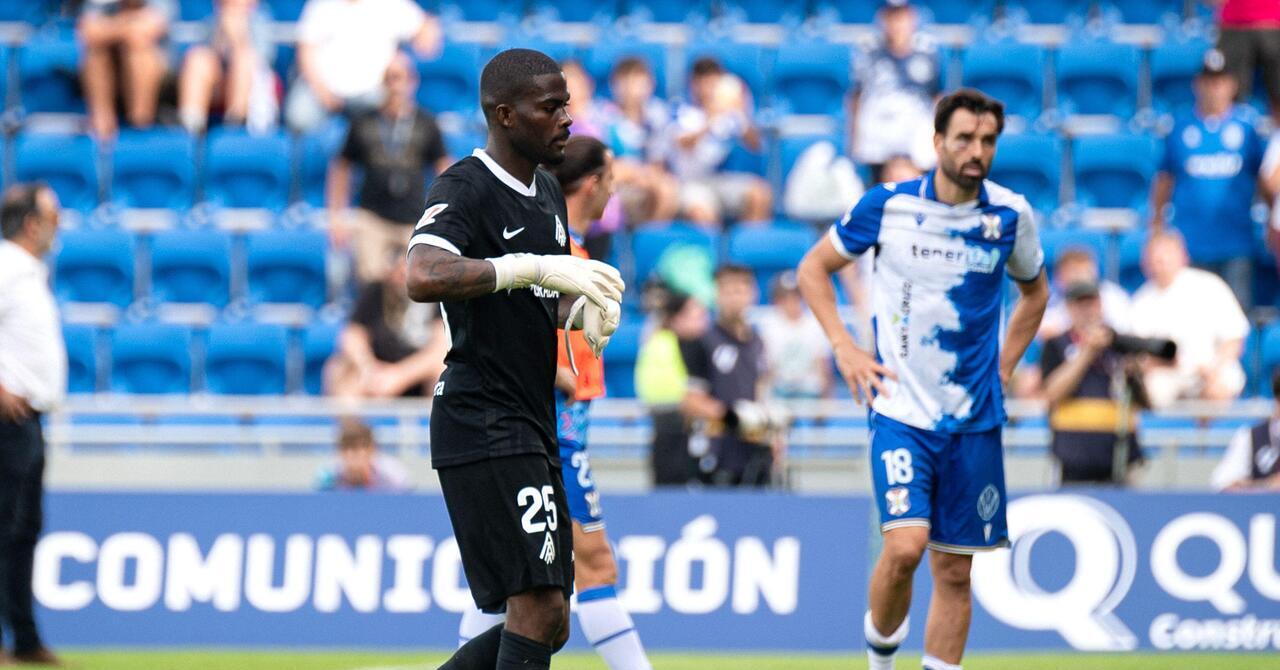
The incident, now etched in the darkest corners of Spanish football history, occurred as both sides fiercely contested a loose ball. FC Andorra goalkeeper Jesus Owono, a young talent known for his agility and commitment, lunged forward. In that fraction of a second, his knee collided with the chest of De Miguel, who was equally committed to winning possession. It was a challenge that, in any other game, might have been met with a yellow card, perhaps even a red, and a quick recovery. But the sheer force, the unfortunate angle, and the cruel hand of fate conspired to create an irreversible catastrophe.

The immediate aftermath was a chilling tableau. Owono, despite being shown a red card, remained on the field, his face a mask of dawning horror. Players from both benches, sensing the gravity of the situation, sprinted onto the pitch. Medical teams, with their characteristic urgency, were already there, desperately attempting to resuscitate De Miguel. The vibrant energy of the stadium evaporated, replaced by an eerie, suffocating silence. It was a stark reminder of the fragile line between the athletic spectacle and the profound vulnerability of human life. De Miguel, just 30 years old and in the prime of his career, was rushed to hospital, but tragically passed away the following morning, leaving a gaping void in the hearts of all who knew him.
Remembering Jesus De Miguel: A Life Cut Short
Jesus de Miguel was more than just a striker for Tenerife; he was a beloved figure, a tireless worker, and a natural leader on and off the pitch. Known for his tenacious spirit, clinical finishing, and infectious smile, he embodied the passion and grit of Spanish football. His journey through the lower leagues, battling for every opportunity, made him an inspiration to many. He was a player who gave everything for his club, a man who celebrated every goal with genuine joy, and who lifted the spirits of his teammates. His sudden absence leaves not just a tactical gap in Tenerife’s squad, but an emotional chasm that will be felt throughout the club, the city, and indeed, the wider football community.
The Burden of Owono: Grief, Scrutiny, and a Police Investigation
In the wake of this unimaginable tragedy, the spotlight has fallen heavily on Jesus Owono. The Equatorial Guinea international, a promising 25-year-old goalkeeper, now finds himself at the center of a police investigation for possible involuntary manslaughter, facing widespread criticism and an emotional burden that few could comprehend. His team-mate, Lautaro Spatz, bravely stepped forward to defend him, articulating what many in the football world instinctively know: no player intentionally sets out to inflict such harm. Owono himself has broken his silence, his statement released by FC Andorra a raw, unfiltered cry of anguish.
“These are the most difficult days of my life,” Owono confessed, his words heavy with profound grief. “I find it difficult to find the words and I find it very difficult to assimilate anything that has happened. I feel enormous pain for the loss of Jesus. I think of him, his family and all the people who loved him.” This isn’t just a professional statement; it’s the raw outpouring of a young man grappling with an existential crisis, a human being crushed under the weight of an accidental but fatal act. His acceptance of future scrutiny – “I know that there will be many issues to address, I will face whatever comes with all due respect” – speaks volumes of his character, yet his immediate priority remains honouring the memory of De Miguel. “But right now, honestly, I can’t think of anything other than Jesus and the pain we are experiencing. Rest in peace, Jesus.” It’s a heartbreaking plea for understanding, a testament to the shared humanity that ultimately binds even adversaries on the pitch.
Game Highlights: Before the Silence
Before the world stood still, the Estadio Heliodoro Rodriguez Lopez was alive with the vibrant pulse of a Segunda Division fixture. The atmosphere was electric, a cauldron of anticipation as Tenerife, pushing for a playoff spot, hosted a plucky FC Andorra side known for their tenacious defending and quick transitions. The home faithful, a sea of blue and white, roared their team on from the first whistle.
The opening exchanges were a tactical masterclass. Tenerife’s midfield maestro, a veteran presence, orchestrated probing attacks, testing Andorra’s organized defensive block. In the 15th minute, a moment of individual brilliance almost broke the deadlock: Tenerife’s winger, hugging the touchline, nutmegged his marker with audacious skill before unleashing a venomous shot that forced Owono into a spectacular, diving save, tipping the ball around the post. The crowd erupted, a collective gasp turning into appreciative applause for both the attacking flair and the goalkeeping heroics.
Andorra, refusing to be pinned back, found their rhythm. A swift counter-attack in the 30th minute saw their lone striker burst through, only to be denied by a last-ditch, perfectly timed tackle from Tenerife’s captain inside the box. It was end-to-end football, physical yet fair, each team desperate for the advantage. The half-time whistle blew with the score still level, but the intensity was palpable, promising a thrilling second half. The stage was set for a decisive moment, a battle for every inch of grass. Little did anyone know, the most decisive, and devastating, moment was yet to come, completely overshadowing the competitive spirit that had so vigorously defined the game’s opening stanza.
Analysis: A Sport Grappling with Tragedy and Responsibility
This tragedy forces a brutal re-evaluation of the inherent risks in professional football. While contact sports inevitably carry dangers, the death of a player on the field is a stark, shocking rarity that sends ripples of dread through the entire sporting world. It begs the question: how far can we push the boundaries of athleticism and aggression before we cross a line into unacceptable danger? Referees are trained to distinguish between fair challenges and reckless play, but in the heat of a high-stakes match, decisions are made in milliseconds, often with imperfect angles and incomplete information. Owono’s red card was given for serious foul play, indicating the referee perceived excessive force, but the devastating outcome elevates the conversation beyond mere sporting infractions.
The police investigation, while legally necessary, highlights the uncomfortable intersection of sport and criminal law. It underscores the immense responsibility players bear, not just to their teammates and opponents, but to society. However, attributing malice or intent in such a fast-paced, instinct-driven environment is incredibly complex. The global football community must rally around both families – De Miguel’s, in their profound loss, and Owono’s, as he navigates an unprecedented emotional and legal ordeal. This incident will undoubtedly spark further discussions on player safety, the role of VAR in reviewing dangerous play, and the psychological support mechanisms available to athletes involved in such traumatic events.
The Path Forward: A Prediction for Spanish Football and Beyond
The tragic death of Jesus de Miguel will not merely be a footnote in the history of Spanish football; it will be a seismic event that reshapes perceptions and protocols. My prediction is that this incident will serve as a stark, permanent reminder of the fragility of life within the intensity of professional sport. We will see an immediate, heightened emphasis on player safety across all leagues, from youth academies to the professional ranks. Expect more stringent interpretations of dangerous play by referees, potentially leading to an increase in cards for challenges previously deemed ’50-50′ or merely robust.
Beyond the rules, there will be a significant and necessary shift in the mental health support offered to players, particularly those directly involved in traumatic on-field incidents. The burden on Jesus Owono is immense, and his well-being, along with that of his teammates and those of Tenerife, must be prioritized. This tragedy will force football to look inwards, not just at its rules and regulations, but at its soul, reinforcing the fundamental truth that while football is a fiercely competitive game, it is, above all, a human endeavor. The spirit of unity and respect, which often gets lost in the heat of battle, will be profoundly re-emphasized, ensuring that Jesus de Miguel’s memory will forever be a catalyst for a safer, more compassionate game.