
United Kingdom Boosts Wildfire Response with A400M Atlas Firefighting Capability
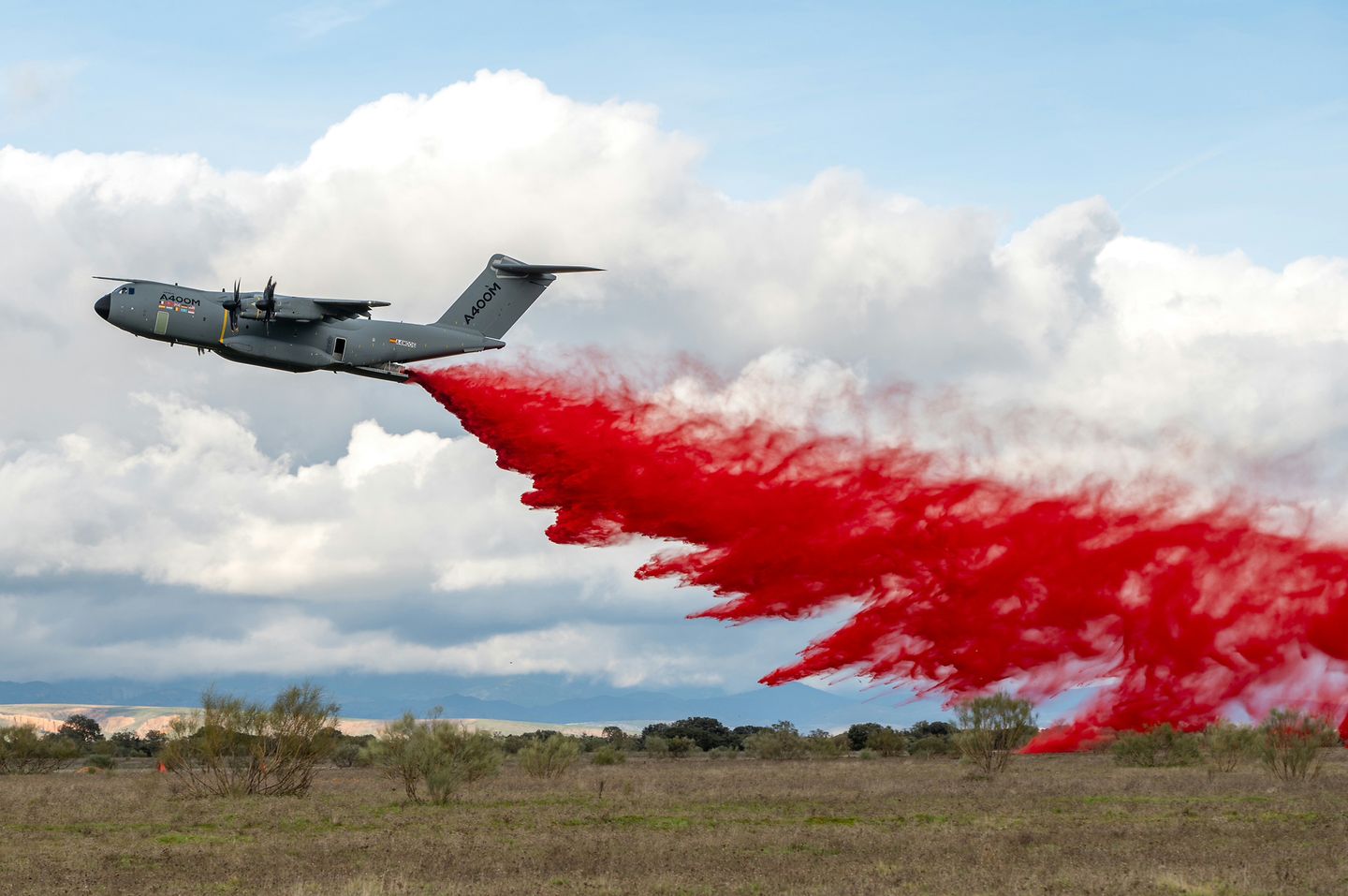
The United Kingdom’s Royal Air Force (RAF) is set to acquire an initial containerised aerial firefighting capability for its A400M Atlas transport aircraft, a move designed to significantly enhance the nation’s capacity to combat severe wildfires. This new asset is slated to be operational and available for the 2027 wildfire season, according to an announcement from the Ministry of Defence (MoD).
The procurement comes amidst growing concerns over the increasing frequency and intensity of wildfires across the UK and globally, phenomena often linked to climate change and prolonged dry spells. The decision marks a pivotal shift in the UK’s approach to domestic wildfire management, integrating military assets into what has traditionally been a civilian-led emergency response.
Details regarding the acquisition were recently sought in Parliament by Ben Obese-Jecty, the Conservative Member of Parliament for Huntingdon. Mr. Obese-Jecty posed a series of questions to the MoD, inquiring about the precise number of firefighting kits to be purchased, the timeline for full crew training, the assessments made regarding the kit’s availability, and whether the capability would be permanently ready for deployment prior to July 2027. These questions underscore parliamentary scrutiny over defence expenditure and operational readiness, reflecting public and political interest in the effective deployment of critical national capabilities.
In response to the parliamentary inquiry, Luke Pollard, the Minister for Defence Readiness and Industry, confirmed the procurement. “The Royal Air Force is procuring an initial containerised aerial firefighting capability for the A400M Atlas aircraft to enhance the UK’s ability to respond to significant wildfire incidents,” Minister Pollard stated. He reiterated that “The capability will be available to support the 2027 wildfire season and represents an important first step towards establishing a sovereign military aerial firefighting capability within the UK.” The term “sovereign military aerial firefighting capability” signifies the UK’s ambition to possess an independent, military-controlled asset for wildfire suppression, reducing potential reliance on international aid or exclusively civilian contractors during large-scale emergencies.
This development follows a major announcement by Prime Minister Andy Burnham at the Wildfire Resilience Summit held last month. At the summit, Prime Minister Burnham outlined a broader strategy to equip both RAF Chinooks and A400Ms for firefighting duties, stating that these military aircraft would be deployed on request. This commitment marks the first time that UK military aircraft will be explicitly designated and prepared for active roles in combating domestic wildfires. Prime Minister Burnham emphasized that “military aircraft will stand ready to help tackle wildfires from the sky,” signalling a strategic shift towards leveraging defence assets for national resilience. Defence Secretary Wes Streeting further reinforced this commitment, asserting that “defence will step up to provide greater support to our emergency services,” acknowledging the increasing pressures faced by traditional civilian firefighting services.
The deployment of military aircraft for firefighting is not entirely new territory for the RAF, though its application domestically is. In May, RAF Chinooks participated in Exercise Ifestos in Cyprus, where they practiced firefighting techniques. The exercise involved tackling a simulated blaze at the Machairas National Forest near Nicosia, demonstrating the Chinooks’ ability to carry a ‘Bambi bucket’ – a flexible container suspended beneath the helicopter that can scoop and dump large volumes of water onto fires. This experience provides valuable operational insight and training for potential future domestic deployments.
The A400M’s firefighting role has also seen international precedent. France, another operator of the A400M Atlas, became the first nation to deploy the aircraft’s firefighting capability in a real-world scenario in July. According to reports from AIN, France utilized a specialized roll-on, roll-off kit that enables the rapid conversion of the transport aircraft into a firebomber, capable of dropping approximately 22 tonnes of fire retardant or water. This modular “roll-on, roll-off” system is crucial, allowing the A400M to retain its primary transport role while offering a rapid conversion capability for aerial firefighting when needed. This French experience offers a direct operational blueprint and validation for the UK’s planned procurement.
The A400M Atlas is a versatile military transport aircraft, designed for strategic and tactical airlift, including carrying heavy and outsize loads. Its conversion into a firefighting platform through a containerised system underscores its adaptability and the strategic value of multi-role aircraft in modern defence and humanitarian operations. The 22-tonne capacity for fire retardant or water places it among the more capable aerial firefighting assets available, offering a significant boost to the UK’s ability to tackle large-scale conflagrations.
Why This Matters
The United Kingdom’s decision to equip its A400M Atlas and Chinook aircraft with aerial firefighting capabilities represents a critical evolution in the nation’s disaster response strategy, with far-reaching implications for national resilience, defence roles, and environmental protection.
Firstly, this procurement directly addresses the escalating threat of wildfires. The UK, historically less prone to large-scale forest fires compared to Mediterranean countries, has experienced a notable increase in significant wildfire incidents in recent years, particularly during prolonged summer droughts. These events pose severe risks to human life, property, critical infrastructure, and biodiversity. By acquiring a sovereign military aerial firefighting capability, the UK significantly enhances its capacity to suppress these fires rapidly and effectively, mitigating potential devastation and protecting communities and natural landscapes.
Secondly, this move signifies an important shift in the role of the armed forces. Traditionally focused on combat operations and defence, modern militaries are increasingly engaged in humanitarian assistance and disaster relief (HADR) missions. Integrating aerial firefighting into the RAF’s operational mandate broadens its humanitarian role domestically, demonstrating the adaptability and utility of defence assets beyond conventional warfare. This also fosters greater collaboration between the military and civilian emergency services, creating a more integrated national response framework.
Thirdly, the adoption of a containerised, roll-on/roll-off system for the A400M ensures operational flexibility and cost-effectiveness. The A400M’s primary function as a strategic airlifter remains unimpeded, allowing for rapid conversion to a firefighting role only when needed. This multi-role capability optimizes the utility of a high-value military asset, avoiding the need for dedicated, single-purpose firefighting aircraft that would sit idle for much of the year. The initial nature of this procurement also suggests a phased approach, allowing for operational learning and potential future expansion of the capability.
Finally, the “Why This Matters” section would be incomplete without acknowledging the broader context of climate change. The increasing severity of wildfires is a palpable symptom of a changing climate. By investing in robust firefighting capabilities, the UK is not only responding to current threats but also proactively preparing for a future where such incidents may become even more commonplace. This strategic investment in national resilience underscores a recognition at the highest levels of government that climate impacts require a comprehensive, multi-agency, and well-resourced national defence.