
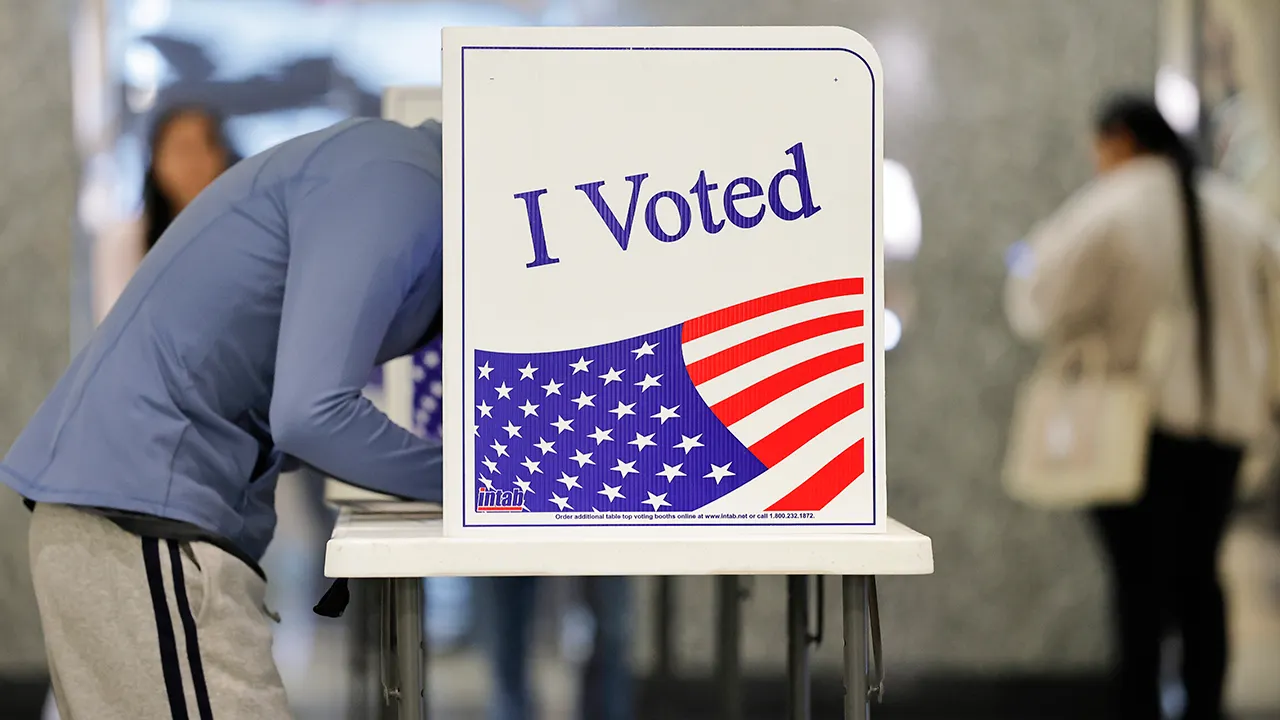
Robert Wolf, a former economic advisor to Obama, and Steve Cortes, a former Trump campaign advisor, discuss the midterm election’s impact on Wall Street.
Key Takeaways:
- Unexpected Market Resilience:Despite projections of a “Blue Wave” giving Democrats control of both chambers, U.S. stock futures surprisingly reversed early losses to trade higher, indicating a complex interplay of factors beyond immediate political shifts.
- Policy Uncertainty Takes Center Stage:The prospect of unified Democratic government raises significant questions for investors regarding potential policy changes across taxation, government spending, and regulatory frameworks impacting sectors like technology, healthcare, and energy.
- Yields & Dollar Signal Repricing:A notable drop in benchmark Treasury yields and a weakening U.S. dollar suggest markets are recalibrating expectations for future fiscal stimulus, inflation, and interest rate trajectories under the new political landscape.
Wall Street woke to a surprisingly nuanced reaction Wednesday morning as U.S. stock futures defied initial bearish forecasts, edging upwards even as projections solidified for Democrats to seize control of both chambers of Congress following the midterm elections. This unexpected resilience suggests investors are grappling with a complex blend of uncertainty, potential policy shifts, and a curious sense of relief now that a clear, albeit challenging, political landscape is emerging.
S&P 500 futures, which had dipped sharply overnight, reversed course to gain 0.35%, with Nasdaq-100 futures following suit with a 0.16% rise. Futures tied to the Dow Jones Industrial Average showed the strongest uptick, climbing 0.84%. This counter-intuitive move highlights the market’s dynamic ability to price in new information, often diverging from conventional wisdom or pre-election jitters.
The evolving election results have injected a fresh wave of uncertainty into financial markets. Investors are now meticulously weighing the potential implications of a unified Democratic government on a wide array of economic and corporate fronts. Key areas of focus include the trajectory of taxes, the scope and nature of government spending, and the regulatory environment for high-growth sectors such as artificial intelligence and Big Tech, alongside traditional pillars like defense, health care, banking, and the nascent cryptocurrency market.
“Markets appear to be pricing in the possibility of a stronger-than-expected Democratic showing, which could reduce expectations for further fiscal stimulus,” Charu Chanana, chief investment strategist at Saxo in Singapore, noted to Reuters. This assessment is critical, suggesting that while a Democratic sweep might typically imply increased spending, the *type* and *source* of that spending – potentially offset by tax increases or targeted rather than broad stimulus – is being carefully scrutinized by market participants. The initial fear of expansive, unchecked spending leading to inflation might be giving way to a more sober assessment of legislative realities.
WHAT THE MIDTERM ELECTIONS COULD MEAN FOR MARKETS, DEBT
A voter marks their ballot in the Kern County Elections Office on Nov. 3, 2026, in Bakersfield, Calif. (Mario Tama/Getty Images)
Historically, shifts in congressional control have not necessarily derailed equity markets. In fact, a divided government or a change in party control often ushers in periods of strong market performance, as gridlock can prevent radical policy shifts and allow corporate earnings and economic fundamentals to take precedence. The S&P 500 notably rose through year-end in five of eight midterm cycles since 1930 when the president’s party lost the House, according to Ned Davis Research. This historical precedent might be providing a calming effect, suggesting that market participants are looking beyond immediate headline risks to the longer-term stability that often follows periods of political realignment.
A unified Democratic Congress, however, presents a different historical dynamic than a divided government. This scenario could empower the party to pursue a more ambitious legislative agenda, particularly concerning social spending, climate initiatives, and enhanced regulatory oversight. Investors are now evaluating the likelihood and magnitude of such policy shifts. For example, discussions around potential increases in corporate tax rates, capital gains taxes, or even wealth taxes could impact corporate profitability and investor sentiment. Conversely, significant investments in infrastructure or green energy could provide tailwinds for specific industries, creating a complex mosaic of winners and losers.
LARRY KUDLOW: THE SOCIALIST DEMOCRATS WILL SPEND PLENTY IF THEY WIN, BUT PRESIDENT TRUMP WILL VETO ALL OF IT

Voters cast their ballots on Election Day at the Cross Insurance Center polling location on Nov. 3, 2026, in Bangor, Maine. (Joe Raedle/Getty Images)
Prediction markets had increasingly signaled a shift towards Democratic control of both chambers as election results trickled in, reflecting substantial wagering—over $1.48 billion—on the midterm outcomes. This pre-positioning by sophisticated bettors may have helped absorb some of the initial shock, allowing for a more measured market reaction once projections became concrete.
Chanana also highlighted investor concerns that Democratic control could usher in greater regulatory scrutiny for burgeoning sectors like Artificial Intelligence and established giants in Big Tech. These worries are particularly acute given current market dynamics, where many tech valuations are already seen as lofty and AI-related spending continues to surge. Increased antitrust action, data privacy regulations, or even tighter controls on content moderation could weigh on these companies’ growth prospects and profitability, necessitating a re-evaluation of their risk premiums.
“However, lower Treasury yields could eventually provide some relief, so the initial selloff may not necessarily be sustained,” she added. This point is crucial. The benchmark 10-year Treasury yield, a key barometer for borrowing costs and future economic expectations, fell a significant 6 basis points to 4.906%. A decline in bond yields typically signals either reduced inflation expectations, a flight to safety, or a belief that the Federal Reserve might adopt a less aggressive monetary policy stance. For equities, particularly growth stocks, lower yields can make future earnings appear more attractive, potentially offsetting some of the regulatory headwinds.
AFFORDABILITY TAKES CENTER STAGE AS AMERICANS CAST THEIR BALLOTS IN HIGH-STAKES MIDTERMS

Kalshi billboards displaying U.S. Senate midterm election odds in Times Square in New York Nov. 2, 2026. (Angelina Katsanis/Bloomberg via Getty Images)
The U.S. dollar also registered weakness, with the dollar index falling 0.32%. This softening greenback saw gains for both the euro and the British pound. A weaker dollar can be interpreted in several ways: it might reflect reduced demand for U.S. assets due to policy uncertainty, or it could signal a shift in global risk appetite. For U.S. multinational corporations, a weaker dollar can boost overseas earnings when converted back into the home currency, offering a potential silver lining amidst domestic political shifts.
Markets overseas, however, largely reacted with declines, indicating a more cautious global sentiment. Japan’s Nikkei fell 3%, South Korea’s KOSPI dropped 1.6%, and a broad index of Asia-Pacific stocks outside Japan declined 0.5%. This synchronized move suggests that international investors are perhaps more sensitive to potential shifts in U.S. trade policy, global economic growth projections, or a general increase in geopolitical risk perception stemming from the American political landscape.
The immediate market response to the midterms underscores a complex narrative. While a “Blue Wave” might typically be associated with concerns over increased government intervention and higher taxes, the market’s initial move suggests a more nuanced interpretation. This could involve an assessment that the resulting legislative agenda, while potentially progressive, might also be tempered by practical realities, or that the resolution of political uncertainty itself provides a floor for market sentiment.
CLICK HERE TO GET FOX BUSINESS ON THE GO
Market Impact
The midterm election results, signaling unified Democratic control, are poised to trigger a period of intensified sector rotation and policy-driven investment. Investors should anticipate increased legislative activity focusing on climate change initiatives, potentially boosting renewable energy and EV sectors, while traditional fossil fuel industries may face headwinds. Healthcare and pharmaceutical companies could experience pressure from drug pricing reform efforts and proposals for expanding public health options. Tech giants face heightened regulatory scrutiny, potentially impacting their growth multiples, necessitating a deeper dive into their antitrust exposure and data governance strategies. On the macro front, while increased government spending in certain areas is likely, the overall fiscal impulse might be moderated by potential tax increases and a more restrained approach to broad stimulus, influencing inflation expectations and the Federal Reserve’s monetary policy trajectory. The bond market’s reaction, with falling yields, suggests a repricing of future growth and inflation, which could support higher-duration growth stocks but also indicates a cautious outlook on sustained economic acceleration. Companies with strong balance sheets and adaptable business models will be better positioned to navigate the evolving regulatory and fiscal landscape.
FOX Business’ Eric Revell and Reuters contributed to this report.