
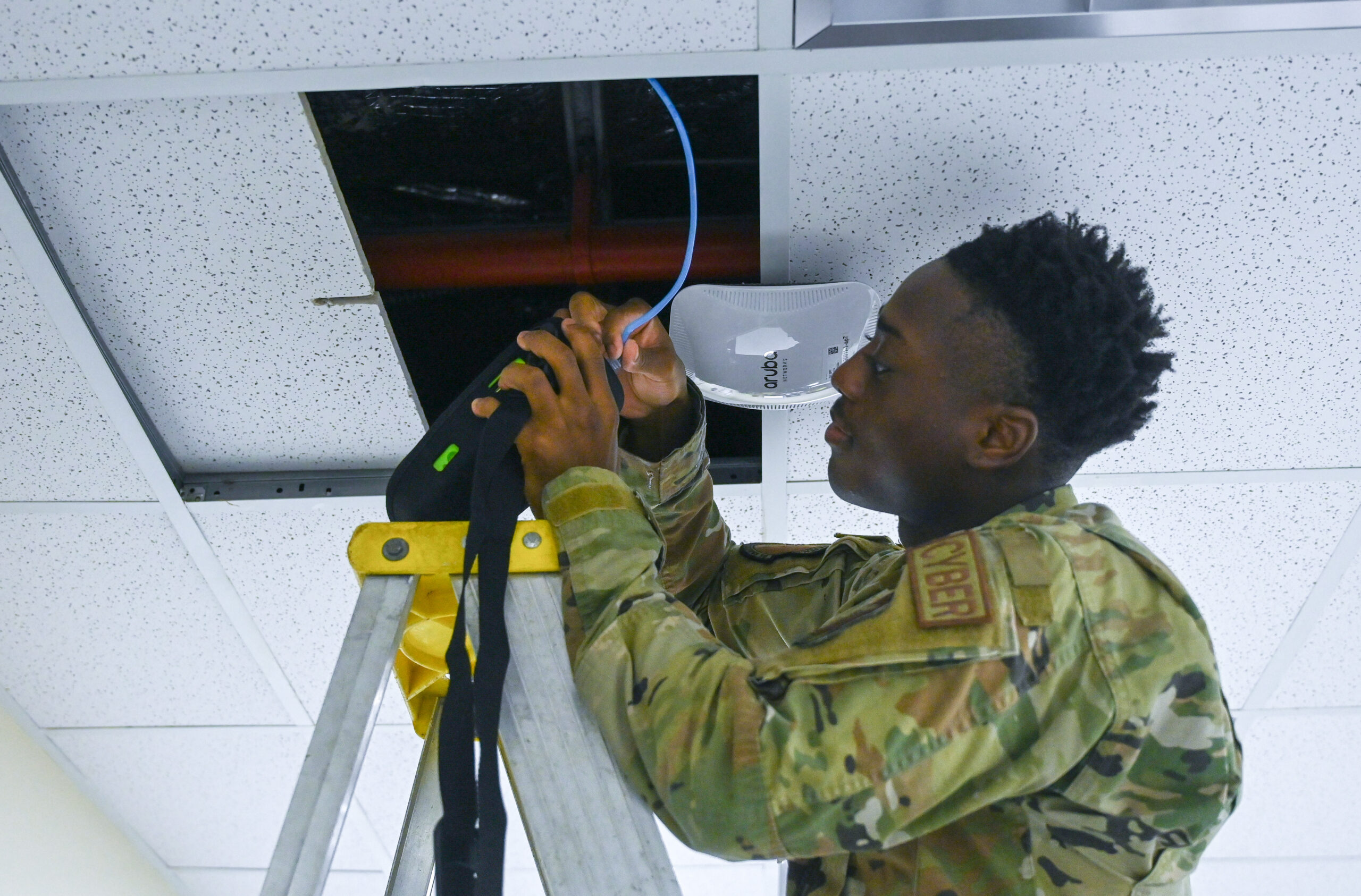
Airmen residing in dormitory housing at 25 U.S. Air Force installations, including one overseas base, now have access to complimentary high-speed Wi-Fi, a significant development in enhancing quality of life for service members. This initiative is being rolled out through a contract between the Army & Air Force Exchange Service (AAFES) and internet provider Boingo Wireless, with plans for further expansion to additional bases.
The agreement leverages Boingo Wireless’s existing telecommunications infrastructure already present at these military installations. The availability of free internet service for Airmen in unaccompanied housing was officially announced by Boingo on October 29, marking a tangible step toward modernizing amenities for service personnel.
This contract with Boingo Wireless was facilitated by AAFES, an agency responsible for providing goods and services to military personnel and their families on U.S. Army and Air Force installations worldwide. The partnership underscores a coordinated effort to address the long-standing need for accessible and affordable internet services within military housing.
Currently, free Wi-Fi connectivity has been activated in dormitories at the following 25 installations, according to an AAFES spokesperson:
- Altus Air Force Base, Okla.
- Beale Air Force Base, Calif.
- Camp Bullis at Joint Base San Antonio, Texas
- Cannon Air Force Base, N.M.
- Columbus Air Force Base, Miss.
- Davis-Monthan Air Force Base, Ariz.
- Dyess Air Force Base, Texas
- Eglin Air Force Base, Fla.
- Ellsworth Air Force Base, S.D.
- Fairchild Air Force Base, Wash.
- Goodfellow Air Force Base, Texas
- Joint Base San Antonio-Lackland, Texas
- Kirtland Air Force Base, N.M.
- Little Rock Air Force Base, Ark.
- Luke Air Force Base, Ariz.
- Maxwell Air Force Base and Gunter Annex, Ala.
- McChord Field at Joint Base Lewis-McChord, Wash.
- McConnell Air Force Base, Kan.
- Misawa Air Base, Japan
- Offutt Air Force Base, Neb.
- Scott Air Force Base, Ill.
- Sheppard Air Force Base, Texas
- United States Air Force Academy, Colo.
- Vance Air Force Base, Okla.
- Vandenberg Space Force Base, Calif.
In addition to the already active sites, Holloman Air Force Base in New Mexico is slated to receive the service in the near future. An AAFES representative indicated that network configuration and service deployment at Holloman are anticipated to be completed within 30 to 45 days following the execution of the necessary memorandum of agreement. While specific future locations were not detailed, Boingo’s announcement confirmed that “additional site deployments [are] systematically underway to expand coverage,” suggesting a broader rollout across more Air Force and potentially Space Force installations.
Air Force Chief Master Sgt. Angela Holden, who serves as AAFES’ senior enlisted advisor, commented on the initiative within Boingo’s announcement. She stated, “Staying connected to family and friends makes a difference in Airmen’s daily lives and helps them stay mission ready. This initiative is one more way the Exchange supports quality of life for Airmen while helping them feel more at home in their dorms.” Her remarks highlight the perceived benefits for Airmen’s morale and overall well-being, directly linking personal connectivity to professional readiness.
This provision of free internet aligns with congressional guidance outlined in the proposed 2025 National Defense Authorization Act (NDAA). The relevant legislative language specifies that “The Secretary of a military department may provide, to a member of the armed forces who resides in military unaccompanied housing (as defined in section 2871 of this title) within the United States, broadband internet access service, at no cost to such member.” This legislative directive provides the framework and authorization for military departments to fund and implement such services, recognizing internet access as a fundamental requirement rather than a luxury for service members.
The Air Force has previously acknowledged the critical role of internet access in modern military life and continuous learning. As early as 2021, Lt. Gen. Marshall B. Webb, then-commander of Air Education and Training Command at Joint Base San Antonio-Randolph, Texas, articulated this evolving perspective. He stated that “It would not be a blanket statement to say the whole Air Force understands that … Wi-Fi is a necessity, as opposed to a convenience.” This sentiment reflects a broader institutional recognition within the Air Force that reliable internet is essential for everything from professional development and mandatory online training to maintaining personal connections and mental well-being for those serving. The new contract moves to fulfill this acknowledged necessity by removing financial barriers for Airmen living in unaccompanied housing.
Why This Matters
The provision of free high-speed Wi-Fi to Airmen in dormitory housing marks a significant step in modernizing military living standards and addressing a long-standing quality-of-life issue. For many years, service members, particularly junior enlisted personnel, have often borne the personal expense of securing reliable internet access in their barracks or dorms. This new initiative eliminates that financial burden, freeing up disposable income for individuals who often operate on modest salaries. This directly impacts their financial well-being and reduces a source of stress.
Beyond financial considerations, readily available internet connectivity is crucial for communication. It enables Airmen to maintain vital connections with family and friends, which is critical for morale, mental health, and reducing feelings of isolation, especially for those stationed far from home or overseas. In an increasingly digital world, access to online resources for personal development, entertainment, and current events also plays a significant role in overall well-being and helps service members feel more connected to civilian life.
From a professional standpoint, constant internet access supports mission readiness and professional development. Modern military training, educational courses, and administrative tasks often require online access. Providing free, high-speed Wi-Fi ensures that Airmen can access these essential resources without impediment, fostering continuous learning and skill enhancement. This aligns with the Air Force’s recognition of Wi-Fi as a “necessity” for education and training, not just a convenience. The initiative also reflects a broader institutional acknowledgment that a well-connected and supported force is a more effective and resilient force.
Furthermore, this program, driven by congressional guidance in the National Defense Authorization Act, sets a precedent for how other military branches might approach similar challenges. It signals a governmental commitment to improving the living conditions and support infrastructure for all service members, potentially leading to similar initiatives for soldiers, sailors, and Marines. Ultimately, by investing in the welfare and connectivity of its personnel, the Air Force aims to enhance retention, improve recruitment appeal, and ensure its members are mentally prepared and professionally equipped for the demands of their service.