
Key Takeaways:
- Strategic Pivot to Autonomy:Tesla is definitively reallocating significant capital and production capacity from the niche, problematic Cybertruck to aggressively scale its high-margin robotaxi and AI initiatives (Cybercab), signaling a profound reorientation towards a software- and service-driven future.
- Cybertruck’s Production End Reflects Market Realities:The decision to cease Cybertruck production at Gigafactory Texas, following years of delays, underwhelming sales figures, and multiple recalls, acknowledges the vehicle’s limited market appeal and the substantial resources it consumed relative to its strategic value for Tesla’s long-term vision.
- High-Stakes Bet on Robotaxis:The rapid expansion of Cybercab production and its planned launch in Dallas underscore Tesla’s accelerated pursuit of the autonomous ride-hailing market, a sector offering immense upside potential but also fraught with significant regulatory, technological, and competitive hurdles that will critically shape Tesla’s future valuation.
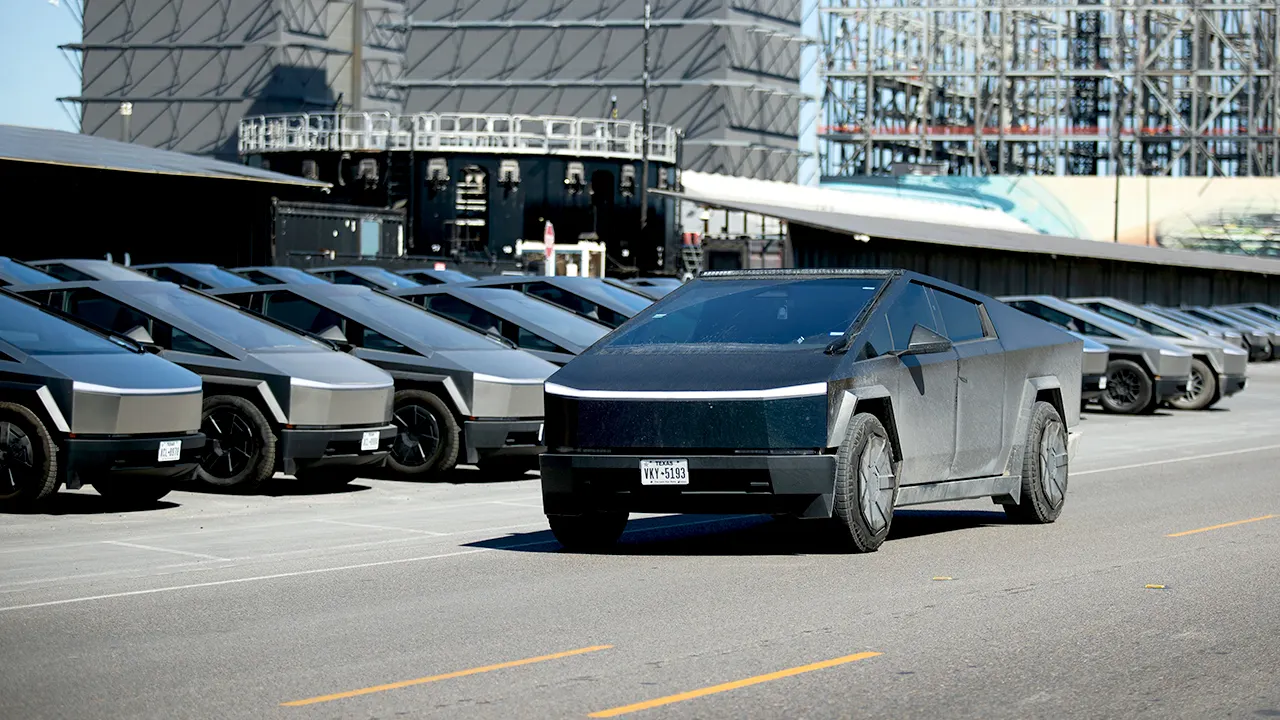
Tesla CEO Elon Musk said vehicle demand is outpacing production as Full Self-Driving gains traction, while the company announced plans to launch Cybercab service in Dallas next month and expand its autonomous transportation network (Credit: Tesla).
Austin, TX –In a significant strategic recalibration that sent ripples through the automotive and tech sectors, Tesla CEO Elon Musk announced late Thursday that the company plans to end production of its polarizing Cybertruck at Gigafactory Texas around the middle of next year. This dramatic shift is explicitly designed to free up crucial manufacturing capacity to ramp up production of its autonomous Cybercab vehicle, signaling Tesla’s accelerated pivot towards a future dominated by AI and robotics, rather than traditional vehicle manufacturing.
Musk’s announcement, made via his X platform, detailed that “Tesla will be winding down production of the Cybertruck at Gigafactory Texas around the middle of next year to make room for increased Cybercab production.” This move represents a marked retreat from what was once one of Musk’s most visible and ambitious “pet projects.” The futuristic Cybertruck, with its distinctive stainless-steel exoskeleton, was initially touted as a revolutionary challenger to established pickup truck giants like Ford’s F-150 and General Motors’ Silverado, and more recently, electric competitors such as the Ford F-150 Lightning and Rivian R1T. Its market entry was delayed by years, impacting Tesla’s ability to capitalize on the early EV truck segment.
The immediate implication for the Cybertruck’s future remains unclear. While it wasn’t specified whether production would relocate to another Tesla facility or be phased out entirely, Gigafactory Texas in Austin is currently the only known Tesla factory equipped for Cybertruck production. This strongly suggests a potential full discontinuation, underscoring the immense capital expenditure and production complexities associated with the Cybertruck, which, despite its novelty, has struggled to achieve mainstream market penetration and profitability relative to Tesla’s other models.
TESLA RAISES CYBERTRUCK PRICES ON 2 US MODELS, AHEAD OF PRODUCTION SHIFT
Musk said that Tesla will end production of the Cybertruck at the company’s Gigafactory Texas in Austin starting mid-2027.(Justin Sullivan/Getty Images)
Despite the strategic pivot, Musk offered a nostalgic nod to the vehicle, stating in response to a user on X that the Cybertruck is the “best vehicle Tesla has ever made” and marking the move as the “end of an era.” This sentiment contrasts sharply with the vehicle’s challenging market performance. Tesla began delivering the Cybertruck in late 2023, after years of delays that tested investor and consumer patience and cost the company significant first-mover advantage. According to Kelley Blue Book, the company sold a mere 20,237 Cybertrucks in the U.S. last year – a significant 48% decline from the 38,965 units sold in 2024. This performance falls dramatically short of Musk’s ambitious prediction of 250,000 annual sales when production commenced in 2023, underscoring the gap between initial hype, substantial R&D investment, and ultimate market reality.
The Cybertruck’s journey has been anything but smooth since its initial unveiling in 2019. That infamous event saw Musk attempt to demonstrate its “shatterproof” windows by having Tesla’s lead designer, Franz von Holzhausen, throw metal balls at them, resulting in two visibly cracked windows – a moment that quickly became a viral symbol of the vehicle’s ambitious yet often faltering development. Since its official debut in 2023, the Cybertruck has also been plagued by quality control issues, leading to 11 recalls issued by the National Highway Traffic Safety Administration (NHTSA). These recalls, some requiring physical repairs and others resolved through over-the-air software updates, further illustrate the manufacturing challenges, the high warranty costs, and the significant resources diverted to a product with limited commercial success, pulling focus and capital away from more scalable initiatives.
ELON MUSK SAYS TESLA-SPACEX MERGER WOULD BE ‘A GOOD IDEA’ AS COMPANIES FORM SPECIAL COMMITTEES
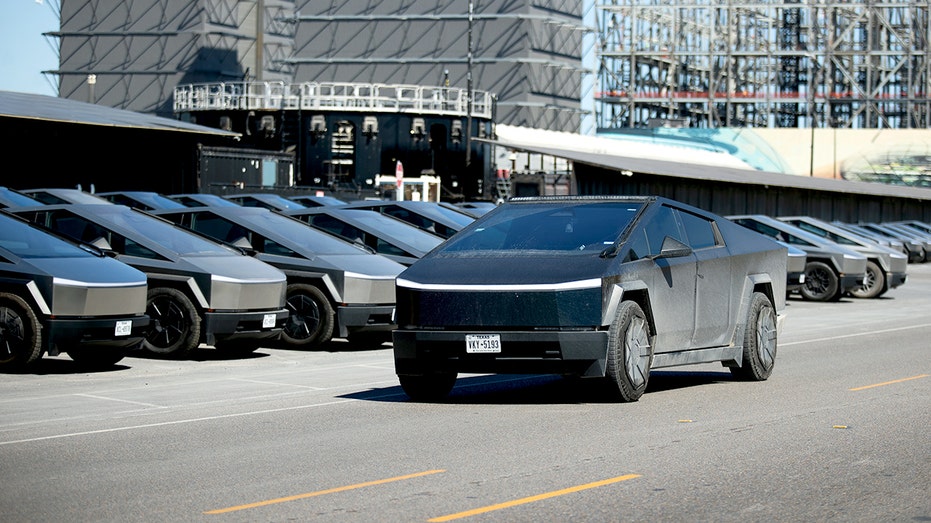
A fleet of Tesla Cybertrucks sits outside the Starbase Build Site at SpaceX’s South Texas testing facility on Feb. 6, 2026.(Reginald Mathalone/NurPhoto via Getty Images)
This strategic decision to deprioritize the Cybertruck aligns with Musk’s broader vision for Tesla as fundamentally an AI and robotics company, rather than solely an electric vehicle manufacturer. The Cybercab, a purpose-built two-seater robotaxi, is central to this evolving narrative. It is envisioned as the core component of a global network of autonomous ride-hailing services, directly competing with established players like Waymo (Alphabet) and Cruise (GM), and challenging the very economics of personal vehicle ownership. This pivot signifies a doubling down on Tesla’s Full Self-Driving (FSD) technology, which, despite years of development, significant capital investment, and regulatory scrutiny, is now being positioned as the primary growth engine for the company’s valuation.
The company’s self-driving technology has indeed been a perennial point of contention and delay, but recent progress has allowed Tesla to begin offering paid rides in a small fleet of Cybercabs in Austin since September. This move signals a critical transition from development to commercial deployment. The market for autonomous ride-hailing is projected to be massive, potentially unlocking entirely new revenue streams with significantly higher margins than traditional vehicle sales. Tesla’s valuation has long incorporated a premium based on the perceived future value of its FSD capabilities and robotaxi network, making this acceleration of Cybercab production a pivotal moment for investor confidence and a test of the market’s long-held faith in Musk’s ambitious projections.
TESLA’S NEW ROADSTER MAKES A FLYING DEBUT, HITTING 60 MPH IN UNDER A SECOND
| Ticker | Security | Last | Change | Change % |
|---|---|---|---|---|
| TSLA | TESLA INC. | 358.22 | +14.53 | +4.23% |
However, the path to widespread robotaxi deployment is far from clear. Tesla continues to face rigorous scrutiny from U.S. auto regulators. The NHTSA opened an audit in September to review whether Tesla has properly self-certified Cybercab to demonstrate compliance with federal motor vehicle safety standards – a critical hurdle for any widespread autonomous deployment. Competitors like Waymo have already accumulated millions of fully autonomous miles in select cities with dedicated safety drivers, highlighting the competitive landscape Tesla is entering, even as its “Full Self-Driving” system still requires human supervision in most scenarios, raising questions about the true “robotaxi” capability compared to rivals.
“Cybertruck was an incredible technology development platform and lives on through Cybercab,” said Cybertruck lead engineer Wes Morrill in a post on X. This statement attempts to frame the Cybertruck not as a commercial failure but as an expensive R&D project whose innovations in materials and manufacturing will be repurposed. Cybercab, though still a relatively small program, is rapidly expanding, having only entered production earlier this year. Tesla has listed an installed capacity of more than 125,000 units for Cybercab, reflecting ambitious scaling plans. Currently, about 570 of the more than 1,200 Tesla robotaxis operating in Texas are Cybercabs, with the remainder predominantly Model Y vehicles, according to the state’s Department of Motor Vehicles, indicating a rapid shift in fleet composition and a significant capital expenditure commitment to this new, unproven business model.
CLICK HERE TO DOWNLOAD THE FOX NEWS APP
Market Impact:
This bold strategic pivot is likely to have multifaceted implications for Tesla’s stock (TSLA) and its competitive landscape. While the discontinuation of the Cybertruck may disappoint a segment of enthusiasts and validate critics who viewed it as a costly distraction, the market is generally expected to view the accelerated focus on Cybercab and autonomous services positively. Investors have long valued Tesla not merely as an automaker, but as a technology innovator on the cusp of revolutionizing transportation through AI. This move reinforces that narrative, potentially boosting investor confidence in Tesla’s long-term, high-margin revenue potential from robotaxis and software subscriptions, rather than relying solely on the capital-intensive business of selling vehicles. The market will be closely watching for signs of rapid Cybercab deployment, regulatory approvals, and the profitability of its autonomous network. Success in this high-stakes venture could unlock significant shareholder value, but any setbacks in technology, safety, or regulatory compliance could severely impact investor sentiment and Tesla’s premium valuation. Furthermore, this intensifies competition in the nascent robotaxi market, putting pressure on rivals to accelerate their own deployments and validate their business models.
Reuters contributed to this report.