
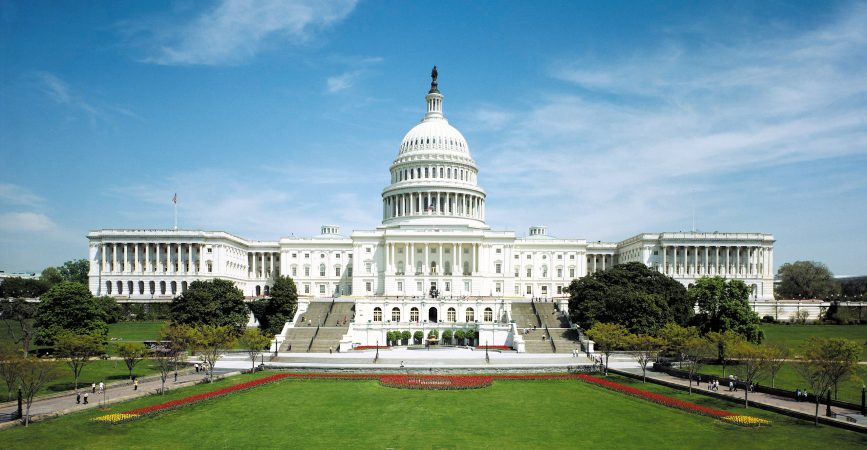
Washington, D.C. – Following significant electoral gains for the Democratic party in last week’s midterm elections, Congress reconvened on November 9 for a six-week “lame-duck” session. While Democrats are poised to command robust majorities in both the House and Senate come January 3, 2027, the current legislative period sees Republicans retaining their narrow majorities until the end of the year. This transitionary phase presents a critical window for lawmakers to address a backlog of unfinished legislative business, notably including long-stalled defense legislation and the annual defense policy bill.
The immediate agenda is dominated by the future of the Pentagon’s substantial Fiscal Year 2027 budget request, which has faced increasing skepticism. Initially proposed at $1.5 trillion, the request was controversially structured into two parts: a $1.15 trillion “base” appropriations bill and an additional $350 billion intended to be funded through a separate reconciliation bill. Reconciliation is a special legislative procedure in the Senate that allows certain budget-related measures to pass with a simple majority, bypassing the usual 60-vote threshold required for most legislation.
Defense analysts have largely concluded that the prospect of passing the $1.5 trillion budget, particularly its reconciliation component, has diminished significantly in the wake of the midterm elections. Byron Callan, a long-time defense analyst at Capital Alpha Partners, had previously assigned only a 10 percent chance of Republicans successfully passing a reconciliation bill. In a November 4 newsletter, Callan explicitly stated that “The magnitude of Democratic gains in the House and Senate from the midterm elections suggests that nothing will get done by Congress for defense legislation” in the remaining weeks of the year.
Travis Sharp, director of defense budget studies at the Center for Strategic and Budgetary Assessments, echoed this sentiment, emphasizing the reduced likelihood of a reconciliation bill. Sharp noted that a previous Republican-led reconciliation package in 2025, which included $150 billion for defense, was facilitated by a concurrent tax cut that fiscal conservatives could support. “This year, there’s no tax cut to trade,” Sharp explained, removing a key incentive for Republican unity on a large defense spending package.
Despite the prevailing pessimism, some Republicans have advocated for a last-ditch effort to push through their defense priorities. Senator Bernie Moreno (R-Ohio) had previously suggested that if Republicans lost their majorities, they might attempt to consolidate as many legislative priorities as possible into a single, comprehensive bill during the lame-duck session, likening it to a “Last Supper” effort. Defense Secretary Pete Hegseth also publicly called on “every patriotic member of Congress” to support a reconciliation bill of “at least $350 billion” in a post-election social media post on November 5.
However, the complex parliamentary procedures involved in reconciliation are time-consuming. The 2025 reconciliation bill, for example, was initiated on April 10 and did not clear Congress until July 3, underscoring the challenge of completing such a measure within the compressed lame-duck calendar. Furthermore, political dynamics could hinder cooperation. Some outgoing lawmakers, particularly those who lost their elections, may choose not to return to Washington for the final weeks, potentially reducing Republican attendance and giving Democrats, who are more likely to be present, increased leverage in negotiations.
Retired Air Force Col. Todd Harmer, now with American Defense International, highlighted this attendance factor, stating, “What happens in the lame duck is really going to be a function of attendance. There are a significant number of members that did not get reelected that are never coming to D.C. again. … So whatever passes in the lame duck is going to require Democrat votes.”
An earlier, scaled-back attempt at a reconciliation package this summer, aimed at covering war costs and replenishing munitions stockpiles, also stalled. While the House passed an initial framework, the Senate declined to take it up, making a larger measure now appear even more remote. This effort was intended to address supplemental funding requests from the White House totaling $67.1 billion for the Pentagon, specifically for costs related to military operations and tensions involving Iran.
Beyond the contentious reconciliation debate, Congress faces other pressing deadlines. The current continuing resolution (CR) that funds the Pentagon and the rest of the government is set to expire on December 11. While a full government shutdown is not widely anticipated, the passage of a comprehensive Fiscal Year 2027 appropriations bill before the end of the year seems unlikely. This means another CR will likely be required to keep government operations funded at least into January.
For Republicans, there remains some incentive to negotiate a deal with Democrats while they still hold a majority, potentially securing a portion of their defense priorities. Conversely, Democrats may prefer to wait until they assume full control in the new year to shape the budget according to their priorities. While some defense-minded Democrats might be willing to cross the aisle to support Pentagon funding, their willingness will likely have limits.
Retired Air Force Col. Anthony “Lazer” Lazarski, a long-time congressional adviser now with Cornerstone Government Affairs, predicted that “The Democrats are going to focus on a smaller and smarter defense budget and they’re going to be looking for parity for defense and nondefense spending, and that’s going to put them at odds with the administration.” This perspective was reinforced by Rep. Adam Smith (D-Wash.), currently the Ranking Member on the House Armed Services Committee, who, in a letter declaring his intent to chair the committee in the new Congress, argued for a defense topline well below the proposed $1.5 trillion. Smith wrote, “We must thoroughly review our national defense strategy and develop a more realistic and sustainable approach that does not require a defense budget in excess of $1 trillion or paid for through draconian cuts to critical domestic programs.”
Historically, lame-duck sessions have seen the passage of full-year defense appropriations. Seamus Daniels of the Center for Strategic and International Studies noted in an October 28 analysis that “during the last three midterm election years (2014, 2018, and 2022), full-year defense appropriations for the relevant fiscal years … were passed prior to the end of the respective calendar year and the adjournment of each respective Congress—despite control of one chamber flipping in each instance.” However, the unprecedented scale and dual-track nature of the Pentagon’s 2027 defense spending plan, particularly the reliance on reconciliation for a significant portion, make the current situation distinct.
NDAA
Alongside budget considerations, the National Defense Authorization Act (NDAA) represents another critical piece of unfinished business. This annual defense policy measure is typically considered “must-pass” legislation, as many defense authorities and programs expire at the end of the calendar year without its enactment. While government funding debates are often highly contentious, the NDAA has historically garnered significant bipartisan support.
A version of the 2027 NDAA cleared the House in July, and informal negotiations between the House and Senate had reportedly commenced prior to the election. However, certain elements within the bill remain contentious. These fault lines include debates over U.S. policy regarding military operations in the Iran region, the Trump administration’s campaign against drug cartels in Latin America, and a controversial proposal to rename the Department of Defense to the Department of War. Other issues likely to arise in any lame-duck negotiations encompass a Pentagon proposal to establish an Autonomous Warfare Command, the scope of Pentagon support for border security and immigration enforcement, the potential deployment of military troops to American cities, and a push from the Trump administration to reduce the U.S. force posture in Europe.
Harmer emphasized the need for compromise on this front: “Especially for the NDAA, any of the poison pills—policy provisions that are partisan—will have to be smoothed out in order to get bipartisan support for the bill.” The success of the NDAA during the lame-duck session will hinge on the willingness of both parties to strip away these contentious, partisan amendments to ensure the passage of essential defense policies.
Why This Matters
The outcomes of the current lame-duck session of Congress hold significant implications for national security, government functionality, and the incoming administration’s agenda. Failure to pass a full defense appropriations bill, particularly the $350 billion reconciliation component, would force the Pentagon to operate under a continuing resolution (CR). A CR typically freezes spending at the previous year’s levels, preventing the start of new programs, delaying procurement of essential equipment, and hindering military readiness. This could undermine efforts to modernize the armed forces, address emerging threats, and maintain U.S. competitive advantage on the global stage, especially in regions of heightened geopolitical tension.
Beyond defense, the inability to pass a full government appropriations bill could lead to uncertainty across all federal agencies. While a full shutdown is unlikely, prolonged reliance on CRs can disrupt long-term planning, reduce efficiency, and impact a wide array of government services from scientific research to infrastructure projects. The debate over defense spending also reflects a broader ideological divide within Congress regarding fiscal priorities, with Democrats advocating for a more balanced approach that also funds domestic programs, contrasting with Republican calls for robust defense investment.
The passage of the National Defense Authorization Act (NDAA) is crucial for the legal framework of the military. Without it, various defense authorities expire, potentially affecting troop pay, benefits, acquisition programs, and the military’s ability to conduct operations. The contentious policy provisions, such as those related to international conflicts, border security, and military structure, reflect deep political divisions that, if unresolved, could stall critical defense policy updates and create instability within the Department of Defense. The legislative maneuvering during this lame-duck period will not only determine the immediate future of U.S. defense and government spending but also set the tone for the political landscape and the legislative challenges facing the newly empowered Democratic Congress in the coming years.