
Federal Workforce Faces Significant Restructuring Amidst Administration Policies; Democrats Seek Oversight Post-Midterms
Since the commencement of his second term, President Donald Trump’s administration has implemented significant changes affecting the federal workforce. These policies have resulted in a reported 17 percent reduction in federal employees and have drawn criticism for allegedly diminishing experienced personnel across various sectors, including medicine, law, and science, while also being accused of politicizing roles traditionally considered non-partisan.
Current and former federal employees, many of whom describe themselves as embattled by these changes, are now looking to the Democratic Party for assistance. Following notable gains in the recent midterm elections, Democrats have acquired new legislative power, particularly in the House of Representatives. However, the path to reversing or mitigating the administration’s policies on the federal workforce is complex, as the Democratic agenda is broad, encompassing issues such as affordability, healthcare, and foreign policy, potentially delaying a focused response to federal employment concerns. Furthermore, the reality of a divided government, with a Democratic-led Congress and a Republican president, suggests inherent limitations on legislative action.
Representative James Walkinshaw, a Democrat from a Northern Virginia district home to a substantial number of federal workers, articulated the long-term perspective of his party and their immediate goals. “We’re playing a long game here while we’re trying to prevent and undo as much damage as possible in the short term,” Walkinshaw stated. He expressed an expectation that the Trump administration would continue its approach to the federal workforce. Earlier this year, Walkinshaw played a role in establishing the Congressional Federal Workforce Caucus, signaling a concerted effort to address these issues. Regarding the newly acquired Democratic majority, he noted, “But now we have some constitutional and legal authority to push back.”
The federal workforce has experienced substantial turnover in recent years. Data indicates that over 389,000 employees departed government service last year, a figure attributed to a combination of terminations and individuals feeling pressured to leave their positions. Departments such as Agriculture, Health and Human Services, Interior, and Treasury reportedly experienced some of the most significant reductions in personnel.
The White House has consistently defended these staffing reductions, asserting that they contribute to a leaner and more efficient government. This rationale is, however, disputed by many former and current federal workers. These individuals point to what they describe as widespread operational challenges, including vacancies and delays in fundamental government functions, such as the processing and distribution of grants.
The incoming Congress faces a comprehensive list of requests from federal employees and their advocates. These include calls to reconstitute the U.S. Agency for International Development (USAID) and enhance its capacity for humanitarian and foreign assistance. Workers also seek the restoration of collective bargaining rights, which they argue have been curtailed. Additionally, there is a desire to improve the public perception and reputation of the federal workforce, which many feel has been negatively characterized by the current administration as being composed of “do-nothing bureaucrats.”
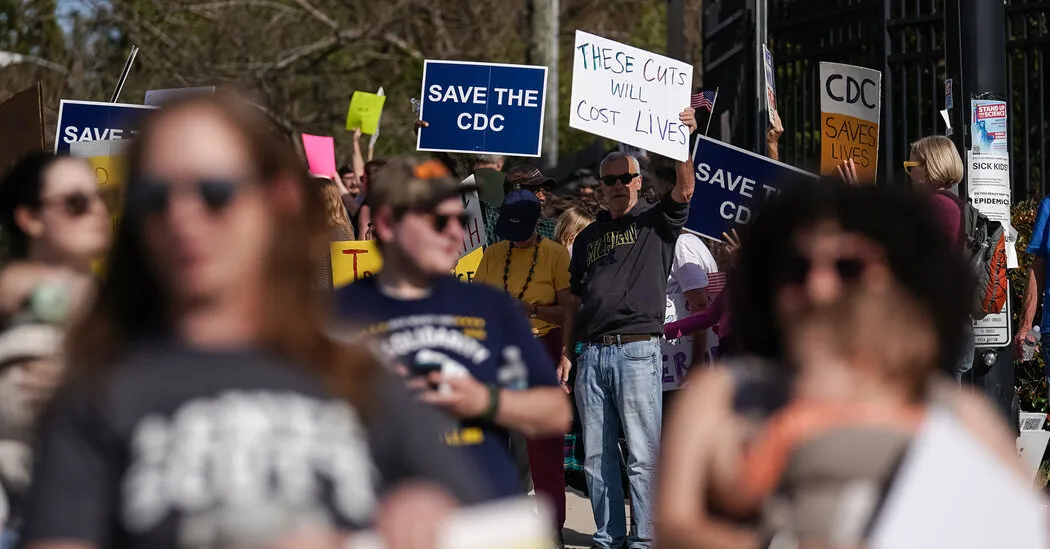
A significant demand from some current and former federal workers is accountability. They are advocating for congressional hearings that would compel Trump administration officials to provide explanations for decisions such as the rescinding of congressionally allocated funds, the implementation of widespread layoffs, and the cancellation of contracts and grants. Aryn Melton Backus, a co-founder of the National Public Health Coalition—a non-profit organization comprised of former Centers for Disease Control and Prevention (CDC) employees who were reportedly fired or laid off—emphasized the potential for increased oversight. Speaking in her personal capacity while still on paid administrative leave, Ms. Melton Backus commented, “A lot of this will take a long time.” She added that a Democratic majority in Congress offers greater hope for whistleblowers, as lawmakers can now hold hearings and summon witnesses. Reflecting on the previous period, she noted, “Part of the attitude over the past year and a half is people have been like, ‘Well, if I do blow the whistle, nothing’s going to happen. So then, I’m risking my career for, you know, something potentially not happening.’”
Across the community of federal workers, there is a prevailing sense of guarded optimism regarding the new congressional landscape. Everett Kelley, the national president of the American Federation of Government Employees (AFGE), the largest labor union representing federal workers, articulated this sentiment. “They feel like there is a real hope, you know, because these last 20 months have been very devastating for them,” Kelley said. He added that employees feel positive “just the mere fact that they feel like somebody that is going to at least stand up to the corruption, stand up to the bullying, and, you know, the dismantling of the government.”
Agan Smalley, president of Local 777 of the International Federation of Professional and Technical Engineers and a geologist with the Army Corps of Engineers, expressed anticipation for her union’s annual legislative conference in Washington. After two years of limited engagement with many Republican lawmakers, she looks forward to the February conference, which provides opportunities for workers to directly engage with lawmakers and their staff on policy matters and workers’ rights. “Some of the way things are supposed to be done will be happening again,” Smalley commented.
Sarah Kobrin, an employee at the National Institutes of Health (NIH), welcomed the midterm election results but cautioned that the extensive cuts to medical research and grant funding were so profound that recovery would require more than just renewed federal investment. Speaking in her personal capacity and not on behalf of the agency, she stated, “It was a big battle to win. But it is far from winning the war.” Kobrin identified a key objective in “winning the war” as limiting the authority granted to Russell T. Vought, the director of the Office of Management and Budget, whom she described as the “architect of the most consequential measures to dismantle the federal government.”
The scope of necessary repairs to government operations is also evident to Zach Dembo, a newly elected Democratic representative who successfully flipped a House district in Kentucky, previously held by a Republican since 2013. Dembo, a Navy veteran and former federal prosecutor who left his job in 2025, is among several incoming lawmakers with prior experience in federal service.
Dembo indicated that he perceives the administration’s efforts to politicize government functions as part of the broader issue of corruption that resonated with voters during his campaign. “We’re all committed to a federal government that operates free of politicization,” Mr. Dembo affirmed. He further suggested, “I think a lot of us never would have ran. We wanted to stay being feds if it weren’t for all the nonsense going on.”
Why This Matters
The stability, expertise, and non-partisan nature of the federal workforce are critical to the effective functioning of government and the delivery of essential public services. A significant reduction in personnel, particularly in specialized fields such as medicine, law, science, and international development, can lead to a substantial loss of institutional knowledge and technical capacity. This can impede the government’s ability to develop, implement, and oversee policies effectively, ranging from public health initiatives and environmental protection to economic regulations and national security. Delays in grant processing, for instance, can hinder scientific research, community development, and humanitarian aid efforts, affecting citizens and global partners alike.
Furthermore, allegations of politicizing non-partisan roles can erode public trust in government institutions. When expert advice or regulatory decisions are perceived as influenced by political agendas rather than objective analysis, it undermines the credibility of federal agencies and the integrity of public service. The role of Congress in overseeing the executive branch’s management of the federal workforce is a vital component of the system of checks and balances, ensuring accountability for personnel decisions, budget allocations, and the overall efficiency and impartiality of government operations. The concerns raised by federal employees and their advocates highlight the broader implications for governance, democratic accountability, and the long-term capacity of the United States government to serve its citizens and uphold its international commitments.
The debate over the federal workforce’s size and composition also has economic consequences, impacting regions with high concentrations of federal employees and the broader ecosystem of government contractors. The ongoing efforts by current and former federal workers, supported by newly empowered congressional Democrats, underscore a significant tension between different visions for the role and structure of government in the United States, with potential lasting effects on public policy and administrative governance.