
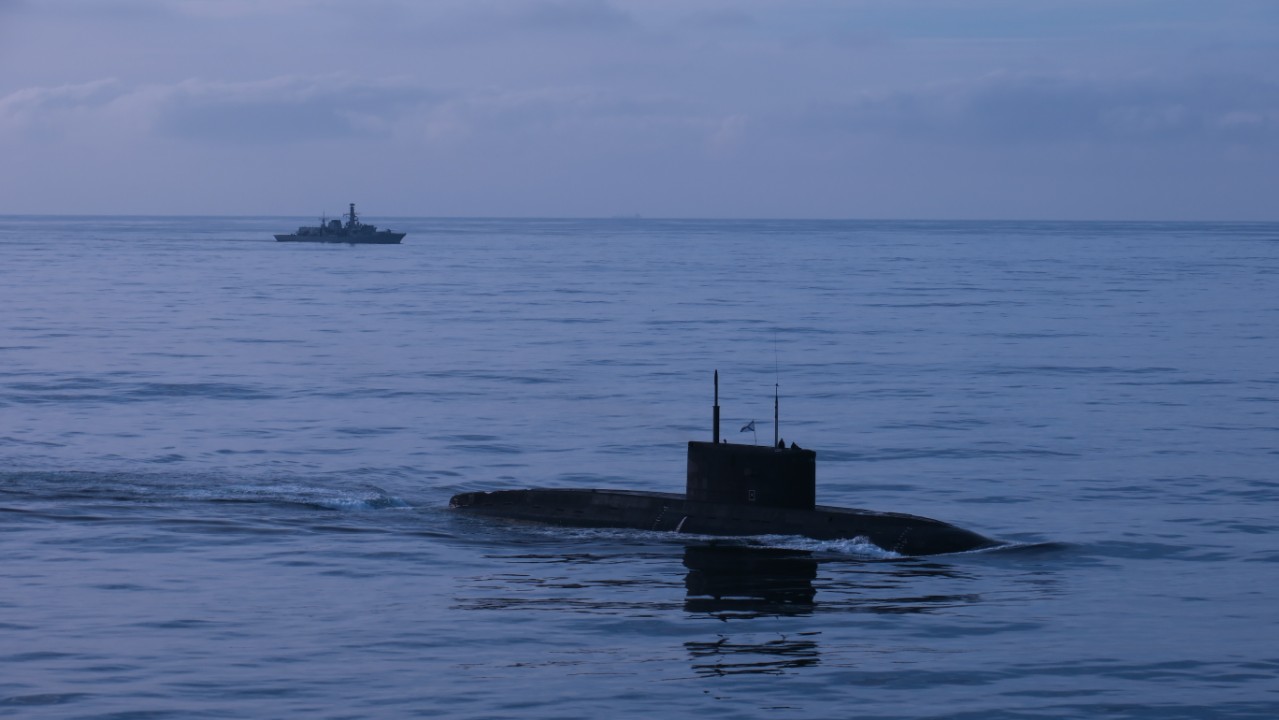
Strategic Significance of Arctic Submarine Activity Highlighted by Outgoing Dutch PM Rutte
Oslo, Norway – Mark Rutte, the outgoing Prime Minister of the Netherlands and a leading candidate to become the next Secretary General of NATO, delivered remarks aboard HMS Prince of Wales in Oslo, drawing significant attention to the strategic threat posed by Russian submarines in the High North. Speaking at the Atlantic Future Forum, Rutte recounted a candid discussion where Norwegian Prime Minister Jonas Gahr Støre underscored to the American President that the primary target of these Russian naval assets is the United States, not Norway itself.
Rutte emphasized the critical role of the North Atlantic as a strategic artery for the transatlantic alliance. He described it as the “bridge between the alliance’s two continents and a vital reinforcement route,” essential for the movement of troops, equipment, and supplies. This maritime corridor is particularly crucial for enabling rapid response and robust deterrence capabilities for NATO’s Eastern Flank, linking North American and European defense infrastructure. Historically, control over the North Atlantic, particularly choke points like the GIUK (Greenland, Iceland, United Kingdom) Gap, has been paramount for transatlantic security, a lesson reinforced during the Cold War. Maintaining open and secure sea lines of communication (SLOCs) across this vast ocean is fundamental to NATO’s ability to project power and ensure mutual defense.
During his address, Rutte underscored the strategic implications of Russian nuclear submarines operating from the Kola Peninsula, home to Russia’s Northern Fleet. He stated unequivocally that the intended target of these advanced submarines, upon leaving their bases, would be the east coast of the United States, rather than Russia’s immediate Nordic neighbours. This assessment highlights a fundamental aspect of Russia’s strategic nuclear posture, emphasizing its capability to project power across vast oceanic distances and threaten the continental United States. The potential for these submarines to carry both conventional and nuclear payloads makes their presence a significant concern for alliance planners. Rutte praised the concerted efforts of allied nations to monitor and contain these vessels, ensuring they “never break out into the North Atlantic,” thereby preventing a direct strategic threat to North America.
Recalling a particularly impactful moment, Rutte addressed current NATO Secretary General Jens Stoltenberg, a former Prime Minister of Norway himself, who was present at the forum. Rutte described it as “one of the most stunning moments” when Prime Minister Støre articulated this nuanced threat directly to the American president. Støre’s direct words, as quoted by Rutte, were: “They are there to attack the United States, and we prevent them from doing so.” This statement from a frontline NATO ally underscores the shared understanding within the alliance regarding the nature and intent of Russia’s northern fleet, and Norway’s integral role in collective defense against such threats. It also serves to align the strategic perspectives of all allies, particularly highlighting how regional security directly contributes to broader transatlantic security.
Rutte further detailed a significant increase in Russia’s military activities across the Arctic and High North regions. This surge includes the reopening and modernization of Soviet-era deep-water ports and military bases, alongside the testing of new, advanced weapon systems, such as hypersonic missiles, long-range torpedoes, and unmanned underwater vehicles (UUVs) designed for operation in extreme conditions. Simultaneously, Rutte noted, China is increasingly asserting its presence in the region, driven by a quest for access to energy resources, critical raw materials, and new, shorter sea lanes opened up by melting Arctic ice, often referred to as the “Polar Silk Road.” China’s interest extends to scientific research and infrastructure investments, which could have dual-use military implications, adding layers of complexity to the Arctic’s geopolitical landscape.
In response to these evolving threats, NATO has significantly strengthened its posture in the High North. Rutte highlighted that seven of the eight Arctic states are now members of the NATO alliance, a significant geopolitical shift following the accession of Finland and Sweden. This expanded membership provides NATO with enhanced geographical reach, intelligence-sharing capabilities, and operational synchronization across the Arctic. The launch of “Arctic Sentry” earlier this year represents a concerted effort to boost NATO’s presence and operational readiness in the region, bringing “more exercises, more assets, and more eyes on the North every day.” These initiatives include advanced anti-submarine warfare (ASW) training, cold-weather operations, enhanced aerial and maritime surveillance, and the deployment of specialized units capable of operating in challenging Arctic environments.
Rutte also commended the alliance’s collaborative spirit, specifically welcoming a British general taking command of NATO’s Joint Force Command in Norfolk, Virginia. This command is pivotal for securing the crucial sea lines of communication (SLOCs) across the Atlantic, ensuring the free flow of commerce and military reinforcements between North America and Europe. Furthermore, he praised the carrier strike group led by HMS Prince of Wales, calling it “a group of European allies working together, providing a key capability and securing a vital area in NATO.” The presence of such a high-value asset, accompanied by allied frigates and support vessels, in the High North demonstrates NATO’s commitment to projecting power, maintaining deterrence, and conducting complex multi-domain operations in this strategically critical area, showcasing interoperability and collective strength.
Echoing Rutte’s sentiments at the same forum, Norway’s Minister of Foreign Affairs, Espen Barth Eide, reinforced his country’s long-standing argument to Washington. Eide stated that Norway has consistently contended that defending the waters off northern Norway is not merely a regional concern but constitutes “homeland defence for America too.” This perspective underscores the interconnectedness of transatlantic security, where the geographic proximity of Russian strategic assets to Norway’s coast directly impacts the security calculus of the entire alliance, particularly the United States. Norway’s advanced surveillance capabilities and strategic location are therefore seen as a crucial first line of defense, serving the broader interests of NATO’s collective security.
Why This Matters
The remarks by outgoing Dutch Prime Minister Mark Rutte and Norwegian officials highlight a critical, evolving dynamic in global security: the increasing strategic importance of the Arctic and High North. This region, once considered a relatively dormant theater, is now a focal point of great power competition, particularly between NATO and Russia, with China also emerging as a significant player. Understanding the intent and capabilities of Russian strategic forces in this area is paramount for transatlantic security and has profound implications for global stability.
Firstly, the explicit statement that Russian submarines in the Arctic target the United States, rather than immediate neighbours, reconfirms the enduring nature of strategic deterrence between Russia and the US. It underscores that while NATO’s Eastern Flank demands attention, the northern approaches remain a critical vector for potential strategic attacks, primarily targeting American homeland security. This necessitates continuous and sophisticated anti-submarine warfare (ASW) capabilities and extensive intelligence, surveillance, and reconnaissance (ISR) efforts from NATO allies, especially those with Arctic coastlines like Norway, to ensure early detection and response.
Secondly, the integration of Finland and Sweden into NATO fundamentally alters the geopolitical landscape of the Arctic. With seven of the eight Arctic states now allied, NATO gains unprecedented strategic depth and cooperative potential in the region. This enhances the alliance’s ability to monitor, deter, and, if necessary, defend against aggressive actions. It also signifies a unified front against growing Russian military activity and China’s expanding economic and strategic interests in the region, which include potential control over new shipping routes and access to valuable resources, potentially intensifying competition.
Thirdly, the emphasis on the North Atlantic as a “vital reinforcement route” reaffirms NATO’s foundational principle of collective defense. The ability to rapidly move troops and materiel across the Atlantic is non-negotiable for supporting allies in Europe, particularly in a crisis scenario involving potential aggression on the continent. Threats to these sea lines of communication, whether from submarines, surface vessels, or air assets, pose an existential risk to the alliance’s operational coherence and deterrence posture. The command structure at Joint Force Command Norfolk and the deployment of carrier strike groups like HMS Prince of Wales are tangible demonstrations of NATO’s commitment to securing these vital arteries.
Finally, the Norwegian perspective that defending its northern waters is “homeland defence for America too” encapsulates the interdependent nature of modern security. It illustrates that geographical distance no longer equates to strategic insulation; the security of one ally is intrinsically linked to the security of all. The forward defense of allies in strategically critical areas directly contributes to the security of all member states, reinforcing the imperative for robust burden-sharing and seamless operational integration across the alliance. The Arctic, therefore, is not merely a distant frontier but an integral component of global security architecture, whose developments have far-reaching implications for international stability and the future of great power relations.