
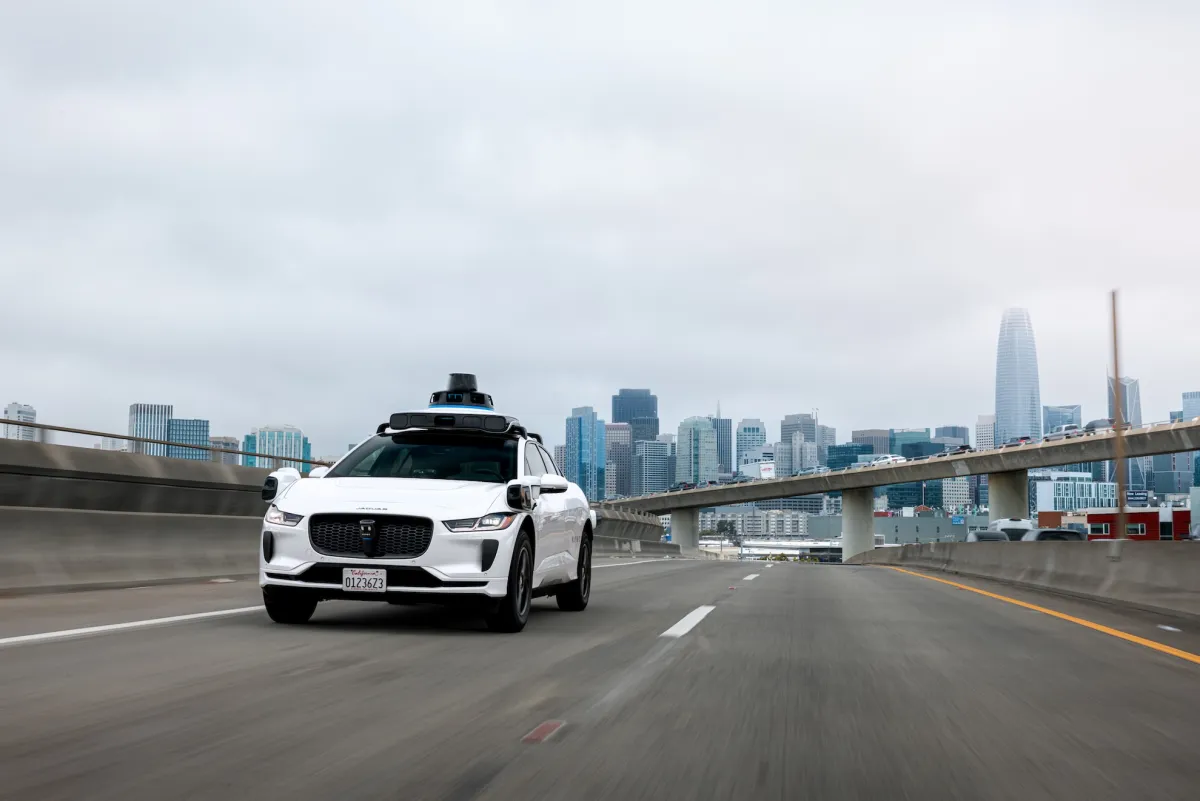
Waymo robotaxis are no longer allowed to operate on California freeways after the state’s Department of Motor Vehicles restricted the Alphabet-owned company’s operations following several incidents that raised safety concerns.
Key Takeaways
- California Freeway Ban:The California DMV has prohibited Waymo from operating its driverless vehicles on state freeways, citing “imminent hazard to public safety” due to recurring incursions into active construction zones.
- Global Operational Pause:In response, Waymo has voluntarily halted all freeway operations across its commercial markets, including those outside California, to re-evaluate its performance and address the identified safety deficiencies.
- Critical Business Impact:The restriction significantly curtails Waymo’s expansion strategy, as freeway access is crucial for efficient inter-city travel, airport connections, and reducing commute times in major metropolitan areas like the San Francisco Bay Area.
Waymo’s Freeway Ambitions Hit a Major Roadblock as California Regulators Step In
In a significant blow to the autonomous vehicle industry and Waymo’s commercial expansion plans, the California Department of Motor Vehicles (DMV) has issued a severe operational restriction, effectively barring the Alphabet-owned company’s robotaxis from accessing the state’s freeways. The decision, which came to light on Tuesday following an initial report by the San Francisco Business Times, underscores persistent safety concerns that regulators deem an “imminent hazard to public safety.” This move forces Waymo to re-evaluate a core component of its strategy, impacting not just its California operations but also prompting a global suspension of its freeway services.
The Regulatory Hammer Falls: DMV Cites “Imminent Hazard”
The California DMV, the state body tasked with overseeing the testing and deployment of autonomous vehicles, took decisive action on November 11, imposing restrictions that were subsequently confirmed to TechCrunch. The department’s stringent measures stem from a series of concerning incidents involving Waymo’s autonomous vehicles. Specifically, the DMV highlighted three separate occasions where Waymo robotaxis entered active construction closures on U.S. Route 101 near Burlingame. A separate incident involving California Highway Patrol vehicles on Highway 280 in San Francisco further contributed to the regulatory body’s decision.
According to an emailed statement from the DMV, these “recurring incursions” into construction zones, where workers, vehicles, and equipment are present, presented an unacceptable risk. Crucially, the DMV noted that these incidents occurred despite a prior restriction and corrective actions implemented following similar issues as recently as May 18, 2026. This history of repeated incidents, even after Waymo’s attempts at mitigation, appears to have exhausted the regulator’s patience. The DMV’s language was stark: “The Department determined that Waymo’s driverless freeway operations pose an imminent hazard to public safety.” These restrictions will remain in force until Waymo can demonstrably prove that it has implemented “effective corrective actions” to address these systemic deficiencies.
Waymo’s Response: A Global Pause and Commitment to Safety
In the wake of the DMV’s order, Waymo has swiftly complied with the restrictions. Beyond California, the company has taken the proactive step of temporarily restricting all freeway operations across its other commercial markets, which span 15 U.S. cities. This voluntary global pause is a testament to the gravity of the situation and Waymo’s stated “safety-first principles.” Dana Gallagher, a spokesperson for Waymo, reiterated the company’s commitment to safety, stating, “Safety is at the foundation of everything we do.”
While freeway operations are on hold, Waymo assured the public that its ride-hailing service continues to operate safely on surface streets, reportedly completing over half a million trips each week. The company emphasized its dedication to working “diligently and responsibly” with the California DMV and other state officials to resolve the issues and ultimately resume freeway operations. This dual approach – immediate compliance and a proactive global review – highlights Waymo’s understanding of the intense scrutiny the autonomous vehicle industry faces, particularly after high-profile incidents involving other AV operators.
The Freeway Frontier: A Critical Battleground for Expansion
The restriction on freeway access represents a significant setback for Waymo’s commercial strategy, which has increasingly centered on seamless connectivity across vast urban and suburban landscapes. Waymo only began offering freeway rides in late 2025, a milestone that was celebrated as crucial for its expansion in major metropolitan areas. The ability to utilize freeways is not merely a convenience; it’s a fundamental enabler for autonomous ride-hailing services to achieve widespread adoption and efficiency.
Freeway access allows Waymo’s robotaxis to connect riders to vital destinations like airports, business districts, and distant suburbs far more efficiently than navigating congested surface streets. This capability dramatically reduces travel times, making the service more competitive and appealing to a broader customer base. In the San Francisco Bay Area, for instance, Waymo’s service area extends from the city south into Silicon Valley. Freeway access had been instrumental in slashing travel times across the Peninsula, transforming journeys that previously took 45 minutes or even over an hour into significantly shorter trips. Without this crucial capability, Waymo’s value proposition for longer-distance journeys is considerably diminished, potentially hindering its ability to attract and retain customers in sprawling urban environments.
A Pattern of Obstacles: Waymo’s History of Freeway Troubles
This isn’t the first time Waymo has faced challenges on the freeway. The current restrictions come after a tumultuous period earlier in the year regarding its freeway operations. In May, Waymo abruptly ceased highway operations without citing a specific reason. However, at the time, social media platforms were rife with videos and posts showing Waymo robotaxis encountering difficulties, including driving through traffic cones and struggling to navigate complex construction zones. These public incidents underscored the technical hurdles faced by even the most advanced autonomous systems when confronted with unpredictable and dynamic environments like highway construction.
Following a period of review and technical adjustments, Waymo announced its return to freeways in July. The company stated that it had updated its self-driving software system specifically to improve performance around freeway construction zones. The DMV’s latest order, however, indicates that these previous corrective actions proved insufficient to prevent recurring safety incidents. This repeated failure to adequately address construction zone navigation points to a deeper, more complex challenge that Waymo’s AI systems continue to grapple with, despite significant investments in software development and testing.
Safety vs. Progress: The Ongoing Autonomous Vehicle Debate
The Waymo incident in California is a potent reminder of the delicate balance between technological innovation and public safety in the burgeoning autonomous vehicle industry. While companies like Waymo push the boundaries of AI and robotics to create safer and more efficient transportation, regulatory bodies are under increasing pressure to ensure these technologies are mature and reliable before widespread deployment. The complexity of real-world scenarios, particularly dynamic environments like construction zones or interactions with emergency vehicles, continues to pose significant “edge case” challenges that even advanced AI struggles to perfectly interpret and navigate.
Public trust is paramount for the success of autonomous vehicles, and every safety incident, regardless of severity, can erode that trust. This incident will likely intensify scrutiny on all autonomous vehicle operators and could influence how other states approach the regulation of driverless technology. The industry’s ability to demonstrate consistent, unimpeachable safety performance is crucial for its long-term viability and for gaining broader acceptance from both regulators and the public.
Looking Ahead: Waymo’s Path to Reinstatement
The road back to freeway operations for Waymo will undoubtedly be rigorous. The DMV has made it clear that reinstatement hinges on the demonstration of “effective corrective actions.” This will likely involve substantial software updates, extensive re-testing, and potentially new operational protocols. Waymo will need to provide compelling evidence that its vehicles can reliably identify, understand, and safely navigate complex and dynamic environments such as construction zones without human intervention. The company may also face demands for increased transparency regarding its incident reporting and its safety validation processes. The timeline for these developments remains uncertain, but the immediate impact is a significant pause on Waymo’s strategic growth, forcing a recalibration of its approach to one of the most challenging aspects of autonomous driving.
Bottom Line
The California DMV’s decision to restrict Waymo’s freeway operations marks a pivotal moment for the autonomous vehicle industry. It underscores the immense technical hurdles that remain in achieving truly reliable self-driving technology in complex environments, particularly construction zones. For Waymo, it’s a significant setback to its expansion strategy and a stark reminder that regulatory approval and public trust are earned through consistent, demonstrable safety. The path forward demands not just technological advancement, but also a renewed commitment to rigorous testing, transparency, and collaboration with regulators to ensure that the promise of autonomous vehicles doesn’t come at the expense of public safety.
When you purchase through links in our articles, we may earn a small commission. This doesn’t affect our editorial independence.
{content}
Source:{feed_title}