
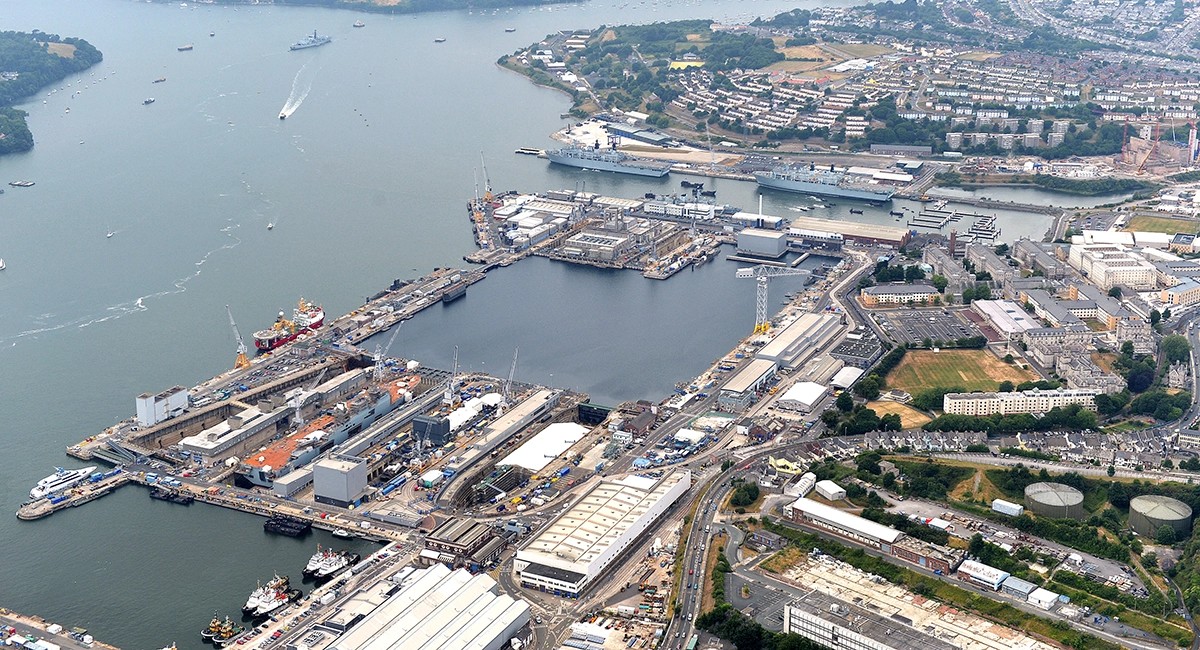
Update on Devonport 10 Dock Upgrade: Delays Projected Despite Construction Progress
Plymouth, UK – The crucial upgrade of 10 Dock at Devonport Naval Base, a facility indispensable for the maintenance of the Royal Navy’s nuclear-powered submarines, has formally entered its construction phase. However, recent reviews by both the Ministry of Defence (MOD) and the National Infrastructure and Service Transformation Authority (NISTA) have identified significant challenges, indicating that the original target completion date of 2027 is now unlikely to be met.
The revelation came in response to a parliamentary inquiry by Ben Obese-Jecty, the Conservative Member of Parliament for Huntingdon, who sought clarity on whether the upgrade would adhere to its initial schedule. Luke Pollard, the Minister for Defence Readiness and Industry, confirmed the projected delays in his written reply.
Context of the Delays
Minister Pollard’s statement acknowledged that “This Government inherited a number of programmes that were late and delayed,” a point he has frequently raised in parliamentary discussions. He elaborated that the assurance processes conducted by the MOD, in collaboration with NISTA – a body tasked with overseeing the delivery of major government infrastructure projects – have “highlighted issues with the original delivery date in 2027.” This indicates a systemic recognition of the difficulties in adhering to the initial timeline for this critical infrastructure project.
Despite these revised projections for the overall timeline, Pollard noted that tangible progress has been made on the ground. He confirmed that “positive progress has been made where 10 Dock has recently moved into the construction phase with the commencement of the dockside buttresses.” This marks a significant milestone, moving the project beyond planning and preparatory stages into active physical construction, which is a necessary step towards its eventual completion.
Broader Programme Challenges
However, the Minister’s response also underscored that challenges extend beyond just the 10 Dock upgrade itself. He stated, “challenges remain with the delivery of the Submarine Waterfront Infrastructure Future (SWIF) programme.” The SWIF programme is a broader initiative encompassing multiple infrastructure projects at Devonport designed to enhance the naval base’s capability to support and maintain the Royal Navy’s submarine fleet. Issues within this wider programme could have ripple effects, potentially impacting the efficiency and timelines of individual components like the 10 Dock upgrade.
The Ministry of Defence is actively working to mitigate these delays. Pollard explained that the MOD is “working closely with NISTA and the contractor to recover the programme.” This collaborative effort aims to identify areas for improvement, streamline processes, and potentially re-sequence work to regain lost time. Furthermore, the MOD is “currently reviewing opportunities to accelerate this work following the Nuclear Regulatory Review.” This suggests that insights or requirements arising from an independent nuclear safety assessment might offer new avenues for accelerating certain aspects of the project, while naturally ensuring all stringent safety standards are met for nuclear infrastructure.
Impact on Royal Navy Submarine Availability
The timely completion of upgrades like that at 10 Dock is paramount for the operational readiness of the Royal Navy. A long-standing issue for the fleet has been the “shortage of dry docks able to take nuclear submarines,” which has been cited as a “major cause of the low availability of the Royal Navy’s attack submarines.” This scarcity has led to submarines experiencing significant waiting periods, or “queuing for maintenance,” which directly impacts their ability to be deployed and fulfil operational duties.
The UK Defence Journal, among other defence publications, has previously reported on the ongoing efforts and strategic pathways intended to resolve these persistent submarine maintenance capacity issues. These reports have highlighted the critical need for investment in infrastructure like 10 Dock to ensure the Royal Navy can maintain a sufficient number of its potent submarine fleet at sea. Delays in such fundamental infrastructure projects therefore have direct implications for the strategic capabilities and operational tempo of the UK’s naval forces.
The Devonport Naval Base is one of the largest naval bases in Western Europe and is the sole facility for refitting and refuelling nuclear-powered submarines in the UK. The upgrade of 10 Dock is specifically designed to modernise and enhance its capacity to handle the Royal Navy’s current and future generations of submarines, making its timely completion crucial for the nation’s defence posture.
Why This Matters
The delay in the upgrade of Devonport’s 10 Dock carries significant implications for the United Kingdom’s national security, defence capabilities, and public spending. Here’s why this development is critical:
- National Security and Operational Readiness:Royal Navy nuclear-powered submarines, particularly the attack submarines (SSNs), are a cornerstone of the UK’s defence strategy, providing intelligence gathering, anti-submarine warfare capabilities, and strategic deterrence. Delays in essential maintenance infrastructure directly translate to reduced submarine availability, meaning fewer boats are ready for deployment. This can diminish the UK’s ability to respond to threats, conduct vital patrols, and project power globally, potentially impacting national security at a fundamental level.
- Defence Spending and Accountability:The upgrade of 10 Dock represents a substantial investment of taxpayer money. Project delays often lead to cost overruns due to extended contractor engagements, inflation, and unforeseen complications. This raises questions about project management efficiency, financial oversight, and accountability within the Ministry of Defence and its contracting partners. Ensuring value for money and timely delivery of critical defence projects is essential for public confidence.
- Strategic Capability and International Commitments:A fully operational and available submarine fleet is crucial for the UK to fulfil its commitments to NATO and other international alliances. Reduced availability due to maintenance backlogs could strain resources, impact joint operations, and potentially undermine the UK’s standing as a reliable defence partner. The capacity to maintain these complex vessels is integral to the UK’s long-term strategic defence planning.
- Industrial and Economic Impact:Major defence infrastructure projects like 10 Dock support a significant industrial base and skilled workforce. Delays can create uncertainty for contractors, their supply chains, and employees. Efficient project execution ensures continued employment, fosters innovation in specialized engineering, and strengthens the UK’s defence industrial base.
- Nuclear Safety and Regulatory Oversight:The involvement of the Nuclear Regulatory Review underscores the paramount importance of safety standards when dealing with nuclear-powered vessels and facilities. While necessary, regulatory processes can add complexity and time to projects. However, any acceleration efforts must rigorously maintain and demonstrate adherence to the highest safety protocols, ensuring public and environmental safety.
In essence, the ongoing challenges at 10 Dock highlight the complex interplay between strategic defence needs, industrial capacity, project management, and fiscal responsibility, all of which are vital for maintaining the UK’s position as a significant global naval power.