
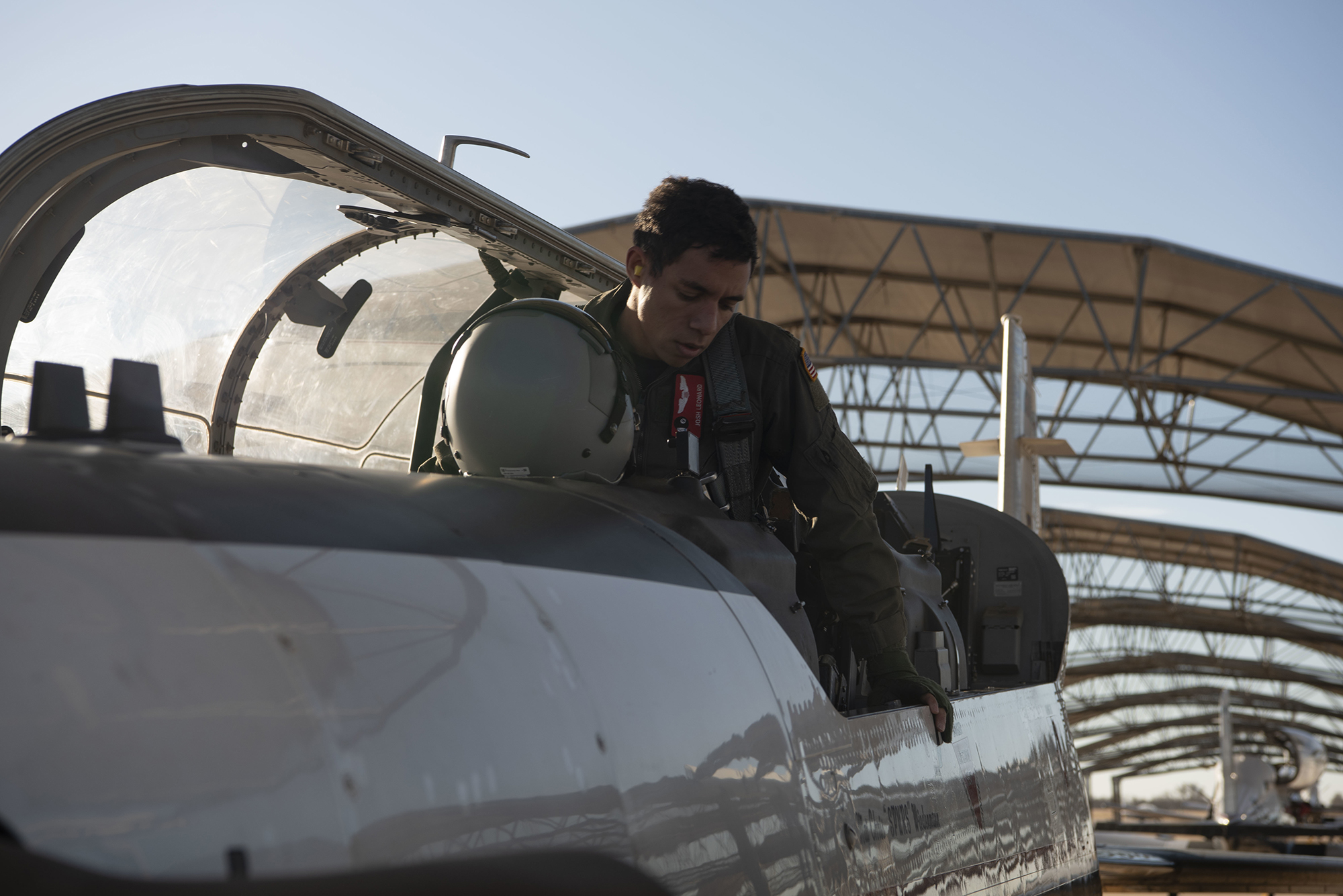
The U.S. Air Force successfully graduated 1,518 new pilots in fiscal year 2026, marking its highest annual pilot production in 35 years. This achievement, confirmed by Lieutenant General Clark J. Quinn, head of Air Education and Training Command (AETC), is largely attributed to the implementation of a new hybrid training model that integrates private sector and military instruction.
AETC had previously announced in September that it was on track to meet its goal of 1,500 pilots by the end of the fiscal year, which concluded on September 30. During a November 16 event hosted by AFA’s Mitchell Institute for Aerospace Studies, Lt. Gen. Quinn provided the final count, stating that the total of 1,518 graduates included approximately 1,000 active-duty pilots, as well as personnel from the Air National Guard and Air Force Reserve. Additionally, between 150 and 175 international students were part of this cohort.
The last instance of the Air Force graduating 1,500 pilots in a single year was in 1991. Lt. Gen. Quinn highlighted that during that period, the service operated more training infrastructure, including Reece Air Force Base in Texas and Williams Air Force Base in Arizona, and maintained approximately 200 more aircraft on its flight lines. Over the subsequent three and a half decades, AETC’s annual pilot production targets varied significantly, ranging from 1,200 down to less than 1,000. However, in recent years, the target was reset to 1,500 in an effort to address a persistent and significant pilot shortage within the service.
Lt. Gen. Quinn clarified that the 1,500-pilot goal is derived from an analysis of what constitutes “healthy career fields” across various aircraft platforms, ensuring an appropriate balance of company grade officers (CGOs) and field grade officers (FGOs) at different stages of their careers. This strategic number aims to sustain operational readiness and provide sufficient leadership depth.
A major overhaul of the Air Force’s pilot production pipeline, termed the Future of Undergraduate Pilot Training (FUPT), was announced in spring 2025. This new system delegates a substantial portion of initial flight instruction to commercial, university-based programs, while reserving military-specific training elements for Air Force-managed bases. Lt. Gen. Quinn explained the rationale behind this pivot: “We failed to make 1,500 for several years, and we realized that continuing to go down that path was probably going to continue with that same result.”
Acknowledging potential skepticism, Lt. Gen. Quinn addressed critics who might question the decision to rely on civilian flight schools, noting that “valid questions” have been raised regarding the world’s premier Air Force adopting such an approach. However, he posited that the hybrid model offers enhanced efficiency and strategic advantages.
Under the FUPT construct, aspiring pilots first enroll in an Initial Pilot Training (IPT) course at one of four participating universities. This phase spans 139 days and includes 120 hours of flight time. Upon successful completion, students obtain their private pilot licenses, along with instrument and multi-engine ratings, in accordance with FAA Part 141 standards. This foundational training equips them with essential general aviation skills.
Following the IPT phase, students transition to one of the Air Force’s four Undergraduate Pilot Training (UPT) bases: Columbus Air Force Base, Mississippi; Laughlin Air Force Base, Texas; Sheppard Air Force Base, Texas; or Vance Air Force Base, Oklahoma. Here, they receive specialized instruction in military aviation skills, such as low-level flying, formation maneuvers, aerobatics, and other competencies unique to military operations. Lt. Gen. Quinn argued that this division of labor is more efficient, as it avoids using highly experienced, combat-ready Air Force instructors to teach fundamental skills like instrument landing systems, which are universally taught in civilian aviation. “I don’t necessarily need to take one of my combat-ready people out of the line to spend doing that,” he stated.
Lt. Gen. Quinn also drew a historical parallel to World War II-era programs, such as the Civilian Pilot Training Program, which extensively utilized civilian flight schools to rapidly produce pilots for the military. He suggested that this partnership approach was instrumental in building the Air Force’s capabilities during that period, indicating that the current strategy is a return to a proven model.
Despite reaching the 1,500-pilot production target, the broader issue of the Air Force’s pilot shortage remains complex. At the end of fiscal year 2025, officials reported a deficit of approximately 2,470 pilots. While increasing the production of new pilots is a crucial component of addressing this shortage, other long-standing challenges, including pilot retention and the absorption of new pilots into operational units, also play significant roles. The Air Force must not only train pilots but also retain experienced personnel and ensure efficient integration into combat-ready squadrons.
General Adrian Spain, commander of Air Combat Command, offered a cautious outlook in September, estimating that it would take “at least” a decade to achieve meaningful improvement in the pilot shortage. Speaking at AFA’s Air, Space & Cyber conference, Gen. Spain emphasized that consistent production at the 1,500-pilot level annually is essential for the Air Force to be in a “much better place than we are today” within a decade.
Why This Matters
The U.S. Air Force’s ability to recruit, train, and retain a sufficient number of pilots is a critical national security imperative with far-reaching implications. The recent achievement of graduating 1,518 pilots in a single fiscal year, the highest count in 35 years, signifies a potentially pivotal moment in addressing a persistent and significant pilot shortage.
**National Security and Global Stability:** A robust and fully staffed pilot force is fundamental to the United States’ capacity for global power projection, deterrence, and rapid response to crises. Air superiority and effective air operations are cornerstones of modern military strategy, directly impacting the nation’s ability to defend its interests and support its allies. A shortage of pilots degrades readiness, limits operational flexibility, and can strain existing personnel, potentially increasing risks in sensitive geopolitical environments.
**Innovation in Military Training:** The adoption of a hybrid private/military training model represents a significant philosophical shift in how the U.S. Air Force approaches specialized skill development. By leveraging civilian infrastructure for foundational flight instruction, the Air Force aims to enhance efficiency, reduce costs, and allow its highly trained military instructors to focus on combat-specific competencies. This innovative approach could serve as a blueprint for other military branches or specialized roles, demonstrating a willingness to adapt traditional training methodologies to meet contemporary demands and resource constraints. It highlights a pragmatic recognition that foundational skills can be taught effectively outside of a purely military context, freeing up valuable military resources for advanced, mission-critical training.
**Economic Efficiency and Taxpayer Value:** Pilot training is an incredibly expensive undertaking, involving specialized aircraft, fuel, instructors, and infrastructure. By offloading initial training to civilian institutions, the Air Force seeks to optimize resource allocation, potentially leading to cost savings and a more efficient pipeline. An effective and sustained pilot production rate, coupled with improved retention, also reduces the long-term financial burden associated with constant recruitment and training to fill deficits.
**Personnel Readiness and Morale:** A chronic pilot shortage can lead to increased operational tempo, longer deployments, and reduced quality of life for existing pilots, contributing to burnout and exacerbating retention issues. Successfully increasing pilot production, if sustained, can alleviate some of this pressure, leading to better morale, improved work-life balance, and a healthier overall force. This, in turn, can positively impact retention rates, creating a virtuous cycle that bolsters the experience level and readiness of the pilot community.
**Long-Term Strategic Planning:** While reaching the 1,500-pilot goal is a significant step, military leadership acknowledges that fully resolving the pilot shortage will take at least a decade. This underscores the need for consistent, long-term strategic planning that goes beyond merely increasing production numbers. It requires continuous attention to retention strategies, career progression paths, and the integration of new technologies into both training and operational units. The Air Force’s commitment to this sustained effort will be crucial for maintaining its qualitative and quantitative edge in the future.