
Key Takeaways:
- Despite significant financial contributions to Republican campaigns and public association with Donald Trump, Elon Musk explicitly stated he is “not MAGA.”
- Musk expressed deep regret over his substantial political spending, questioning its efficacy after the recent midterms and acknowledging that money isn’t the sole determinant in American elections.
- Facing potential investigations from Democratic lawmakers into his White House initiatives (DOGE) and Starlink’s role in Ukraine, Musk maintains he has committed no crimes and does not require a presidential pardon.
Elon Musk, the tech mogul notorious for his bold pronouncements, has once again confounded expectations. Despite months of overt political alignment with Donald Trump, including a reported $277 million spent on his 2024 campaign and declarations of “dark MAGA” allegiance, Musk now claims he is “not MAGA.” This sudden pivot, made at The New York Times DealBook Summit, raises questions about his true political leanings, especially as he faces growing scrutiny from Washington.
The Political Paradox: Actions vs. Assertions
The narrative surrounding Elon Musk’s deep ties to the Republican Party, particularly his robust support for Donald Trump, has been anything but straightforward. Reports indicate a staggering $277 million poured into Trump’s 2024 presidential reelection efforts. This financial backing was accompanied by highly publicized gestures, including a visit to the Oval Office where he was photographed donning a conspicuously oversized MAGA hat – a symbol synonymous with Trump’s “Make America Great Again” movement. Prior to this, Musk had even embraced the “dark MAGA” moniker, suggesting a deep, if somewhat enigmatic, alignment with the movement’s more fervent wing.
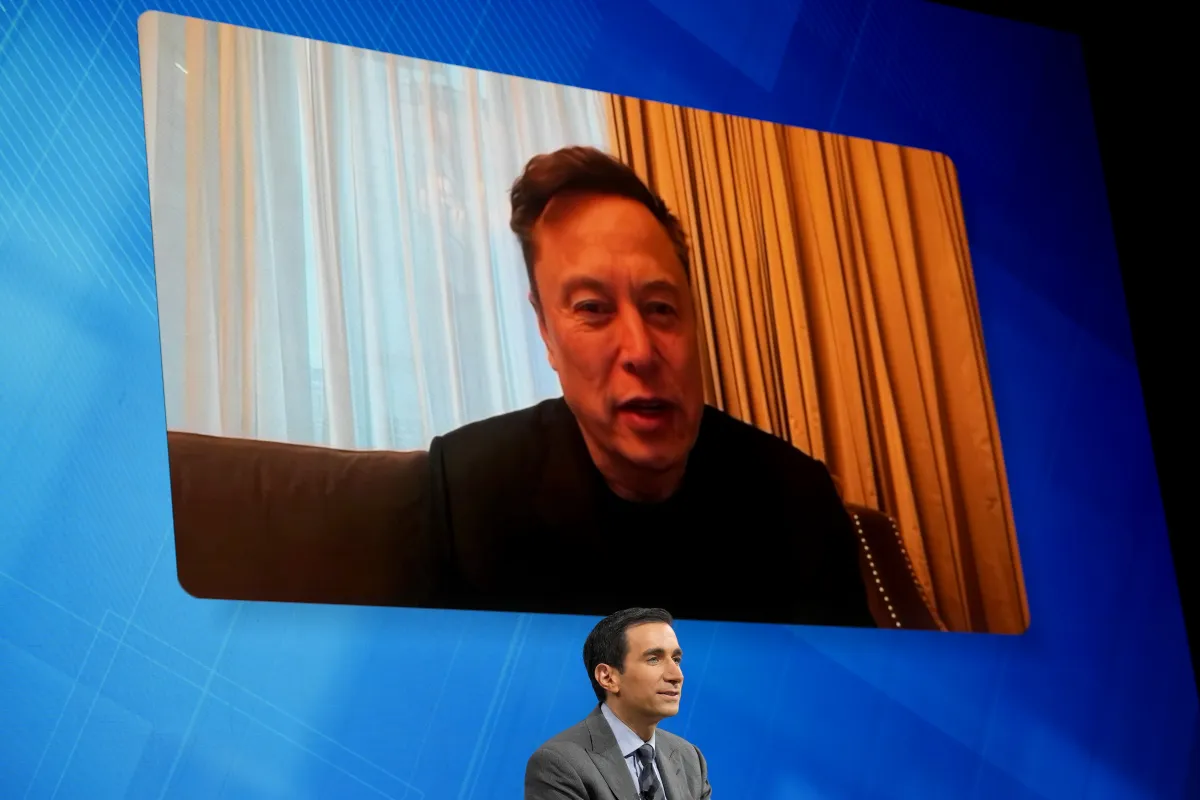
Yet, speaking via video call from China, where he was reportedly attending the APEC summit alongside President Trump, Musk offered a surprising disclaimer to Andrew Ross Sorkin at The New York Times DealBook Summit. “I’m not MAGA,” Musk stated plainly, before quickly adding a caveat: “Well, at least I’m not like… I’m not sure what MAGA means.” He then clarified, “If that means sort of blind adherence to a set of policies by the Republican Party, then I certainly don’t have that.” This equivocation highlights the complex, often contradictory, nature of Musk’s public persona and his apparent reluctance to be easily categorized, despite his highly visible actions.
Financial Follies & Political Post-Mortem
Musk’s latest pronouncements came amidst a broader discussion concerning the aftermath of this year’s midterms, an election cycle that saw a “blue wave” defy expectations, leading to significant Democratic victories across the nation. It was an outcome that, by Musk’s own admission, felt like a personal setback. He had reportedly channeled an even more gargantuan sum—some $445 million—into supporting Republican candidates during these elections. Reflecting on this considerable investment, Musk did not mince words about his disappointment.
“I feel pretty foolish about having spent so much money and not seen much for it,” he confessed, a rare moment of vulnerability from the usually bullish entrepreneur. While he mused that “maybe it would have been much worse without that,” the sentiment underscored a potent realization: “it certainly shows that, you know, American elections are not just about money.” This admission from one of the world’s wealthiest individuals offers a potent, albeit expensive, lesson on the unpredictable dynamics of democratic processes, suggesting that even immense financial leverage has its limits in shaping political outcomes.
The Extremism Denial & Past Controversies
Adding another layer to his complex public image, Musk also used the DealBook platform to distance himself from his often-viral “edgelord” persona, asserting that he harbors no extreme political views. “I don’t think I have like, you know, any kind of extreme political views,” he declared, a statement that drew immediate challenge from Sorkin. When pressed on his immigration stance, which Sorkin noted some consider extreme, Musk’s seemingly innocent query, “Like what?”, elicited mild laughter from the audience, highlighting the perceived disconnect between his self-assessment and public perception.
This latest attempt to portray himself as a centrist stands in stark contrast to his infamous appearance at the same summit just a year prior, in 2023. At that time, Musk was embroiled in a fierce battle with advertisers on his social media platform, X (formerly Twitter), who were threatening to boycott over a perceived surge in hateful content. His response, delivered with characteristic bluntness to Sorkin, was to tell those advertisers to “go f— themselves.” This past outburst serves as a powerful reminder of Musk’s capacity for provocative statements, making his current denial of “extreme views” all the more a subject of public debate and scrutiny.
Mounting Scrutiny & Legal Shadows
Beyond the shifting sands of political identity, Musk now faces a more tangible threat: potential investigations from Democratic lawmakers. With the advent of a new term and a reshaped political landscape, various congressional committees have signaled their intent to probe Musk’s business activities, particularly as they relate to potential corruption within the Trump administration. Officials have explicitly voiced interest in scrutinizing Musk’s involvement in DOGE, the “government efficiency” initiative he launched within the White House at the outset of Trump’s new term.
Equally under the microscope are Starlink’s operations in Ukraine. The satellite internet service, a crucial lifeline for the Ukrainian military, has been accused of throttling access at critical junctures, raising questions about its operational autonomy and potential geopolitical implications. These inquiries hint at a period of heightened legal and regulatory scrutiny for the Tesla and SpaceX CEO, moving beyond mere public relations battles into the realm of official oversight.
The Pardon & Beria Bomb
The gravity of these potential investigations was underscored when Sorkin broached the subject of a presidential pardon. Citing comments from figures like the chairman of the oversight committee advising Musk to “lawyer up,” and the president himself hinting at a possible pardon, Sorkin laid out the escalating concerns. Musk, however, remained defiant. “I don’t think I need a pardon by the way, because I haven’t committed any crimes,” he asserted, dismissing the notion entirely.
Yet, in the same breath, Musk once again veered into controversial territory, evoking a dark chapter of Soviet history. He appeared to liken an incoming Texas official to Lavrentiy Beria, the notorious head of Stalin’s secret police, famous for his chilling dictum: “Show me the man, and I’ll show you the crime.” Musk stated, “The incoming Texas, you know, House Majority Leader, said that I should go to prison. I’m like, the guy’s trying to, you know channel Beria from, like, Stalin, where it’s, you know, show me the man, I’ll show you the crime type of thing.” It’s worth noting, for accuracy, that Texas does not have a House Majority Leader. Musk was likely referencing Gene Wu, the incoming chair of the Texas House Democratic caucus, who has indeed called for investigations into Musk’s potential criminal activity. Musk concluded with a hopeful, if pointed, remark: “Hopefully, in this country, you still need to do an actual crime before you go to prison.” This incident exemplifies Musk’s tendency to escalate rhetoric, even when misidentifying his targets, adding fuel to the ongoing debate about his judgment and public communication style.
Bottom Line:Elon Musk’s latest statements reveal a tech mogul attempting to navigate the treacherous waters of partisan politics while simultaneously facing serious governmental inquiries. His denial of a MAGA identity, coupled with regret over political spending, signals a potential strategic pivot away from explicit political alignment, possibly to mitigate future legal and regulatory risks. However, his continued use of inflammatory rhetoric and a steadfast refusal to acknowledge his own contribution to his ‘extreme views’ perception suggests that while the political landscape around him may be shifting, Musk’s unpredictable and confrontational public persona is likely to remain a constant source of fascination and contention.
When you purchase through links in our articles, we may earn a small commission. This doesn’t affect our editorial independence.
{content}
Source:{feed_title}