
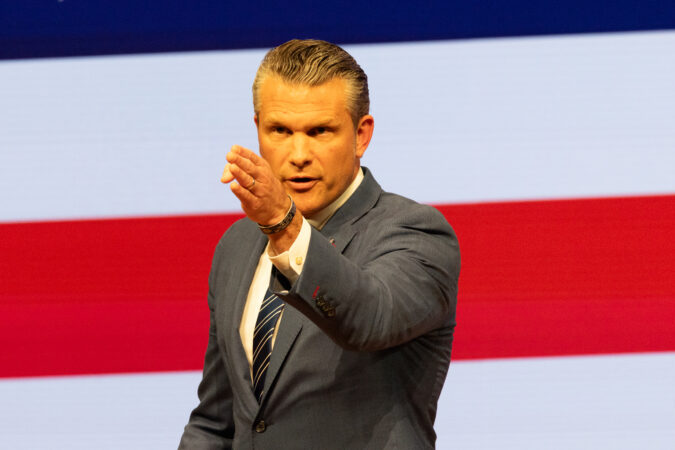
**U.S. Secretary of Defense Visits Venezuela, Signs Military Cooperation Pact Amid Political Transition**
CARACAS, Venezuela – U.S. Secretary of Defense Pete Hegseth made an unannounced visit to Venezuela on November 18, signing an agreement to re-establish military ties with the interim government led by acting President Delcy Rodriguez. The accord marks a significant shift in the relationship between the two nations, following a period of profound hostility that culminated in the U.S. apprehension of former President Nicolas Maduro earlier this year.
Venezuelan state television broadcast video footage of Secretary Hegseth greeting Acting President Rodriguez at the Miraflores presidential palace in Caracas. The newly formalized agreement outlines a framework for military cooperation, which is expected to include joint training exercises, intelligence sharing, and the potential transfer of defense equipment and capabilities.
During a meeting with diplomats and military officials from both countries, Secretary Hegseth described Venezuela’s transformation, stating it “has gone from our most aggressive regional threat to a compliant security partner.” This change, he emphasized, follows January’s “Operation Absolute Resolve,” an operation in which U.S. forces captured former Venezuelan President Nicolas Maduro and his wife. They were subsequently transported to the United States, where they are currently incarcerated and awaiting trial on various charges, the specifics of which have not been fully disclosed but are understood to relate to drug trafficking and corruption. The sudden removal of Maduro created a power vacuum, leading to the establishment of an interim government under Rodriguez, whose legitimacy remains a point of contention among some international observers and Venezuelan opposition factions.
Secretary Hegseth articulated the U.S. objectives behind the new defense accord, stating it would enable the two countries “to stabilize Venezuela” and more effectively combat drug trafficking operations that have historically plagued the region. This emphasis aligns with the U.S. National Defense Strategy, which lists security in the Western Hemisphere as a paramount priority.
Acting President Rodriguez, speaking on behalf of the Venezuelan interim government, expressed hope that the accord would provide her country’s armed forces with access to “new military technologies” and advanced training. This indicates a desire to modernize Venezuela’s military capabilities, which have suffered from years of underinvestment and international sanctions.
The nature of Secretary Hegseth’s trip was unusual, as the Pentagon did not issue an official trip notification prior to his arrival. News of the visit was initially confirmed by Air and Space Forces Magazine, which utilized flight tracking data and information from sources familiar with the matter. Hegseth departed Miami aboard an Air Force C-32 jetliner, arriving in Caracas without accompanying media. Late in the day, the Pentagon formally acknowledged the trip through a series of social media posts and provided a brief readout of the Secretary’s discussions. A spokesperson for Hegseth did not immediately respond to requests for further comment regarding the details of the agreement or the clandestine nature of the travel arrangements.
While Hegseth’s visit marks a significant milestone, he is not the first senior U.S. official to visit Venezuela since the January raid. Energy Secretary Chris Wright and Interior Secretary Doug Burgum preceded him, underscoring U.S. interest in Venezuela’s vast natural resources. Additionally, General Dan Caine, Chairman of the Joint Chiefs of Staff, made an official visit in June, as did General Francis Donovan, head of U.S. Southern Command. These earlier visits laid the groundwork for the current diplomatic and military re-engagement.
Secretary Hegseth, however, emphasized that his trip signaled the beginning of a “new era.” He reiterated that the new pact is a “partnership that will allow America to cooperate with the Venezuelan government and Venezuelan military,” encompassing “training together, partnering together, sharing intelligence, more defense equipment, and capabilities together.”
Despite the diplomatic overtures, the internal situation in Venezuela remains unsettled. Opposition leader María Corina Machado returned to the country in October, signaling renewed political activity, but no date has yet been set for the next presidential election. The absence of a clear electoral timeline contributes to ongoing political uncertainty, raising questions about the long-term stability and democratic trajectory of the nation.
The U.S. administration, under President Trump, has repeatedly highlighted the strategic importance of Venezuela’s oil reserves. President Trump has asserted that access to Venezuelan oil could mitigate disruptions to global energy supplies, particularly those caused by potential conflicts in critical areas such as the Middle East. Secretary Hegseth echoed this sentiment during his visit, suggesting that enhanced U.S.-Venezuela cooperation “makes the Strait of Hormuz a non-factor for the Western Hemisphere” in terms of energy security. However, restoring Venezuela’s oil production, which has suffered from years of chronic underinvestment, mismanagement, and the impact of international sanctions, will require extensive infrastructure rehabilitation and is projected to take several years.
Secretary Hegseth’s trip to Venezuela began with a visit to U.S. Southern Command headquarters in Miami and is scheduled to include additional stops in Colombia and other nations in the region before his return, indicating a broader U.S. effort to strengthen security partnerships across Latin America.
Why This Matters
The unannounced visit by Secretary of Defense Pete Hegseth to Venezuela and the subsequent signing of a military cooperation agreement represent a profound realignment of U.S. foreign policy in Latin America with significant geopolitical implications.
Firstly, this event underscores a dramatic shift in U.S. engagement with Venezuela, moving from a policy of isolating the Maduro regime to actively collaborating with an interim government installed after a U.S.-led operation to apprehend a sitting head of state. This sets a potentially controversial precedent for international intervention and nation-building efforts, raising questions about sovereignty and international law.
Secondly, the re-establishment of military ties could reshape regional security dynamics. Cooperation in intelligence sharing and counter-narcotics efforts could enhance stability in a region grappling with organized crime, but it also raises concerns among neighboring countries about a potential increase in U.S. military presence and influence.
Thirdly, the energy dimension is critical. U.S. interest in Venezuelan oil as a means to diversify global energy supplies and reduce reliance on volatile regions like the Middle East could have far-reaching effects on international oil markets. However, the long road to rehabilitating Venezuela’s oil infrastructure means any significant impact on global supply will not be immediate.
Finally, the internal political situation in Venezuela remains fragile. While the U.S. is now engaging with the interim government, the lack of a clear timeline for democratic elections and the presence of opposition figures like María Corina Machado highlight the challenges in achieving genuine political stability and a lasting democratic transition. The success or failure of this U.S.-backed transition will serve as a critical case study for future international efforts in complex political environments.