
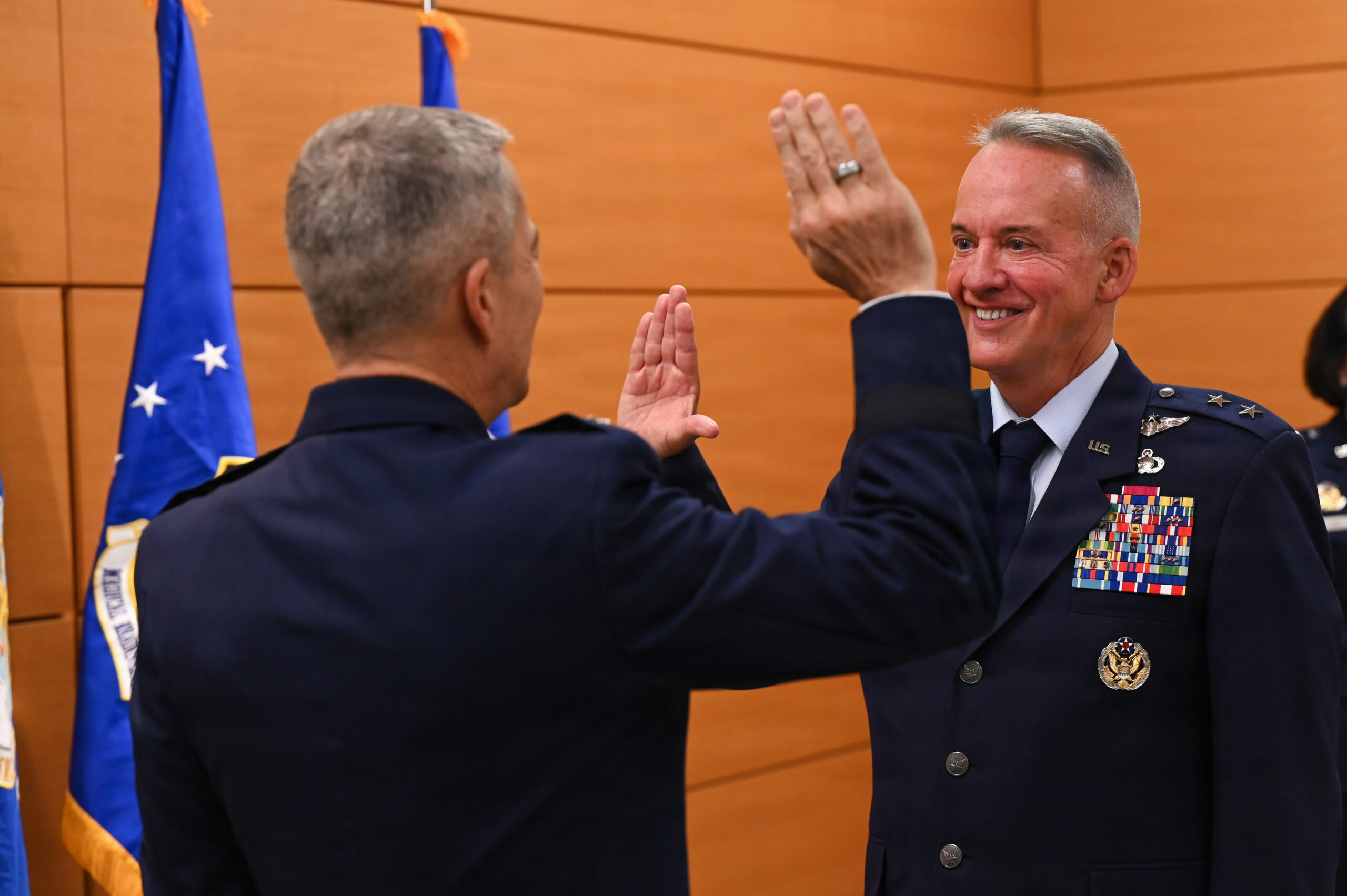
Major General James Parry recently assumed the role of Director of the Office of the Joint Surgeon General at the National Guard Bureau, marking his first Thanksgiving as a two-star general. This appointment in September positions him as the highest-ranking medical officer within the National Guard. His career trajectory, spanning nearly 40 years, is notable for its unconventional beginning and the significant hurdles overcome to reach such a senior medical leadership position.
General Parry’s military journey commenced in 1986 as an enlisted cook in the Ohio Air National Guard, a role he initially did not aspire to. He recalls a memorable incident from his early days as an Airman Basic, tasked with preparing sweet potatoes for approximately 1,000 personnel during a Thanksgiving meal. In an attempt to replicate his mother’s candied sweet potato recipe, he deviated from the standardized instructions, resulting in the potatoes burning due to extended cooking times. This experience led to his temporary demotion back to vegetable preparation duties, a clear lesson in adhering to established procedures within a large-scale operation.
During his time as a cook at the 179th Airlift Wing in Ohio, General Parry described the demanding schedule of drill weekends, which included continuous service, such as preparing breakfast for 1,000 individuals. He notes the hierarchy within the kitchen, where non-commissioned officers (NCOs) were typically assigned to meat preparation, while Airmen, like himself, handled vegetables. His ambition to advance beyond basic vegetable tasks led to the ill-fated sweet potato assignment, an early professional setback.
The path from an enlisted cook to a two-star general, particularly one in a medical leadership role, is atypical within the U.S. armed forces. While statistics on such career transitions are not routinely tracked, General Parry’s ascent underscores a unique blend of perseverance and adaptability. Historical examples of individuals with diverse starting points reaching high military ranks include figures like Harriet Tubman, posthumously commissioned as a brigadier general in the Maryland National Guard in 2024 for her multifaceted service during the Civil War.
General Parry’s initial ambition upon joining the Ohio Air National Guard after high school was to become a pilot. However, this aspiration was thwarted early in his career during basic training at Lackland Air Force Base. A hearing examination revealed significant hearing loss in his left ear, a condition he was aware of but had been advised by a recruiter not to disclose, and which had been overlooked in previous state-level tests. Just hours before he was scheduled to be sent home, a liaison officer from the Guard identified an alternative role for which his hearing impairment was not a disqualifier: a cook. He accepted the position, spending four years in this Air Force Specialty Code (AFSC) before transitioning to intelligence duties.
During his enlisted service, Parry earned a promotion to sergeant, a rank equivalent to an Army corporal and then known as “buck sergeant” within the E-4 pay grade. This rank, which marked the first tier of the Air Force’s noncommissioned officer corps, was phased out in 1991, making General Parry one of the last active service members to have held it. By 1997, after completing his college education and marrying, he commissioned as an intelligence officer. Despite this new role, his ambition to fly persisted. Efforts by Ohio Guard officials to secure a hearing waiver for him to become a pilot or navigator proved unsuccessful.
Following a decisive meeting where the impossibility of a flight waiver was confirmed, a flight surgeon, Major Jeff Hess, suggested an alternative path to flying: becoming a flight surgeon. This proposition was monumental, as General Parry held a degree in geography and had no prior pre-medical coursework. The journey required him to undertake two additional years of undergraduate science courses to meet medical school prerequisites. Despite applying to 12 medical schools near his home in Akron, Ohio, he secured only one interview. He ultimately enrolled at the Lake Erie College of Osteopathic Medicine in Erie, Pennsylvania.
In 2003, General Parry graduated fifth in his class from medical school. By 2008, he had completed a residency in otolaryngology, a medical specialty focused on ear, nose, and throat conditions, including hearing loss. He further qualified as a flight surgeon in 2009 after completing the Air Force’s aerospace medicine course. Despite his new medical qualifications, his Ohio wing did not have an open flight surgeon position, leading him to continue in intelligence roles until 2012. That year, a flight surgeon vacancy arose at the 110th Wing in the Michigan Air National Guard, which he accepted. This unit was in the process of transitioning from A-10 and C-21 aircraft operations to MQ-9 Predators, further delaying his opportunity for manned flight hours.
Finally, in 2014, his Michigan unit authorized him to fly with the C-130s of his hometown 179th Air Mobility Wing in Ohio. Nearly three decades after his initial enlistment and two decades after deciding to pursue medical school, General Parry embarked on his first operational flight as an aircrew member—a two-hour night flight on a C-130H from Ohio’s Mansfield Lahm Air National Guard Base. This moment represented the culmination of a long-held ambition and a testament to his persistent pursuit of his goals.
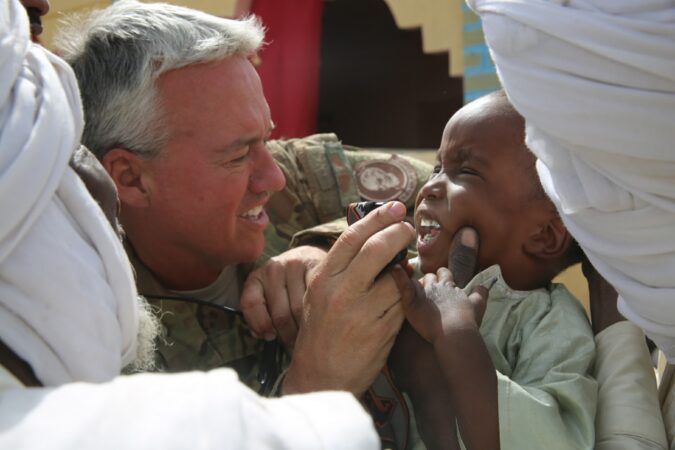
Over the subsequent eight years, General Parry accumulated nearly 600 flight hours, including 102 hours in combat zones. His deployments included serving with small medical teams in the Caribbean, Africa, and the Middle East. In 2022, he was promoted to brigadier general, taking on a role at the National Guard Bureau in Virginia. In late September, he received his second star upon assuming the National Guard’s top medical leadership position. He continues to balance his military duties, working three days a week in Virginia, with his medical practice in Ohio for the remaining two days. Despite his high rank and demanding responsibilities, he maintains a personal tradition of preparing sweet potatoes for holiday meals.
Why This Matters
The appointment of Major General James Parry as the Director of the Office of the Joint Surgeon General at the National Guard Bureau is significant for several reasons, touching upon themes of military leadership, medical readiness, and career development within the armed forces.
**Inspirational Leadership and Perseverance:** General Parry’s career exemplifies extraordinary perseverance and adaptability. His journey from an enlisted cook with a hearing impairment, initially disqualified from flying, to a two-star general and the Guard’s top medical officer, underscores the potential for individuals to overcome significant obstacles through dedication and a willingness to embrace new paths. His story serves as an inspiration, demonstrating that non-traditional routes can lead to the highest levels of leadership and specialized expertise within the military. It highlights the value of continuous learning, professional development, and the pursuit of goals despite initial setbacks.
**National Guard Medical Readiness:** As the highest-ranking medical officer in the National Guard, General Parry is responsible for the health and well-being of over 430,000 Army and Air National Guard members across all 54 states, territories, and the District of Columbia. His role is critical to ensuring the medical readiness of these forces, who serve dual state and federal missions, including domestic emergency response and overseas deployments. This involves overseeing medical policies, healthcare delivery, preventative medicine programs, and ensuring that Guard personnel are physically and mentally prepared for their diverse operational roles. His specialized background as an otolaryngologist and flight surgeon offers unique insights into conditions relevant to service members, particularly those in aviation roles.
**Diversity of Military Careers and Talent Utilization:** General Parry’s career trajectory challenges conventional notions of military progression. It illustrates the breadth of opportunities available within the armed forces, extending far beyond traditional combat roles into highly specialized fields like medicine. His journey from enlisted service to becoming a commissioned officer and then a senior medical leader demonstrates the military’s capacity to identify, cultivate, and promote talent from diverse backgrounds and starting points. This is particularly relevant as the military seeks to recruit and retain a diverse workforce with a wide range of skills to meet complex national security challenges.
**Implications for Military Healthcare Policy:** Leaders like General Parry, with their extensive experience from various military echelons and civilian medical practice, are uniquely positioned to influence military healthcare policy. His personal experience with hearing loss and the challenges of obtaining waivers could inform discussions on medical standards, recruitment criteria, and pathways for individuals with specific medical conditions to serve. His dual civilian-military medical roles also provide a comprehensive perspective on integrating civilian healthcare best practices with military medical needs, especially for a component like the National Guard, whose members frequently transition between civilian and military healthcare systems.
In summary, Major General Parry’s promotion signifies not only a personal achievement but also reinforces the principles of resilience, diverse talent utilization, and the critical importance of robust medical leadership for the readiness and welfare of the National Guard, an essential component of the United States’ defense posture.