
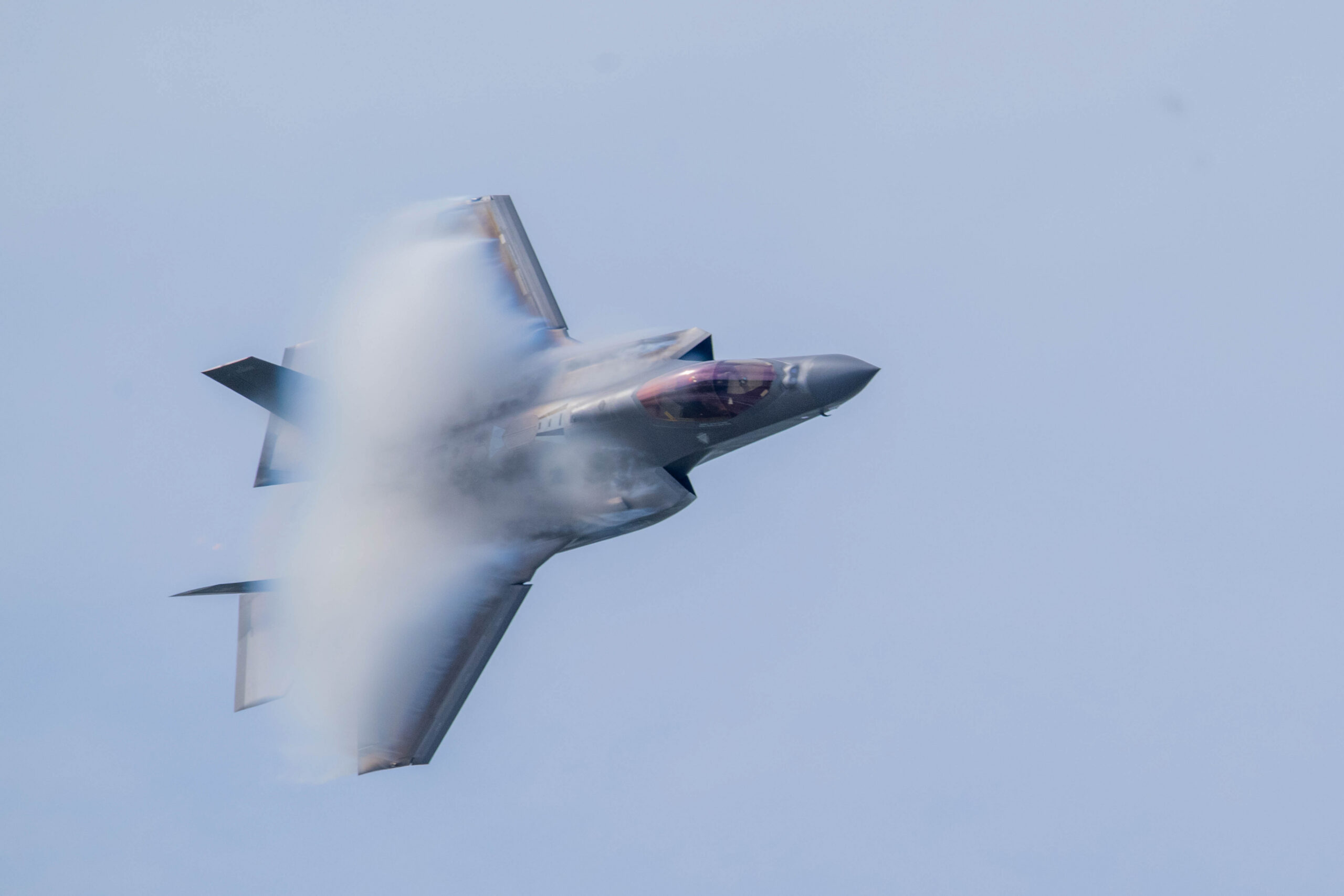
The U.S. Air Force’s F-35A Lightning II Demonstration Team is slated to return to Luke Air Force Base in Arizona, marking its first residency at the base in seven years. The move, announced on November 20, positions the team at Luke’s 56th Fighter Wing in preparation for the 2027 airshow season, signaling a strategic realignment of resources for the Air Force’s advanced fifth-generation fighter demonstrations.
The demonstration team has been operating out of Hill Air Force Base, Utah, under the 388th Fighter Wing since late 2019. Prior to that, Luke Air Force Base was the original home for the team and its predecessor, the F-35A Heritage Flight Team, beginning in late 2015. This reassignment therefore represents a full-circle journey for the F-35A demonstration unit, bringing it back to a base deeply intertwined with the F-35 program’s training and development.
While the F-16 Thunderbirds serve as the U.S. Air Force’s flagship aerial demonstration squadron, the service also maintains dedicated demonstration teams for its two advanced fifth-generation fighters: the F-22 Raptor and the F-35A Lightning II. These specialized teams play a crucial role in showcasing the unique capabilities of these cutting-edge aircraft, which are fundamental to modern air superiority and global strike operations. Unlike the multi-aircraft precision formations of the Thunderbirds, the F-22 and F-35 teams typically feature a single aircraft performing maneuvers that highlight its agility, power, and technological prowess, often in conjunction with historical “heritage flights” alongside vintage military aircraft.
Each F-35 demonstration team is a compact unit, typically comprising approximately a dozen Airmen. This includes a highly skilled pilot who also serves as the team commander, a dedicated team superintendent overseeing operations, a group of about seven maintenance personnel—such as crew chiefs—who ensure the F-35A is in peak condition for every performance, and public affairs specialists responsible for outreach and communication. These teams travel extensively across the country and sometimes internationally, performing at airshows and military base open houses, engaging with the public, and communicating the Air Force’s mission and capabilities.
The F-35 team’s most recent commander was Maj. Sean “Rambo” Loughlin, who concluded his tenure showcasing the aircraft’s performance. With the upcoming move, leaders at the 56th Fighter Wing are now in the process of selecting the next pilot and commander, as well as the other essential team members, to lead the demonstration unit for the 2027 season. The rigorous selection and training process culminates in the certification of the new pilot, which is planned for February 2027 by Gen. Adrian Spain, head of Air Combat Command (ACC), during the annual Heritage Flight Training Course held at Davis-Monthan Air Force Base in Arizona. This certification ensures the pilot meets the highest standards for safety and performance required for public demonstrations.
The decision to relocate the F-35 demonstration team was the result of a “comprehensive assessment” conducted by the Air Force. This evaluation considered several key factors, including the operational tempo of existing F-35 units, the availability of F-35 aircraft for demonstration purposes, and critically, Luke Air Force Base’s extensive pool of highly experienced F-35 pilots. Luke’s 56th Fighter Wing holds a unique and vital position within the U.S. Air Force as its primary and largest F-35 training center. It serves as the central hub for graduating F-35 pilots not only for the United States but also for numerous allied nations, including the Netherlands, Denmark, and others actively acquiring or operating the Lightning II. This concentration of expertise, combined with readily available aircraft and maintenance support personnel, makes Luke an optimal environment for sustaining and operating a high-performance demonstration team without significantly impacting combat readiness or training schedules.
Despite the reassignment of the demonstration team, the Air Force has affirmed that the 388th Fighter Wing at Hill Air Force Base will experience no adverse effects on its core mission. Its combat capability, operational readiness, manpower levels, and overall resources are expected to remain unaffected by the team’s departure. This ensures that the 388th Fighter Wing, a frontline combat unit, can continue its vital operational missions without interruption.
The F-35 demonstration team’s operational season typically spans from spring to early fall each year. During this period, the team makes appearances at approximately two dozen locations, participating in major air shows, military base open houses, and other public outreach events across the nation. These appearances provide millions of spectators with a rare opportunity to witness the advanced capabilities of the F-35A Lightning II up close and interact with the Airmen who operate and maintain this sophisticated aircraft.
Why This Matters
The reassignment of the F-35A Lightning II Demonstration Team to Luke Air Force Base holds significant implications for several reasons:
- Strategic Optimization of Resources:The move to Luke AFB, a premier F-35 training hub, reflects a deliberate strategy by the U.S. Air Force to optimize its resources. By leveraging Luke’s deep pool of experienced F-35 instructor pilots and its robust infrastructure for aircraft maintenance and availability, the Air Force can operate the demonstration team more efficiently. This approach minimizes the impact on frontline combat units like the 388th Fighter Wing at Hill AFB, allowing them to focus solely on their operational readiness and deployment responsibilities.
- Public Engagement and Recruitment:Air Force demonstration teams serve as powerful public relations and recruitment tools. The F-35A team showcases the pinnacle of American airpower technology, inspiring patriotism and encouraging young people to consider careers in aviation, science, technology, engineering, and mathematics (STEM), and military service. Its presence at airshows provides a tangible connection between the public and the advanced capabilities of the Air Force, fostering public support for defense initiatives and investments.
- Showcasing Advanced Airpower:The F-35A Lightning II is a cornerstone of global air superiority, representing a leap forward in stealth technology, integrated avionics, and multi-role capabilities. Its demonstration team highlights these advanced features, educating the public and international observers about the aircraft’s critical role in national defense and coalition operations. This visual display of cutting-edge technology also serves as a subtle form of strategic communication, signaling advanced capabilities to both allies and potential adversaries.
- Enhancing Training Synergy:Locating the demonstration team at a major training base like Luke AFB creates synergy between training and public outreach. It allows highly skilled instructors to potentially transition into demo pilot roles, further refining their flying expertise while contributing to the Air Force’s public image. This integration can also expose a wider range of F-35 pilots and maintainers at Luke to the unique demands and precision required for aerial demonstrations, indirectly enhancing overall force readiness and proficiency.
- Reinforcing Luke AFB’s Importance:The return of the F-35A demonstration team further solidifies Luke AFB’s critical role as a central pillar of the F-35 program, not just for U.S. forces but for international partners as well. It underscores the base’s significance beyond just pilot training, positioning it as a key hub for showcasing the future of airpower to a global audience.
In essence, this move is more than just a logistical transfer; it’s a strategic decision that enhances the Air Force’s ability to demonstrate its most advanced fighter, recruit future generations of Airmen, and efficiently manage its operational and public engagement priorities.