
Key Takeaways:
- **Strategic Pivot Amid Headwinds:** Faced with a protracted slump in new home demand due to high interest rates, elevated construction costs, and regulatory friction, home builders are strategically pivoting towards the remodeling and repair sector to sustain operations and revenue streams.
- **”Golden Handcuff” Effect Driving Renovation Boom:** Existing homeowners, locked into historically low mortgage rates, are opting to renovate their current residences rather than sell and face significantly higher borrowing costs on a new purchase, fueling robust demand for remodeling services.
- **Affordability Crisis Reshaping Housing Landscape:** The confluence of persistent inflation, restrictive monetary policy, and local policy burdens (taxes, insurance) has created an acute affordability crisis, fundamentally altering buyer behavior and forcing builders to adapt their business models in a challenging market.
SERHANT. founder and CEO Ryan Serhant speaks to Fox News Digital at his SoHo headquarters, discussing how local policy friction, property tax burdens and insurance spikes combine to stall mobility in today’s housing market.
Amid a persistently sluggish housing market, defined by an acute affordability crisis and a notable slowdown in new construction, home builders are demonstrating remarkable adaptability by branching out into remodeling and repair work to keep business flowing. This strategic pivot highlights the intense pressure on the residential construction sector as it navigates one of its most challenging periods in recent memory, forcing a re-evaluation of traditional business models.
A recent report by The Wall Street Journal vividly details how builders are contending with multiple headwinds. Slow demand, primarily driven by elevated interest rates that deter potential buyers, is compounded by stubbornly high construction costs. These costs, stemming from a combination of labor shortages, volatile material prices, and supply chain inefficiencies, continue to squeeze builder margins, making new projects less viable or profitable. The cumulative effect is a significant deceleration in housing starts and new home sales, pushing many firms to seek alternative revenue streams.
Many smaller-scale builders, particularly those without the capital reserves of larger national players, have found a lifeline in remodeling and repair projects. This segment of the market, traditionally dominated by specialized contractors, has seen a substantial boost as homeowners, facing the “golden handcuff” effect of their current low-rate mortgages, increasingly opt to renovate their existing properties rather than brave a new purchase in a high-interest-rate environment. This trend underscores a broader market shift: mobility is stalled, and homeowners are investing in their current assets.
TOP REAL ESTATE MOGUL ISSUES STARK WARNING AS CALIFORNIA BUYERS SAY ‘ENOUGH IS ENOUGH’ ON TAXES
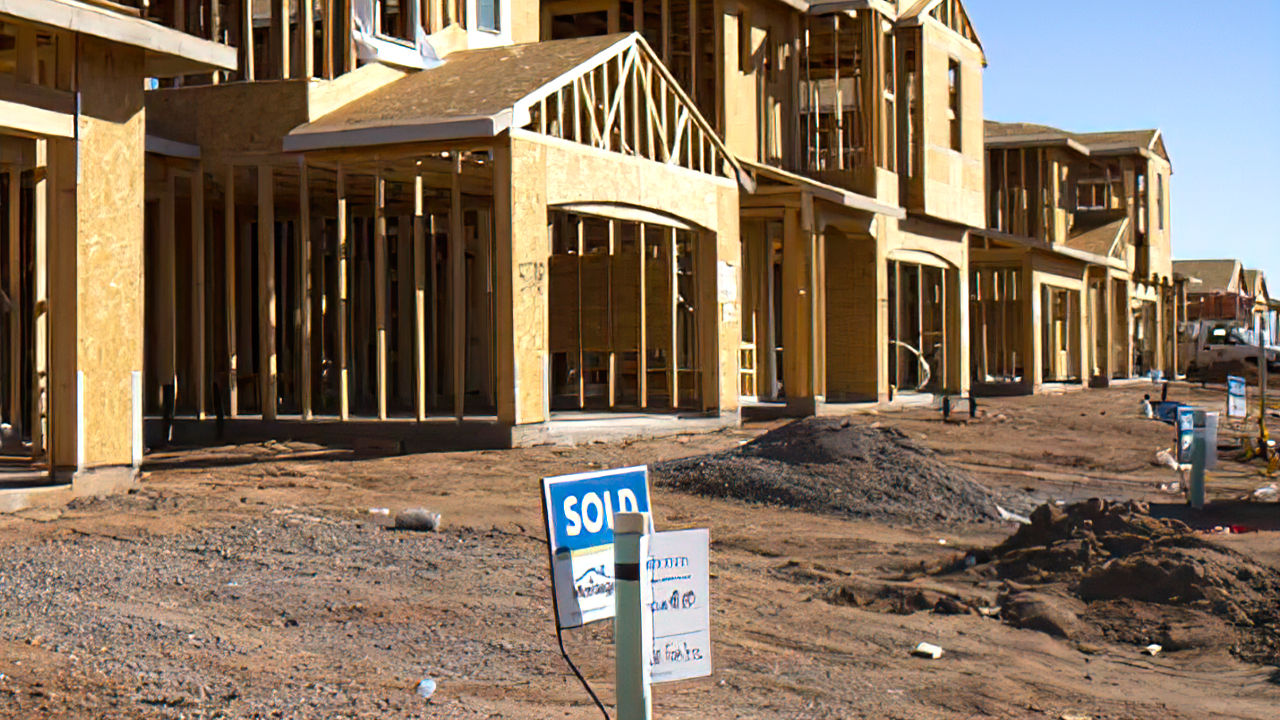
A “Sold” sign outside a new home under construction in Tucson, Arizona. Home builders have pivoted to remodel and repair work in order to keep the lights on amid a sluggish housing market. (Photographer: Rebecca Noble/Bloomberg via Getty Images / Getty Images)
“That’s the kind of thing that’s driving us to have to go into remodeling because people right now are just not looking at new construction,” Bruce Rogers, founder of Crystal Coast Construction Unlimited, told the newspaper. His sentiment resonates deeply across the industry, reflecting a pragmatic response to market realities. Rogers elaborated on a recent deal for a $2.5 million custom home that fell through. Buyers backed out not only over rising mortgage rates – a direct consequence of the Federal Reserve’s aggressive monetary tightening to combat inflation – but also due to concerns that tariffs and fuel surcharges would further drive up building costs over the project’s duration. Such uncertainties introduce significant risk for both buyers and builders, making long-term commitments daunting. To help keep the lights on and maintain cash flow, his company has strategically begun emphasizing remodeling services on its website, a clear indicator of the market’s directional shift.
The Journal highlighted several other builders successfully navigating this pivot. At Diamond Custom Homes in Naples, Florida, for instance, remodeling has become the bulk of the business after the new housing market cooled significantly in 2023. This is particularly notable in luxury markets like Naples, where high-net-worth individuals often have the capital to undertake extensive renovations, even if they choose to stay put. Similarly, White Maple Construction in New Jersey, launched in 2020 at the height of the pandemic housing boom, is still planning its first custom home. Growing a new construction business has proven exceptionally challenging, hampered by the persistent combination of high interest rates, which erode buyer purchasing power, and steep land prices, which make new developments financially prohibitive in many desirable areas.
Jim Reif, a builder and remodeler in Wisconsin, pointed to another significant driver of the remodeling boom: the aging demographic. He has taken on projects focused on making bathrooms and entryways more accessible for older homeowners who are increasingly opting to “age in place.” This trend, amplified by the financial disincentives of moving, represents a growing niche for builders willing to adapt their services. “I think some of the people would be interested in having a newer place, but they’re used to the interest rates at 2 and 3%,” he said, articulating the psychological barrier many homeowners face when confronted with today’s 6-7% mortgage rates. “So they just decide to stay where they are.” This highlights the “rate lock-in” phenomenon, where millions of homeowners are effectively trapped in their current homes by their advantageous mortgage terms.
Even with concerns over overall housing costs remaining elevated, an interesting dynamic persists: buying a newly built home remains less expensive per square foot than buying an existing one in many U.S. markets. This counterintuitive finding, at first glance, might seem to contradict the narrative of a sluggish new construction market. However, it reflects several factors: new home builders are often able to achieve economies of scale, utilize more efficient building techniques, and sometimes offer incentives to move inventory. Furthermore, existing homes may be in highly desirable, established neighborhoods where land values and property taxes drive up overall costs, or they may require significant upgrades, effectively closing the price-per-square-foot gap once renovation costs are factored in.
Stuart Varney tracks market drops following an inflation surprise. Madison Alworth breaks down Nvidia’s restricted chip access, while Mitch Roschelle discusses Florida property tax relief and housing reform.
According to a Zillow analysis published in October, newly built homes sold for a median of $205 per square foot in July, compared with $212 per square foot for existing homes. This cost advantage for new builds is observed nationwide and in roughly one-third of major U.S. metro areas. While this might suggest an opportunity for buyers, the higher absolute price points of new construction, coupled with high interest rates, often make the total monthly payment prohibitive for many, pushing them back to the renovation market. The broader market context, including local policy friction, increasing property tax burdens, and surging insurance spikes — factors highlighted by real estate leaders like Ryan Serhant — further complicate the equation, stalling mobility and exacerbating affordability challenges across various regions, particularly in states like California and Florida.
Bilt Rewards founder and CEO Ankur Jain joins ‘The Claman Countdown’ to discuss the housing market slowdown and the launch of a new AI-driven platform.
GET FOX BUSINESS ON THE GO BY CLICKING HERE
Market Impact:
The strategic shift by home builders towards remodeling and repair work has significant implications for the broader market. For **investors**, this pivot suggests a need to re-evaluate traditional homebuilding stocks, potentially favoring those with diversified service offerings or a strong presence in the renovation sector. Companies supplying materials and services for remodeling — from hardware stores to appliance manufacturers and specialized trade services — could see sustained demand. For **homeowners**, the prolonged period of high rates means limited mobility and increased investment in existing properties, potentially leading to higher home equity but also increased renovation costs. The current environment also accentuates the “tale of two markets” for homebuyers: new construction might offer a better price-per-square-foot value, but the overall cost of financing remains a hurdle, pushing many towards older, potentially smaller, or less updated existing homes. Ultimately, this dynamic could lead to a more mature and resilient renovation market, while the new construction sector may experience further consolidation and a greater focus on niche, affordable housing solutions or high-density urban developments as builders continue to adapt to a landscape defined by elevated costs and constrained consumer purchasing power. This impacts everything from local job markets in construction to the broader economic indicators tied to housing starts and residential investment.
FOX Business’ Sophia Compton contributed to this report.