
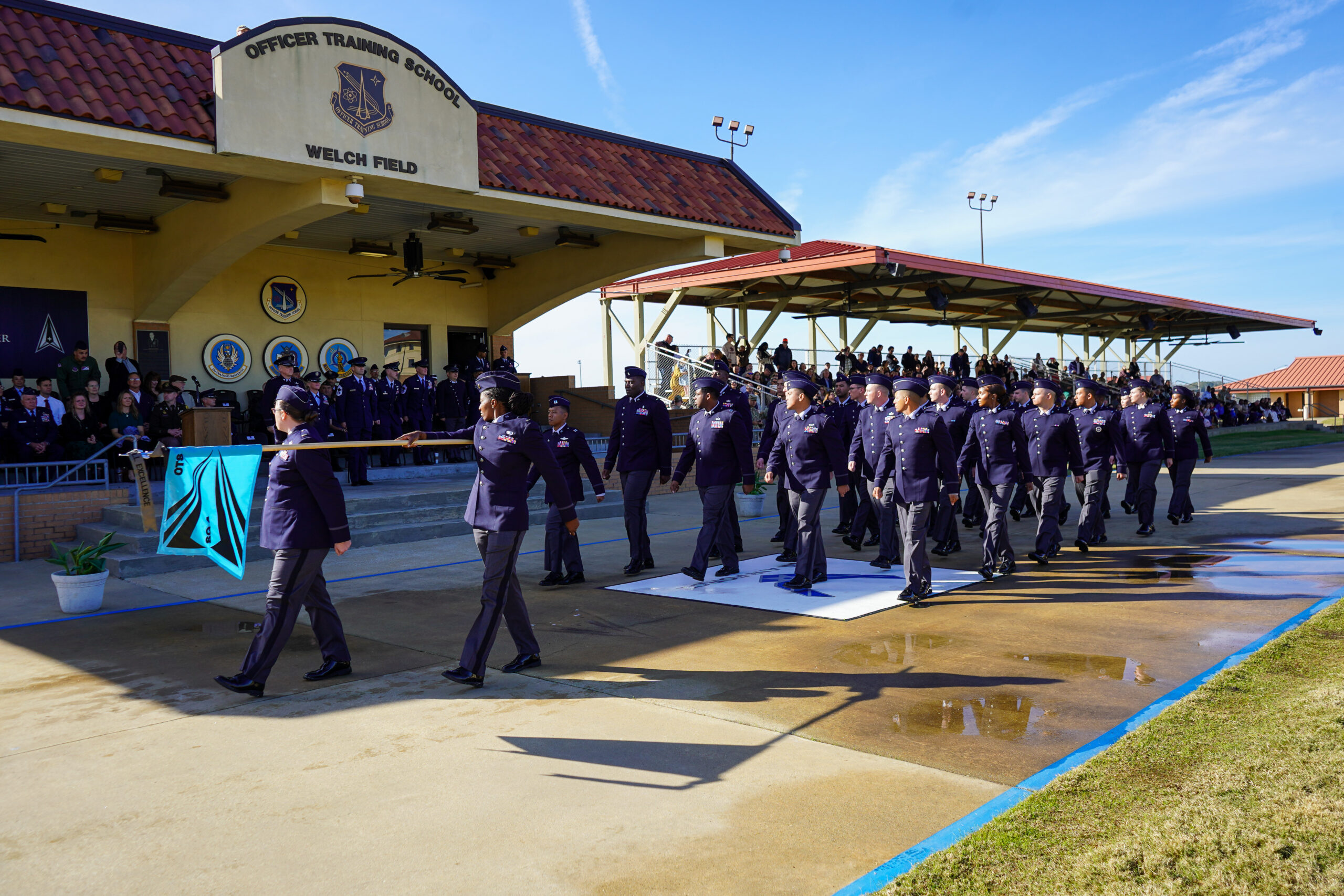
Maxwell Air Force Base, Alabama –The United States Space Force has marked a significant milestone in its organizational development with the graduation of its first Officer Training School (OTS) squadron composed entirely of Space Force officer candidates. Thirty-six new Guardians, as Space Force personnel are known, officially joined the burgeoning service on November 20, following an intensive 8.5-week training program at Maxwell Air Force Base, Alabama.
This event represents the latest step in the Space Force’s strategic efforts to cultivate its own distinct identity and operational capabilities within the broader Department of the Air Force (DAF) training ecosystem. Since its establishment in December 2019 as the newest branch of the U.S. Armed Forces, the Space Force has been progressively carving out service-specific training pipelines for its personnel, moving beyond initial reliance on Air Force infrastructure.
The graduating cohort, dubbed the “Wolfpack Squadron,” was part of OTS Class 27-03, which commenced training on September 22. They trained alongside three Air Force squadrons, underscoring the collaborative yet increasingly specialized nature of DAF officer accession. General Michael Guetlein, one of the four Space Force four-star generals and head of the Golden Dome missile defense program, presided over the graduation ceremony. He administered the oath of office, formally commissioning the new officers into the Space Force.
Addressing the new Guardians, Gen. Guetlein emphasized the profound significance of their commitment. “Whether you serve for just a few years or 30, your service puts you in an elite group of Americans who stood tall and accepted the oath to serve their country,” Guetlein stated. “That is something you will be able to hold onto for the rest of your life. Wear that with honor and with pride. Lead with integrity and never forget the commitment you made.” His remarks highlighted the enduring values expected of military officers and the unique responsibility entrusted to those defending the space domain.
Officer Training School is one of three primary commissioning sources for officers within the Department of the Air Force, complementing the U.S. Air Force Academy (USAFA) and the Reserve Officers Training Corps (ROTC) program. While USAFA provides a four-year undergraduate education steeped in military tradition, and ROTC integrates military instruction with civilian university studies, OTS offers a concentrated commissioning path for college graduates or prior-enlisted personnel. It plays a critical role in providing a flexible and responsive intake mechanism for officers, particularly crucial for a new service undergoing rapid expansion.
The Space Force first commissioned Guardians through OTS in October 2020, shortly after its inception. Since then, the service has steadily increased its presence within the program, graduating its first Space Force-dedicated flight of 15 Guardians in March 2023. The recent graduation of a full squadron signifies a new level of maturity in its officer accession strategy.
Currently, the Space Force commissions approximately 100 officers annually through OTS. This figure is projected to rise significantly as the service embarks on an ambitious growth trajectory, aiming to more than double its uniformed personnel from roughly 11,000 to over 25,000 in the coming years. This expansion is driven by the increasing strategic importance of space for national security, intelligence, communication, and global economic activities, demanding a larger, highly specialized workforce capable of operating in a contested and rapidly evolving domain.
Beyond officer commissioning, the Space Force has been systematically building out its specialized training infrastructure across various career stages. In 2022, the first class of enlisted Guardians completed Basic Military Training (BMT) under a Space Force-specific curriculum, tailored to the unique foundational knowledge and physical requirements of space operations. That same year, the U.S. Air Force Academy launched its “Azimuth” summer program, designed to introduce cadets to potential career paths and the distinct culture within the Space Force, helping to shape future officer talent from an early stage.
Looking ahead, the Space Force is further enhancing its post-commissioning education. In 2024, the U.S. Space Force introduced its own Officer Training Course (OTC), a comprehensive 12-month program. This specialized course is designed to equip newly commissioned officers, including the recent Wolfpack graduates, with advanced skills essential for careers in critical fields such as intelligence, space operations, cyber operations, and acquisition fundamentals. This dedicated follow-on training ensures that Guardians are prepared to address the complex technical and operational challenges inherent in safeguarding and utilizing the space domain effectively.
Why This Matters
The graduation of the first all-Space Force Officer Training School squadron represents a pivotal moment in the evolution of the United States Space Force and holds significant implications for global security and technological advancement. This development underscores the U.S.’s commitment to cultivating a highly specialized military branch capable of operating effectively in the increasingly critical and contested space domain.
Enhancing National Security:As space becomes integral to modern warfare, communication, navigation, and intelligence gathering, a dedicated and well-trained Space Force is crucial for maintaining U.S. national security interests. These new officers will fill roles vital to defending American and allied satellites, monitoring adversarial activities, and ensuring uninterrupted access to space-based capabilities that underpin military operations and civilian life.
Deterrence and Defense in a New Domain:The creation of distinct training pathways and the growth of the Space Force signal a clear intent to deter aggression in space and, if necessary, defend U.S. assets and interests. By developing a bespoke force with specialized expertise in space operations, cyber warfare, and intelligence, the U.S. enhances its capacity to respond to threats ranging from electronic jamming and cyberattacks to direct attacks on satellites, thereby contributing to global strategic stability.
Fostering a Unique Professional Identity:For any new military branch, establishing a unique culture, doctrine, and training philosophy is paramount for long-term effectiveness. The integration of Space Force-specific curricula, from basic training to advanced officer courses, is critical for forging a distinct Guardian identity. This dedicated approach ensures that personnel are not merely adapting Air Force roles to space, but are instead developing innovative strategies and tactics uniquely suited to the challenges and opportunities of the space domain.
Adapting to a Rapidly Evolving Environment:The space domain is characterized by rapid technological advancement and increasing complexity, driven by both state and commercial actors. The specialized training these new officers receive is designed to equip them with the agility and expertise needed to manage advanced satellite systems, analyze complex orbital mechanics, and counter sophisticated threats. This dedicated human capital investment is essential for maintaining a technological edge and ensuring operational superiority in a constantly changing environment.
Global Implications and the Future of Warfare:The strengthening of the U.S. Space Force sends a clear signal to international partners and rivals alike regarding the strategic importance placed on space. It influences the military doctrines and investments of other nations, potentially accelerating a global trend towards militarization and weaponization of space. Understanding the implications of a professionalized Space Force is crucial for assessing the future trajectory of international relations, arms control, and the evolving nature of global conflict.