
Gain access to the Editor’s Summary for free
Roula Khalaf, Editor of the FT, curates her top pieces in this regular bulletin.
Rolls-Royce is imploring the UK government to pledge state aid for the £3bn creation of a new aircraft engine, a pivotal initiative for its strategy to rejoin the lucrative regional flight sector.
The FTSE 100 conglomerate has notified high-ranking officials of its desire to secure an assurance during the initial six months of the current year, as per three individuals apprised of the discussions.
It is requesting between £100mn and £200mn initially to assist in financing the creation and evaluation of a prototype for the UltraFan 30 engine, sources indicated.
Tufan Erginbilgiç, Rolls-Royce’s chief executive, has been deeply engaged, having conferred on the issue with business secretary Peter Kyle over the past few weeks, they further mentioned.
The company has been engaged in discussions with authorities since the previous year regarding grants to facilitate the development of a fully certified engine prepared for manufacturing, a project anticipated to incur expenses of approximately £3bn.
Rolls-Royce’s prospective return to the single-aisle aircraft sector follows a three-year overhaul under Erginbilgiç.
The magnitude of the change guided by the ex-BP official will be highlighted this week, as the group is projected to announce unprecedented earnings and disposable cash flow for 2025, based on its updated outlook.
Investors are also anticipating the firm will declare an additional stock repurchase. Rolls-Royce revealed a £1bn buyback in February of the previous year.
UK officials are examining diverse funding origins for the narrow-body project, including the Aerospace Technology Institute, which distributes government finance for advancement within the industry. Utilizing the sovereign wealth fund or furnishing startup aid represented alternative choices, according to the people familiar with the talks.
Using ATI funding, however, is considered “complicated” due to the necessity of balancing support for Rolls-Royce with the requirements of rival aviation firms including Airbus and Safran, who both have a substantial footprint in the UK, the sources reported.
The government could also acquire an interest in the project. “Such a move is conceivable,” remarked a single source.
“This government is being considerably more proactive in economic affairs, hence it’s starting to think it will function as a stakeholder,” another individual noted, further stating that Rolls-Royce was on an “extensive lobbying effort targeting the government for financial backing, and the endeavor is progressing rather favorably”.
Labour has made advanced fabrication a priority as one of eight rapidly expanding industries in its economic plan.
Rolls-Royce contends the initiative has the potential to generate about 40,000 specialized positions, both within the company and across the broader vendor network, and to yield up to £120bn for the UK economy throughout the duration of the scheme.
The company presently constructs power units solely for twin-aisle planes that fly extended-range journeys. It departed the single-aisle airplane sector — such as the Airbus A320 and Boeing’s 737 Max, which are primarily deployed on regional flights — over ten years prior.
Single-aisle aircraft constitute a considerably larger proportion of the worldwide commercial aviation sector in terms of quantity.
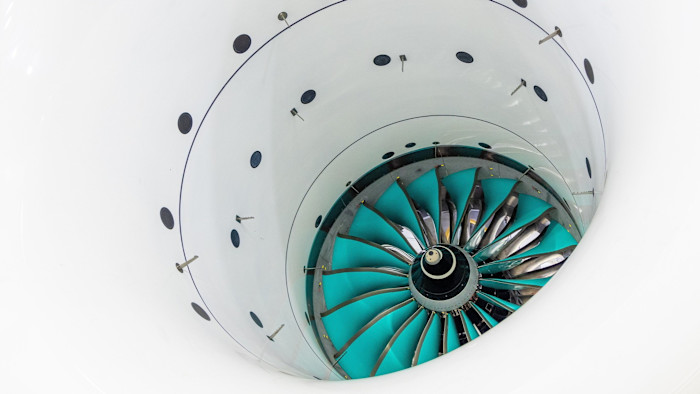
The group has invested over £500mn in a prototype of the UltraFan engine, which is designed to be 25 per cent more economical than the group’s initial Trent powerplants.
It stated in the year 2024 that it had commenced efforts on a “reduced-size” prototype, the UltraFan 30, that would be configured to drive future single-aisle airplane models.
Airbus and Boeing are anticipated to select powerplants for their upcoming aircraft models before the close of the current ten-year period.
Erginbilgiç has also suggested that Rolls-Royce would need to collaborate with a different firm to re-enter the narrow-body market. The group formerly maintained a collaboration with US aerospace group Pratt & Whitney but withdrew from the undertaking in 2013.
Rolls-Royce asserted that the aviation sector faces worldwide competition and that its competitors obtain substantial support from their native authorities. Germany, where the company has extensive activities, is also keen on assisting in financing the project, as per aviation sector leaders.
Rolls-Royce stated it was engaged in “productive conversations with the government about how we can cooperate to achieve this chance”, further noting that the initiative might “open up a $1.6 trillion market for the UK”.
The UK’s Ministry of Commerce and Industry commented: “The UK has among the most highly contested aviation industries in the world, and we appreciate the enduring contribution that Rolls-Royce continues to play in it, upholding numerous well-paying, skilled employment opportunities.”