
**Key Takeaways**
1. **Geopolitical Risk Elevates Supply Chain Costs:** The Middle East conflict has directly translated into a significant geopolitical risk premium on global logistics, tripling freight costs and forcing extensive rerouting for Kenyan exports, severely eroding profit margins for vital agricultural sectors.
2. **Crippling Blow to Key Export Sectors:** Kenya’s floriculture ($900M annually) and tea ($1.4B annually) industries, major foreign exchange earners, face market closures, mounting losses, and severe cash flow issues, jeopardizing hundreds of thousands of livelihoods and threatening the nation’s trade balance.
3. **Long-Term Market Realignments Possible:** Beyond immediate disruption, the conflict may catalyze a re-evaluation of global supply chain dependencies, investment in alternative logistics infrastructure, and a sustained shift in commodity trade routes, potentially leading to persistent inflationary pressures and increased operational complexity for businesses worldwide.
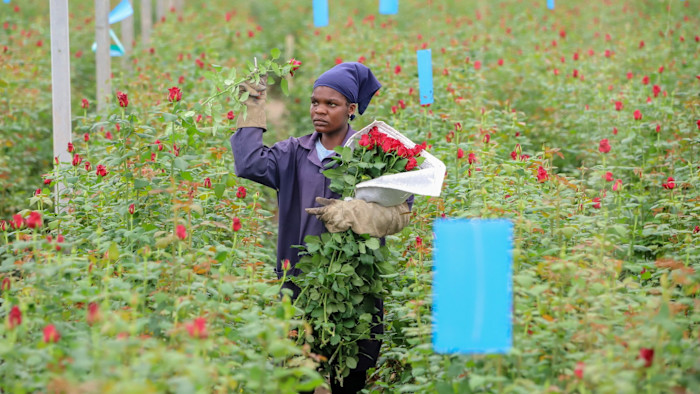
Once destined for the vibrant markets of Dubai, Riyadh, Tehran, and Doha, the exquisite flowers cultivated by Ngari Mahihu on the fertile slopes below Mount Kenya are now, remarkably, serving as feed for his sheep. This stark image encapsulates one of the more bizarre yet profound economic consequences of escalating geopolitical tensions: the decision by US President Donald Trump and Israel’s Prime Minister Benjamin Netanyahu to bomb Iran in February, and the subsequent retaliatory strikes by Tehran on US allies in the Gulf.
The economic fallout has been immediate and severe. Iran’s response, involving drones and missiles targeting Gulf airports, grounded vital cargo flights and effectively severed the Strait of Hormuz – a critical artery through which booming East African trade with the region once flowed. Mahihu, like countless other producers, has been forced to jettison millions of rose stems, facing an overall loss of more than half of his export volumes from his 60-hectare farm near Nakuru. While established markets in Russia, the UK, and Australia provide some resilience, the disruption underscores the profound vulnerability of global supply chains to regional instability.
Kenya, a powerhouse in agricultural exports, stands as the world’s fourth-largest producer of cut flowers and the largest exporter of black tea. Traders across these key sectors, alongside those dealing in fresh produce, are grappling with the repercussions of the Middle East war. Markets have been abruptly cut off, profit margins are being eviscerated by soaring transport and input costs, and mounting losses are accruing as perishable goods rot or lie unsold in congested warehouses. Representative associations have issued dire warnings: a prolonged stand-off between Washington and Tehran could imperil countless Kenyan livelihoods, triggering a cascading socio-economic crisis.
“The Middle East developed into being a very big flower consumer and also a hub, so that, for example, from my farm here we do about 1mn stems a week into that market,” Mahihu explained, highlighting the critical role of Gulf wholesalers in the United Arab Emirates, Qatar, and Saudi Arabia for his Baraka Roses company. Beyond the logistical hub function, Iran itself boasts a robust flower culture, representing a significant direct consumer market.
The logistical bottleneck intensified dramatically when major air freight operators halted flights from Kenya following the drone and missile strikes on Gulf airports. The few airlines still operating cargo services are now charging an exorbitant three times the normal freight rates. This astronomical increase, coupled with chaotic and unreliable scheduling and priority access for fresh vegetables, has rendered flower exports economically unviable. Furthermore, the emptying hotels in Gulf cities have cancelled orders, and the exodus of expatriates, traditionally large customers, has further depressed demand. The ripple effect extends even to European markets, with industry reports indicating that florists like Interflora and Bloom & Wild are facing higher import costs for their Kenyan supplies.
Kenya’s floriculture industry is a cornerstone of its economy, generating nearly $900 million annually in foreign exchange and sustaining hundreds of thousands of direct and indirect jobs, according to the Kenya Flower Council. The Council articulated the gravity of the situation: “The current challenges therefore have far-reaching implications — not only for exporters, but also for employment, rural livelihoods, and the country’s broader economic stability.” The reliance on air freight, while efficient, exposes the sector to extreme sensitivity to fuel price fluctuations and geopolitical blockades.
Even companies like UK-based Bloom & Wild, which touts Kenyan flower imports as integral to its sustainability strategy due to the lower carbon footprint compared to European greenhouse-grown alternatives, are feeling the pinch. The company has already implemented small price increases on some products, a direct consequence of the elevated freight costs. This demonstrates how geopolitical disruptions can undermine even well-intentioned corporate sustainability efforts by skewing the economic viability of green supply chains.
The tea industry, another giant in Kenya’s export portfolio with colonial-era roots, also faces immense pressure. As Africa’s largest tea producer, Kenya exported 600,000 tonnes worth $1.4 billion last year to markets including Pakistan, Egypt, and the UK. The Middle East accounts for a substantial 20-25 percent of these exports. The East Africa Tea Trade Association (EATTA) reports losses running at an alarming $8 million per week since March 1, due to war-induced disruption. Millions of kilos of tea leaves are currently held up at the port of Mombasa, the regional hub for tea auctions.
Nick Munyi, a veteran tea trader in Mombasa and former EATTA chair, described the initial phase as “everything came to a standstill.” Consignments typically destined for the Gulf have been rerouted to Colombo, Sri Lanka, where severe congestion has led to protracted delays in transshipment. The persistent threat from Yemen’s Iran-backed Houthis in the Red Sea has forced trade routes, normally passing through the Bab el-Mandeb strait to Egypt, to be redirected around South Africa and the Cape of Good Hope. These significantly longer maritime routes have not only inflated shipping costs due to increased fuel consumption and transit times but have also created severe hold-ups in payment cycles.
“The cash flow problem has affected the whole tea supply chain,” Munyi emphasized, predicting that farmers, the foundation of the industry, would ultimately bear the brunt of the chaos, even as consumer prices for tea are likely to rise globally. In Pakistan, the largest importer of Kenyan tea, traders like Syed Wali in Quetta are waiting months for shipments that should have arrived in February, impacting both domestic sales and cross-border trade into Afghanistan.
Should the crisis persist, the economic ripple effects will intensify. Mahihu anticipates having to place a significant portion of his 1,200-1,500 rose farm workers on unpaid leave, a stark reminder of the human cost of geopolitical instability. While his parting quip, “We are great believers that nothing lasts forever — even Trump,” injects a touch of gallows humor, the underlying economic challenges are far from temporary.
**Market Impact**
The ongoing Middle East conflict serves as a potent reminder of the interconnectedness of global commodity markets and the fragility of just-in-time supply chains. For investors, this scenario underscores the critical importance of geopolitical risk assessment in portfolio management, particularly concerning emerging markets heavily reliant on single trade routes or concentrated export baskets. Shipping indices, already volatile, are likely to reflect sustained upward pressure due to increased fuel costs, insurance premiums, and rerouting expenses, potentially leading to broader inflationary trends across consumer goods. Furthermore, the disruption could accelerate strategic shifts in global logistics, prompting greater investment in alternative infrastructure and regional supply chain diversification, rather than over-reliance on single choke points like the Strait of Hormuz. The long-term implications for Kenya include potential downgrades in credit ratings if foreign exchange earnings continue to plummet, alongside heightened social instability from job losses. For multinational corporations, this crisis mandates a rigorous re-evaluation of supply chain resilience, demanding robust contingency planning and a deeper understanding of the geopolitical landscape shaping global commerce.