
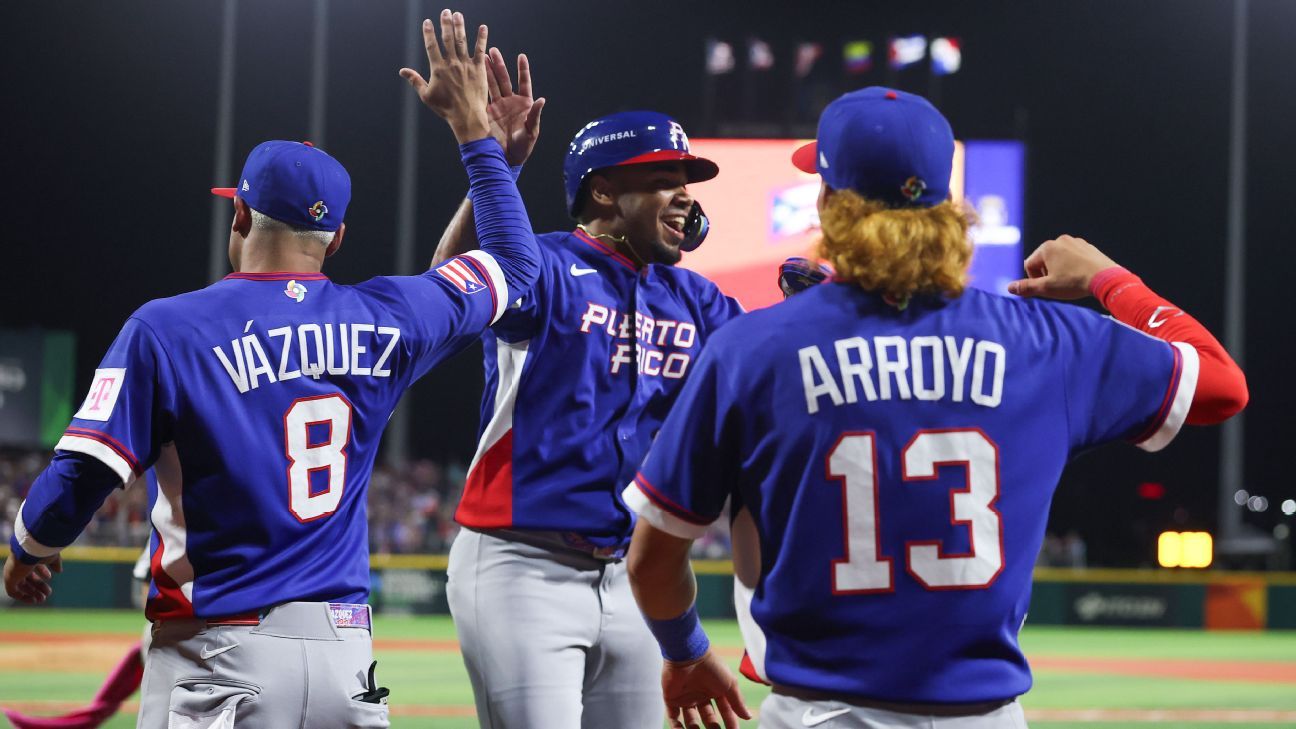
SAN JUAN, Puerto Rico — For an extended period, ill-will had tainted the World Baseball Classic’s scheduled reappearance in Puerto Rico. Initial enthusiasm across the island soon morphed into fury when unforeseen bureaucratic hurdles abruptly hindered several of the most prominent Puerto Rican talents from participating in the event at the last moment. By late January, the indignation had escalated to the point where José Quiles, president of the Puerto Rico Baseball Federation, felt compelled to threaten pulling the team entirely from the contest.
Nevertheless, those prior concerns faded once the initial throw occurred Friday night. The assembly of players was not what the 18,793 spectators present at Estadio Hiram Bithorn – alongside millions throughout the archipelago and among those dispersed abroad – had pictured. They had expected Francisco Lindor, Carlos Correa, and Javier Báez, the most distinguished Puerto Rico-born players in Major League Baseball, to be prominently featured, dazzling in their native land. Yet, this ceased to be relevant as soon as the Puerto Rican squad, in its inaugural game as a WBC host since 2013, stepped onto the ground against Colombia.
The vexation had dissolved, giving way to customary rhythmic percussion sounds and robust acclamations during Puerto Rico’s 5-0 triumph, marking the commencement of Pool A matches.
“We will not yield,” stated Puerto Rico manager Yadier Molina in Spanish. “We have faith in our abilities, we rely on our hurlers, and we have confidence in our fielding. Points will be amassed, and we will advance around the diamond. We are convinced these individuals are prepared for this competition.”
The Puerto Rican players – uniformly sporting bleached blond hair or beards, upholding the Team Rubio custom initiated in the 2017 WBC – possess few renowned figures but are abundant in youthful players still endeavoring to carve out their niche at the sport’s highest level.
They commenced the competition with an identical ambition to teams from the initial five versions of this tournament: securing the WBC title as the inaugural Puerto Rican team (the squad placed second in 2013 and 2017). However, they also came with a distinct aim for this particular collective: demonstrating their capability to stand for this esteemed baseball country, which boasts the second highest number of victories in WBC history.
“I liken this squad to the team in 2017, which was the initial competition for a significant portion of us, and we managed to achieve great feats,” Puerto Rico closer Edwin Díaz stated in Spanish. “I believe that all of us, myself included, share an identical fervent desire for victory.”
As early as November, Puerto Rico’s squad management was aware they would lack Los Angeles Dodgers versatile player Enrique Hernández, following his offseason elbow surgery. However, additional setbacks occurred with the close of the non-playing period.
Eligibility requirements for insurance had tightened since the last WBC, an event where Díaz – then with the New York Mets, now with the Dodgers – sustained a knee injury that concluded his season while rejoicing in Puerto Rico’s triumph over the Dominican Republic, and Houston Astros second baseman Jose Altuve was absent for the initial seven weeks of the season due to a thumb ailment acquired during the tournament. Puerto Rico experienced the repercussions more severely than any other WBC team.
Lindor and Correa were informed of their insurance rejection in late January, resulting in significant voids in Puerto Rico’s lineup. A final attempt proposal from celebrated Puerto Rican musical performer Bad Bunny to provide coverage for the two prominent players via an alternative insurer was not approved by their representatives or clubs.
Catcher Victor Caratini and reliever Alexis Diaz were likewise refused coverage. Jose Berríos, a right-handed pitcher and two-time All-Star, was denied insurance for pool play, though he might conceivably link up with the squad for the quarterfinal stage. The circumstance might have been more dire – relievers Jovani Moran, Luis Quiñones, and Yacksel Ríos were first refused coverage until those rulings were reversed.
Subsequently, a further misfortune struck: Báez was disqualified because of a three-year ban imposed on him after a positive test for cannabis during the 2023 WBC.
The inclusion of past All-Stars Nolan Arenado (a probable future Hall of Famer) and Willi Castro to this year’s squad served to soften the impact of the impediment, but unavoidable chagrin loomed. Lindor, Correa, Báez, and Berríos boast numerous All-Star selections. Only Díaz and Arenado are the sole members of the present squad holding that honor. The team’s management – led by general manager Carlos Beltran, and featuring Edgar Martinez, Juan Gonzalez, and Sandy Alomar Jr. on Molina’s coaching staff – commands greater prestige than the athletes themselves.
“It is painful,” Molina remarked. “However, we are concentrating on the individuals present who are prepared to embody and demonstrate to the people of Puerto Rico their reliability.”
This collective, featuring 39-year-old captain Martin Maldonado serving as catcher for his concluding matches as an athlete, demonstrated this truth in its initial performance on native ground. Experienced southpaw Jose Quintana, the foremost hurler in Colombia’s baseball annals, prevented Puerto Rico from registering any hits in his three-frame opening; the squad’s initial hit of the competition only materialized in the fifth inning, a base hit by right fielder Carlos Cortes against southpaw Adrian Almeida.
Subsequently, the scoring surge began; Puerto Rico exploded for a quintet of scores on five hits and an error, electrifying the packed stadium. After four subsequent innings, Díaz appeared from the relief pitching area to his distinctive trumpet-fueled entrance, obtaining the concluding three outs in the pivotal victory.
“The atmosphere was vibrant on the field,” remarked Puerto Rico starter Seth Lugo, who pitched four innings without allowing a run. “In every inning, the presence of the supporters was palpable.”
Puerto Rico’s subsequent engagement involves a contest with Panama on Saturday night. Despite the notable missing players, the squad began as joint-favorite in Pool A together with Canada. During the elimination stages, Puerto Rico would take on the mantle of the less-favored competitor against the competition’s elite, celebrity-filled teams – yet its players are determined to demonstrate their rightful place.
“I perceive this as a youthful squad that is extremely eager and possesses a strong will to triumph,” stated Hernández, fully uniformed on Friday after having traveled by air from Arizona to join the squad, in Spanish. “Some assert the squad is not ‘whole,’ but if there’s one characteristic defining us as Puerto Ricans, it’s that we leverage every opportunity to its fullest extent.”