
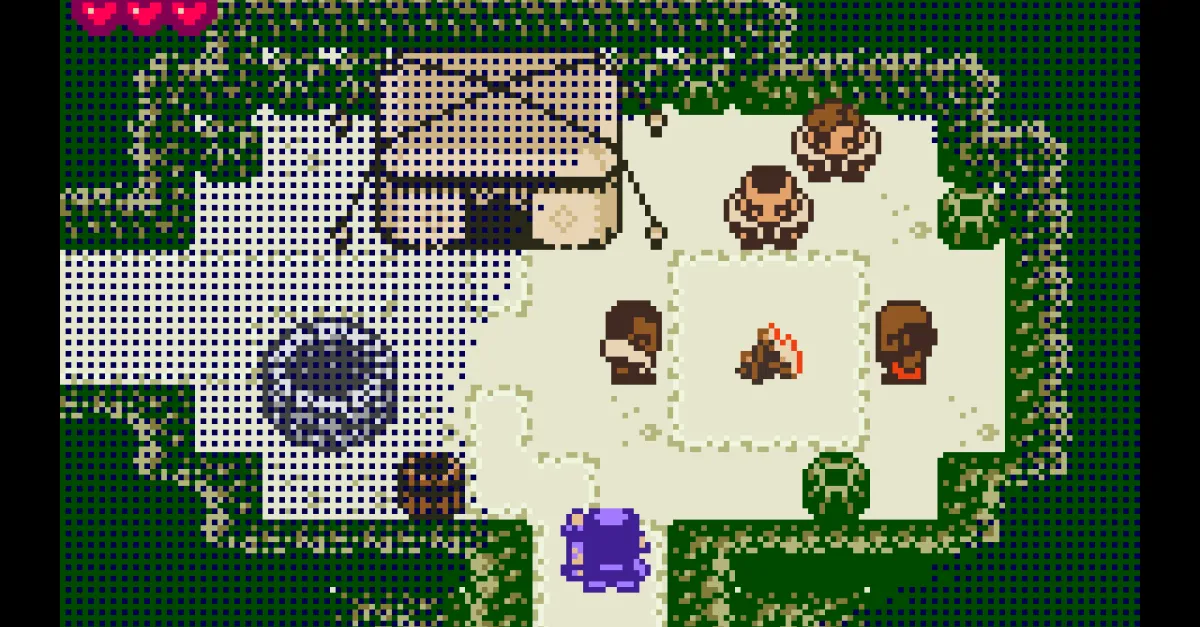
Numerous titles attempt to imitateThe Legend of Zelda, yet seldom succeed in embodying its essence within such a compact, succinct offering asRatcheteer DX. This dystopian game can be finished in just a few hours, but within that timeframe, it almost flawlessly replicates the quintessentialZeldaatmosphere, providing a genuine feeling of exploration coupled with the gratification of independent discovery.
This game is situated in a grim future epoch where the majority of humankind lies dormant beneath the planet’s crust to endure an impending glacial period. For continued operation, technicians are roused periodically to service the entire array of machinery vital for collective survival. However, upon your character’s awakening, virtually everything has malfunctioned: critical infrastructure, such as the power station and water purification plant, has ceased functioning, and your guide has vanished. Rectifying these issues necessitates traversing numerous impediments, both subterranean and terrestrial.
My assertion thatRatcheteer DXresemblesZeldarefers to the classic, NES or Game Boy generation ofZeldatitles. It presents as a top-down adventure rendered with distinctive pixel art, and guidance on objectives or methods is minimal. While aspects have been somewhat simplified, the core emphasis remains on devising solutions to challenges and progressing through the environment.
In pursuit of this, players gradually acquire novel implements, each capable of profoundly altering gameplay dynamics. Initially, a basic lantern is provided, serving to illuminate darkness and energize specific mechanisms (as well as irritating particular adversaries); however, ultimately, a wrench for combat, the capacity to leap, and additional tools become available. Every modest acquisition unlocks fresh possibilities within the game, either by enhancing player capabilities, revealing new routes, or, in certain scenarios, achieving both.
Despite the demands, I was never overly disoriented or disheartened; yetRatcheteer DXpresents sufficient challenge that traversing a dungeon or a subterranean maze to locate my subsequent objective remained gratifying. Furthermore, the narrative unexpectedly engrossed me: conveyed sparsely via concise exchanges, players can delve into supplementary writings that enrich the setting, and an enigmatic idiom is even present for decryption to uncover further lore. This intricate world-building introduced an additional dimension, deepening my desire for continued exploration.
Similar to the quirky channel-hopping simulationBlippo Plus,Ratcheteer DXis in fact an improved iteration of a title initially released on the Playdate platform. On Panic’s portable device,Ratcheteer DXoffered a somber and confined experience, aptly matching the game’s atmosphere. The vibrant color enhancement renders it a more pleasant game, facilitating exploration on an expanded display, and the need for frequent item exchanges is reduced inDX, a welcome modification. For those still desiring a more retro aesthetic, the game provides three alternative graphical modes: monochrome, Playdate-esque grayscale, and “pea soup,” closely resembling the classic Game Boy screen.
Irrespective of how one chooses to experience it,Ratcheteer DXdelivers a wonderfully concise interpretation ofZeldathat skillfully balances difficulty with accessibility. Moreover, as the flagshipZeldafranchise consistently grows in scope and grandeur, titles such asRatcheteer DXserve as a pleasant homage to an earlier era.
Ratcheteer DXis currently accessible for the Switch, personal computers, and Mac systems.