
Gain access to the Editor’s Overview without charge
Roula Khalaf, Editor of the FT, chooses her preferred articles in this periodic bulletin.
Israeli authorities are gearing up for a prolonged operation against the Lebanese armed faction Hizbollah, an action expected to persist past the conclusion of the conflict against Iran, as per individuals informed about the deliberations.
Israeli officials stated recently that they anticipate the US-Israeli war with Iran to span “several weeks,” as they endeavor to dismantle Tehran’s nuclear and ballistic missile capacities, alongside the principal safeguards sustaining the Islamic republic.
Nevertheless, US President Donald Trump seemed to qualify his stance in one of his numerous public statements on Monday, declaring that the conflict was progressing faster than anticipated and was “largely concluded, almost entirely.”
Those with knowledge of the strategic arrangements indicated that the Israeli assault against Hizbollah — which was initiated after the Iranian-supported group launched projectiles toward northern Israel recently — would persist for a duration no less than the attack against Iran and might even extend past any truce with Tehran.
“[The objective is] to cause sufficient harm [to Hizbollah so] that there is no perpetual dread of needing to relocate the inhabitants of the northern regions,” one of the individuals remarked, alluding to Israeli communities moved from their homes in earlier skirmishes with Hizbollah.
An Arab diplomat conveyed that the message concerning timing had been communicated to countries in the region. “The Israelis are apprising world stakeholders of the likelihood that the conflict with Hizbollah could become protracted and outlive the war with Iran,” the diplomat added.
There have also been negotiation endeavors to avert a wider Israeli military action, with France proposing assistance in demilitarizing Hizbollah, according to a person briefed on the matter, and Lebanese officials declaring openly that they would be receptive to unmediated discussions with Israel.
Israeli officials had been deliberating a fresh assault against Hizbollah even prior to the initiation of the US-Israeli strike against Iran, according to a person briefed on the operation.
Israel initiated an extensive conflict in Lebanon in October 2024. That came after twelve months of frontier shelling between the two adversaries, which began when Hizbollah launched projectiles at Israel subsequent to Hamas’s October 2023 attack from Gaza.
A truce facilitated by the US ostensibly ceased the hostilities, but Israel maintained almost daily bombardments on Hizbollah, contending that the group’s demobilization — which Israel, the US and the Lebanese government anticipated within the accord but which Hizbollah had not overtly assented to — was not advancing with sufficient speed.
The antagonism intensified once more last week, with Israel unleashing a wider offensive on Hizbollah after it discharged projectiles and unmanned aerial vehicles towards Israel in reprisal for Israel’s assassination of Iran’s paramount spiritual guide, Ayatollah Ali Khamenei.
“Hizbollah made a grave error,” said one Israeli defense authority.
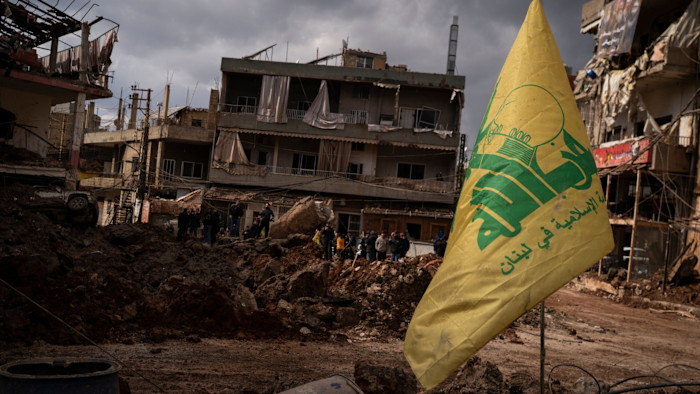
Since then, Israeli forces have struck over 600 locations across Lebanon, with most bombardments aiming at the nation’s southern region and Beirut’s heavily inhabited southern districts where Hizbollah wields influence. This has prompted the largest displacement of Lebanese civilians since the end of the 2024 conflict.
Israel retained soldiers in at least five positions slightly within Lebanese borders after the 2024 ceasefire. It has stationed extra troops in Lebanon and now occupies no fewer than twelve forward positions across the slender stretch of the boundary, according to two people cognizant of the situation.
Israeli officials assert this constituted a protective action to forestall any endeavors by Hizbollah to launch projectiles directly at northern Israeli communities or initiate incursions across the frontier.
Despite activating myriad reserve personnel, the Israeli army has not yet advanced deeper into the northern reaches of Lebanese border villages, as they did during the 2024 terrestrial campaign.
Adding complexity to the situation is the severity of the current comprehensive conflict against Iran. “Most of the aerial resources are being used in that theater of operations,” said an Israeli defense authority.
But Israeli forces have conducted multiple incursions further into Lebanese territory, including one in the south on Sunday night and an aerial mission in the east of the country on Friday that the military said was intended to uncover data concerning an Israeli airman unaccounted for since the 1980s.
Two people cognizant of the circumstances said there had also been talks regarding deploying Israeli forces to the Bekaa Valley, parts of which are considered a Hizbollah bastion. One of the people said no resolution had been made.
UNIFIL said it had noted combat activities in various sites in southern Lebanon, and a person acquainted with the Israeli military’s deployments said they had seen Israeli troops carrying out construction efforts in several positions a minimum of one kilometer within Lebanese territory. This might suggest Israel was intending to retain these sites, the person said.
Lebanon’s army has retreated from almost all of its posts adjacent to the designated Blue Line in southern Lebanon, according to two people aware of the troop displacements. Residents of three villages told the FT they had seen processions of soldiers abandoning their stations near IDF strongholds inside Lebanon.
The chief of the Israeli armed forces, Eyal Zamir, informed high-ranking officers on Sunday that the endeavor would demand “fortitude.” “This will take significant duration, you should be ready for such an eventuality, and regardless of its length, it shall run its course,” he said.