
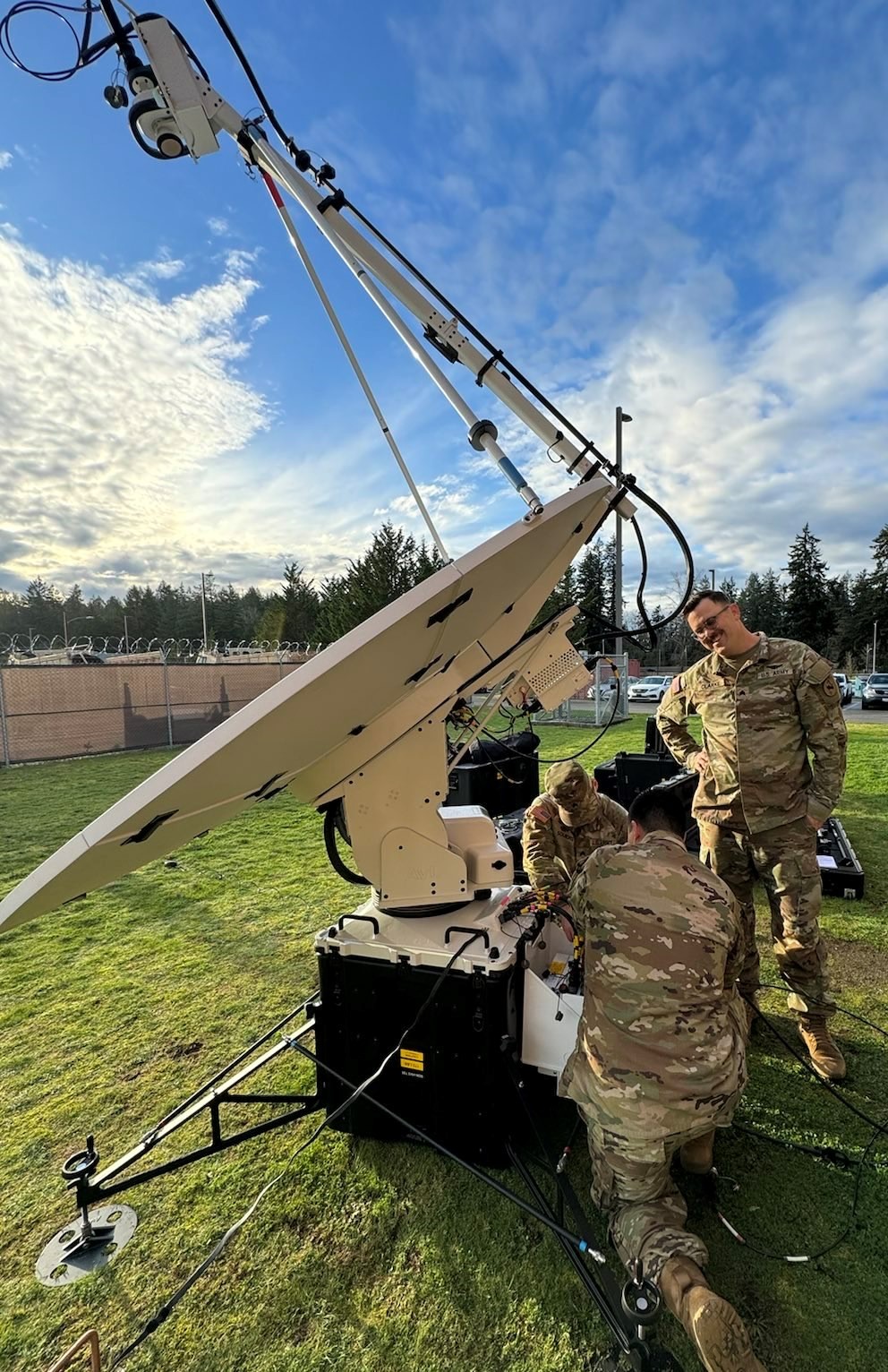
The United States Army is significantly expanding its expertise and capabilities in space operations, establishing a dedicated branch and planning to integrate thousands of specialized personnel in the coming years. This strategic shift aims to deepen the Army’s ability to leverage space-based assets for critical functions such as navigation, communication in challenging environments, and precision targeting.
In June, the Army officially created its Space Operations Branch, a move designed to consolidate space-related career paths and provide specialized training for Soldiers in operating and deploying space systems. This initiative represents a formal recognition of the growing importance of space in modern warfare and the Army’s distinct role within the broader U.S. military’s space enterprise.
During the annual Association of the U.S. Army (AUSA) Annual Meeting in Washington, D.C., officials announced a significant step in this expansion. Effective October 1, 600 enlisted Soldiers were officially transferred into the new branch. These individuals have been reclassified as 40D Tactical Space Operations Specialists, a Military Occupational Specialty (MOS) code specifically for space troops. They now join 40A Space Operations Officers, creating a unified and dedicated cadre of space professionals. Previously, these enlisted Soldiers had been temporarily assigned to space-related units from fields such as Air Defense Artillery, Signal, and Military Intelligence, highlighting the Army’s long-standing reliance on cross-functional expertise for space tasks.
Col. Joseph Mroszczyk, director of the Army’s Transformation Integration Directorate for Space Superiority and High Altitude, informed reporters on October 14 that the Army’s space operations cadre has nearly doubled since 2012. He anticipates this growth trajectory will continue substantially within the new Space Operations Branch. When asked about specific targets for expansion, Mroszczyk indicated that the branch is expected to grow to “a couple thousand dedicated folks,” encompassing both enlisted personnel and officers. He described this as a “significant contribution across the service” but did not provide a timeline for achieving this target.
This expansion comes four years after the establishment of the U.S. Space Force in 2019, which saw space operators and units transfer from various military branches, primarily the Air Force. While some critics suggest that the Army’s independent expansion risks duplicating efforts or blurring inter-service roles, Army officials maintain a clear distinction. They argue that while the Space Force focuses on achieving and maintaining space superiority in orbit, the Army’s role is specifically to integrate space capabilities and effects into tactical, multi-domain operations from the ground. This perspective emphasizes a complementary, rather than redundant, function.
Lt. Gen. John Rafferty, commander of the Army’s Space and Missile Defense Command, elaborated on this distinction in an October 13 interview with Air & Space Forces Magazine. He stressed that as demand for space-enabled capabilities intensifies, the Army must provide the same professional career pathways and specialized training for its space operators that it offers for traditional specializations such as artillery, infantry, and aviation. “Training, education, experience, and talent management is how you create great leaders, and that’s how you build great units with great leaders,” Rafferty stated. He added that it became evident to the Army that “in order to capitalize on the momentum, the gains that we’ve made in Army space-delivered capabilities, we need to professionalize the branch and do it fast.”
Rafferty highlighted several key areas where the Army foresees an increasing need for space personnel and effects in the coming years. On October 8, the Army activated a new Multi-Domain Task Force (MDTF) at Fort Carson, Colorado. This unit is one of four such elements strategically positioned globally, designed to integrate air, land, sea, space, and cyber operations within a theater of conflict. A fifth MDTF is planned for activation in 2028. Each of these task forces incorporates space effects, meaning that as more MDTFs are established, a proportional increase in space personnel and systems will be required to support their operations.
Additionally, Rafferty pointed to the creation of a new Theater Strike Effects Group within U.S. Army Pacific, which will also necessitate robust space support. The Army also intends to broaden the focus of its 1st Space Brigade, headquartered at Fort Carson but with elements distributed across six countries. Currently, the brigade’s mission encompasses GPS support, theater missile warning, and satellite communications. The Army plans to expand its scope into new, unspecified capability areas, further driving the demand for specialized space operators and systems.
Beyond personnel, the Army is also exploring new platforms. While it has not publicly announced plans to field its own satellites, both Rafferty and Mroszczyk expressed significant interest in developing an architecture of stratospheric platforms operating in the “near-space” region. This region is generally defined as altitudes between 60,000 and 100,000 feet, above typical air traffic but below orbital space.
“That’s a—no pun intended—space that is just ripe with potential, and the opportunities for various payloads to be on those is remarkable right now,” Rafferty commented, emphasizing its affordability and scalability. He views this as a crucial area to pursue as the space branch expands. Mroszczyk further described near-space as a “transition point” between the air and space domains, where platforms could host a variety of payloads for missions such as sensing and communications. These platforms could even serve as launch points for “launched effects”—the Army’s term for small, autonomous systems deployed from air or ground.
Mroszczyk provided an example of how high-altitude platforms could form a “complementary” layer for existing space-based data transport efforts, such as the Space Development Agency’s Proliferated Warfighter Space Architecture or the Space Data Network. Systems in this near-space layer could aid in distributing data during a conflict, providing essential resiliency should traditional space systems be targeted or disrupted. The Army is exploring a range of systems, from smaller platforms to larger balloons, and plans multiple experiments in the coming year to test these concepts. “That operational space allows some persistence and broad coverage in an area where you can deliver space-like capabilities in terms of payloads, but then also take advantage of the deep access that you get from a stratospheric balloon,” Mroszczyk concluded.
Why This Matters
The U.S. Army’s aggressive expansion into space operations signals a fundamental shift in how ground forces envision and execute modern warfare. This initiative underscores the recognition that space is no longer merely a support domain but an integral, contested battlespace directly impacting tactical outcomes on Earth. By creating its own Space Operations Branch and training thousands of dedicated personnel, the Army aims to seamlessly integrate space capabilities into every facet of its multi-domain operations, from intelligence gathering and secure communications to precision strike and defensive measures.
This move has significant implications for inter-service dynamics and the future of military strategy. While the U.S. Space Force focuses on orbital superiority and protecting space assets, the Army’s emphasis on tactical integration from the ground clarifies a complementary, rather than competitive, role. This distinction is crucial for optimizing resources and avoiding duplication of effort, fostering a more robust and resilient overall U.S. military space enterprise. However, it also necessitates clear lines of communication and cooperation between the services to ensure a unified approach to national security in space.
The Army’s focus on “near-space” platforms, operating in the stratosphere, represents a novel and potentially disruptive technological frontier. These affordable and scalable platforms could provide persistent surveillance, enhanced communications, and even deploy autonomous systems, bridging the gap between traditional air power and orbital satellites. This stratospheric layer offers a resilient alternative or complement to vulnerable orbital assets, providing critical capabilities in a contested environment where satellite access might be denied or degraded. The planned experiments in this area could pave the way for new operational paradigms and strategic advantages.
Ultimately, this expansion reflects the evolving nature of warfare, where battles are fought across all domains—land, sea, air, cyber, and space—simultaneously. By professionalizing its space cadre and investing in new technologies like stratospheric platforms, the Army is proactively adapting to a future where adversaries will increasingly challenge access to and superiority in space. This ensures that American ground forces remain equipped with the most advanced capabilities to navigate complex battlefields, protect personnel, and achieve strategic objectives in an increasingly interconnected and contested global security landscape.