
Matternet CEO Andreas Raptopoulos discusses the race to scale drone delivery and the future of U.S. airspace economy on ‘Mornings with Maria.’
**Key Takeaways:**
1. **Operational Cost Surge & Profitability Concerns:** Proposed legislation in New York City threatens to significantly elevate last-mile delivery costs for e-commerce giants like Amazon by mandating direct employment over subcontracting, potentially impacting corporate profitability and investor sentiment towards the logistics sector.
2. **Broader Regulatory Precedent for Gig Economy:** The “Delivery Protection Act” sets a critical precedent for the burgeoning gig economy, signaling increased regulatory scrutiny over contractor classification, which could force widespread operational restructuring and cost re-evaluations across various sectors relying on flexible labor models.
3. **Consumer Impact & Economic Shift:** New York City residents could face substantially higher delivery fees and slower service, while the potential relocation of major logistics operations out of the five boroughs could diminish local job creation and alter the competitive landscape for small and large businesses alike.
—
**NYC Regulatory Headwind Threatens Logistics Sector, Amazon’s Profitability Model**
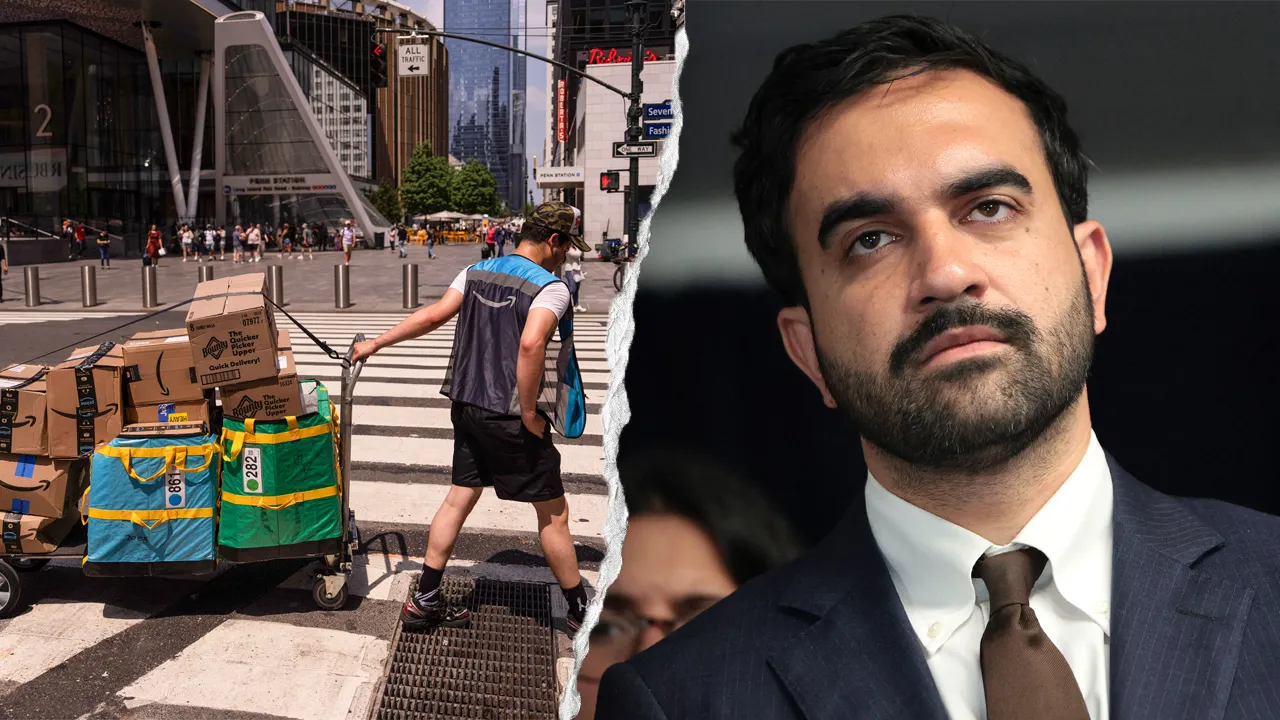
New York City is poised to become a critical battleground in the ongoing debate over labor classification and the operational models of modern logistics. A proposed Democratic-socialist policy, Intro 0518-2026, dubbed the “Delivery Protection Act,” could impose substantial new costs on businesses, with Amazon warning that it could burden New York City households with an additional $664 per year. The legislation, backed by City Councilmember Tiffany Cabán and Mayor Zohran Mamdani, aims to prohibit large shipping companies from utilizing third-party contractors for last-mile deliveries, a move that could force some delivery operations to reconsider their presence within the five boroughs.
For market participants, this bill represents a significant regulatory risk, not just for Amazon (NASDAQ: AMZN) but for the entire logistics and e-commerce ecosystem. Amazon, a bellwether for the sector, has publicly expressed its opposition, emphasizing its desire to remain in New York City while simultaneously highlighting the severe economic repercussions of the bill. “Our priority is to continue creating good jobs and supporting our employees in New York City,” an Amazon spokesperson stated, underscoring the company’s commitment while subtly signaling the strategic evaluation of its operational footprint.
The core of Intro 0518-2026 mandates that operators of certain last-mile facilities directly employ workers performing core services, including delivery, thereby restricting subcontracting for that work. This legislative push stems from a widely voiced concern among worker advocates and certain political factions: that corporations like Amazon leverage subcontracting to sidestep accountability, dictate working conditions, and avoid traditional employee benefits and protections. Mayor Mamdani’s office articulated this position, noting, “Corporations like Amazon build billion-dollar business models by insulating themselves from accountability through a system of exploitative subcontracting… The result is a system that leaves workers vulnerable and corporations free to avoid accountability for reckless conditions on city streets.”
This ideological clash—worker protection versus business model efficiency—has profound implications for Amazon’s operational calculus and, by extension, its financial outlook. Amazon’s Delivery Service Partner (DSP) program, which relies on a network of small businesses employing W-2 workers to execute last-mile deliveries, is a cornerstone of its logistical strategy, providing both flexibility and scalability. This model allows Amazon to rapidly expand its delivery capacity without directly incurring the full overhead of a vast, directly employed workforce.
**Economic Fallout and Supply Chain Disruptions**
The financial implications of Intro 0518 are stark. Amazon cited an analysis by consulting firm AKRF, commissioned by the Five Borough Jobs Campaign, which projects a massive increase in delivery costs. The report suggests that if facilities are forced to relocate farther from customers – as would be necessary to avoid city mandates – per-route travel time, fuel consumption, and labor costs would surge while packages delivered per route would decline. The analysis models a staggering **267% cost increase per package** for deliveries currently handled by NYC facilities, coupled with service-level declines of 10 to 21%. Critically, these costs are projected to translate into an **additional $664 in annual delivery expenses passed directly to every New York City household.**
For investors, these figures represent a clear threat to Amazon’s notoriously thin operating margins in retail and logistics. A significant hike in delivery costs in a key market like NYC could impact overall profitability, potentially leading to downward revisions in earnings forecasts and a re-evaluation of the company’s valuation multiples. The threat isn’t just to Amazon; it also impacts the ecosystem of small businesses that form the backbone of its DSP network. “As written, this legislation would put more than 40 Delivery Service Partners and their 5,000-plus employees at risk,” Amazon warned, highlighting the direct impact on local entrepreneurs, many of whom are minorities and first-generation Americans.
The New York Delivers Coalition, which comprises these independent small businesses, echoes Amazon’s concerns. They emphasize that while large corporations might have the resources to adapt, the independent DSPs would likely be forced to shut down, jeopardizing over 10,000 local New Yorker jobs. This underscores a critical market dynamic: regulatory changes often disproportionately affect smaller players, potentially leading to market consolidation or reduced competition.
The potential for Amazon to relocate its operations and delivery facilities outside New York City – to neighboring New Jersey, Long Island, or Westchester – illustrates a common corporate response to adverse regulatory environments: geographic arbitrage. While such a move might mitigate direct compliance costs within NYC, it introduces new logistical complexities, longer delivery routes, increased fuel consumption, and potentially slower service for NYC residents, further reinforcing the projected cost increases for consumers. This strategic maneuver could also result in a net loss of economic activity and job opportunities within the five boroughs, shifting them to neighboring regions.
**Broader Market Implications and Regulatory Trends**
The “Delivery Protection Act” extends far beyond Amazon, serving as a critical indicator for the future of the entire gig economy and the burgeoning market for last-mile logistics solutions. Should this bill pass and prove effective in reclassifying contractors as employees, it could inspire similar legislative efforts in other major urban centers and states, creating a ripple effect across companies like Uber, DoorDash, FedEx, and UPS that also rely on flexible labor models or extensive contractor networks.
The core issue of worker classification carries substantial financial implications. Reclassifying contractors as employees typically entails increased labor costs due to minimum wage requirements, overtime pay, benefits packages (health insurance, retirement plans), payroll taxes, and workers’ compensation. For companies that have built business models on the cost efficiency and flexibility of independent contractors, such a shift could necessitate a fundamental overhaul of their operations, supply chains, and pricing strategies.
For investors, this adds another layer of regulatory risk to an already complex landscape. Companies operating in the logistics and gig economy sectors might see their stock valuations impacted by increased uncertainty, potential litigation, and the specter of higher operational expenses. The ongoing debate highlights the tension between social welfare objectives and the principles of free-market enterprise and operational efficiency that drive innovation and competitive pricing.
Amazon’s proactive outreach to City Council members and its invitation for them to visit facilities and engage with DSPs and their employees underscores its attempt to educate policymakers on the ground-level realities of its business model. The company’s stance, shared by the New York Delivers Coalition, is a plea for dialogue before decisions are made that could irrevocably alter the economic landscape for thousands of New Yorkers and redefine the future of urban logistics.
**Market Impact**
The proposed Delivery Protection Act in New York City poses a material financial risk to Amazon and the broader last-mile logistics sector. Should it pass, the mandated shift to direct employment would likely lead to a substantial increase in operational costs, compressing profit margins for e-commerce and delivery companies. This could trigger downward revisions in analyst earnings forecasts for affected entities and put downward pressure on their stock valuations, particularly for those with significant NYC market exposure. Furthermore, the legislation creates a template for similar regulatory actions nationwide, signaling a tightening labor market for the gig economy and potentially accelerating a broader re-evaluation of contractor-based business models. For consumers, the outcome will likely mean higher delivery costs and potentially slower service, while the threatened relocation of logistics hubs could impact local economies and job markets, making the unfolding situation a key watch for investors tracking regulatory trends and their impact on corporate profitability and consumer spending.