
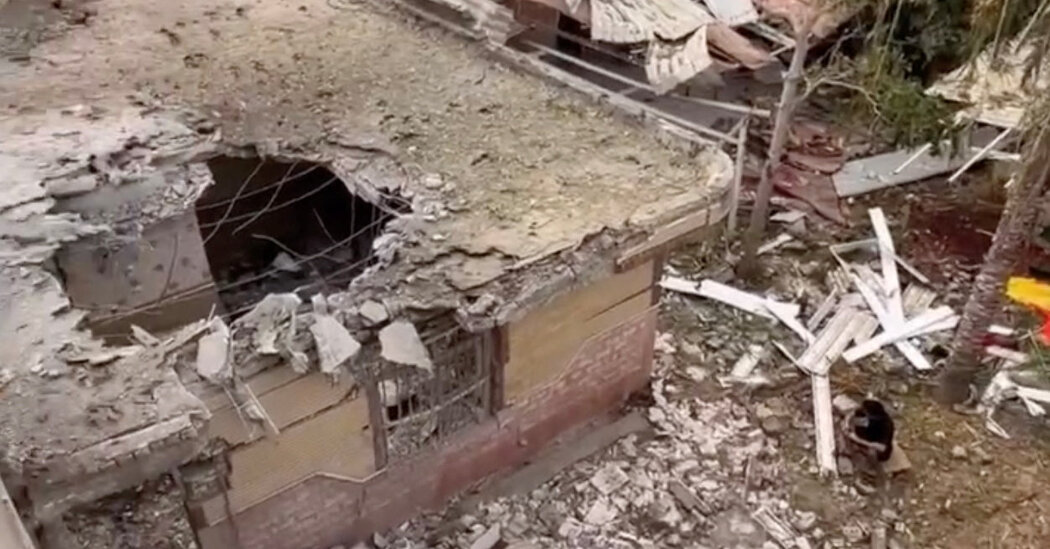
A significant escalation of tensions between the United States and Iran unfolded overnight, marked by a series of reciprocal military strikes. This intense exchange of fire reportedly resulted in casualties among both military personnel and civilians within Iran, according to Iranian state media and official statements. Among the gravest allegations from Tehran was the killing of four individuals, including a child, at a wedding in a residential area.
The United States Central Command (CENTCOM), which oversees U.S. military operations across the Middle East, confirmed it had conducted strikes on Iranian military targets. These actions, CENTCOM stated, were undertaken in direct retaliation for previous attacks on international shipping and American forces stationed in the region, indicating a deepening cycle of military engagement between Washington and Tehran.
Iranian authorities reported substantial losses following the U.S. operations. A statement published by the Iranian news agency Tasnim on Wednesday indicated that four members of the aerospace division of the Islamic Revolutionary Guards Corps (IRGC) were killed in a U.S. strike in the western city of Kermanshah. Separately, Iran’s state outlet Press TV reported on Wednesday that a total of at least 12 people lost their lives in strikes across Iran’s southern region, underscoring the widespread impact of the overnight assaults.
One of the most concerning reports from Iranian officials detailed a U.S. military strike hitting a wedding celebration. This incident, according to Iranian state media, occurred in a residential area within the small port town of Kuhestak in the Hormozgan province of southern Iran. The attack reportedly killed four individuals, including a child, and resulted in approximately 50 others being wounded and subsequently hospitalized, according to the same sources. These reports, if verified, highlight the devastating potential for civilian harm in the ongoing military confrontations.
In response to the civilian casualty reports, U.S. Central Command acknowledged awareness of the claims but issued a denial regarding the deliberate targeting of non-combatants. A statement from the U.S. military asserted, “The U.S. military never targets civilians, unlike the I.R.G.C.,” drawing a clear distinction between its operational protocols and those of the Iranian Revolutionary Guards Corps.
Following the U.S. strikes, Iranian officials swiftly condemned the actions and vowed a robust response. Esmaeil Baghaei, spokesman for Iran’s Foreign Ministry, utilized a social media post on Wednesday to denounce the strikes and pledge that Tehran would retaliate “with firmness.” This declaration signaled Iran’s intention to not only defend its interests but also to escalate its counter-actions.
Indeed, the Revolutionary Guards subsequently announced on Wednesday morning that they had launched a series of retaliatory missile attacks overnight. These strikes reportedly targeted an American military base in Jordan, U.S. military equipment warehouses in Iraq, and an air base in Kuwait that hosts American forces. These claims indicate a broad-based response designed to demonstrate Iran’s reach and resolve across the wider Middle East region.
The region immediately felt the impact of Iran’s reported counter-strikes. Jordan’s military confirmed on Wednesday that 13 ballistic missiles had entered its airspace. While 10 of these were successfully intercepted, three others reportedly fell in remote, unpopulated areas, according to a statement released on social media by the Jordanian military. Similarly, Kuwait’s military reported that its air defenses were actively confronting attacks by Iranian drones. Bahrain’s military also confirmed it had intercepted Iranian aerial attacks, indicating a coordinated and multi-pronged Iranian response that affected several U.S. allies in the Gulf.
Later in the day, Mohsen Rezaei, a prominent Iranian security official, took to social media to announce that Iran would soon unveil a “new strategy on the battlefield, in diplomacy, and in confronting the economic blockade.” Rezaei’s statement, while lacking specific details, suggested a comprehensive and potentially significant shift in Iran’s approach to the ongoing standoff with the United States and its allies, indicating a move beyond direct military exchanges to broader strategic considerations.
This latest deadly back-and-forth serves as a stark demonstration of the entrenched stalemate characterizing relations between Washington and Tehran. The current cycle of violence persists more than six months after President Trump initiated strikes on Iran, a period during which he had expressed an expectation of a swift resolution to the conflict. Instead, the situation appears to be deepening, with both sides exhibiting an unwillingness to de-escalate.
Further complicating the regional security landscape, the Revolutionary Guards asserted on Wednesday, in a statement carried by state news media, that two oil tankers attempting to transit the Strait of Hormuz had struck mines, subsequently exploded, and were on fire. This claim, however, could not be immediately or independently verified, adding an element of uncertainty to the volatile maritime situation.
Iran has consistently maintained that it holds the right to control the passage of ships through the Strait of Hormuz. This critical waterway, situated on Iran’s southern coast, serves as a vital artery for the global passage of oil and other crucial resources. Before the recent escalation of the U.S.-Israeli conflict, it was one of the world’s most important choke points for maritime trade. The U.S. Navy has been actively assisting ships in navigating a southern route through the strait, closer to the coast of Oman, a measure that has consistently drawn hostile responses and attacks from Iranian forces.
In its statement regarding the alleged tanker incidents, the Revolutionary Guards issued a warning, promising unspecified “additional punishments” for ships that opt to use the U.S.-backed navigation route through the Strait of Hormuz. This threat underscores Iran’s determination to assert its dominance over the strait and challenge international shipping perceived as operating outside its preferred parameters.
Concurrently, the Saudi foreign ministry confirmed on Wednesday that Iran had targeted a Saudi-flagged tanker named Sidr while it was passing through the Strait of Hormuz. Bahri, the Saudi shipping company that operates the tanker, issued a statement detailing a “security incident” on Monday during which two Filipino seafarers were tragically killed. This confirmed incident, distinct from the IRGC’s unverified claims, highlights the tangible and deadly risks faced by commercial shipping in the contested waters of the Strait of Hormuz.
Adam Rasgon and Sanam Mahoozi contributed reporting.
Why This Matters
The recent exchange of strikes between the United States and Iran represents a significant and dangerous escalation in an already volatile region. This cycle of retaliation carries several critical implications:
- Risk of Wider Conflict:The direct military engagement, including reported civilian casualties and attacks on regional bases, dramatically increases the risk of a broader, uncontrolled conflict. Such an outcome could draw in other regional and international actors, destabilizing the entire Middle East.
- Humanitarian Impact:Reports of civilian deaths, particularly at a wedding, underscore the devastating human cost of these military actions. Any further escalation would inevitably lead to more civilian suffering, displacement, and a humanitarian crisis.
- Global Energy Security:The Strait of Hormuz is a critical choke point for global oil and gas shipments. Incidents involving tankers, whether verified or alleged, directly threaten the flow of energy, potentially leading to sharp increases in global oil prices and significant economic disruption worldwide.
- Maritime Security Challenges:Attacks and threats against commercial shipping in international waters challenge the principles of free navigation and international maritime law. This creates an environment of fear and uncertainty for global trade, potentially impacting supply chains far beyond the Middle East.
- Erosion of Diplomacy:The immediate resort to military force and the exchange of threats indicate a severe breakdown in diplomatic channels and trust between Washington and Tehran. Without clear pathways for de-escalation and dialogue, the potential for miscalculation and unintended consequences grows exponentially.
- Regional Alliances Under Strain:The targeting of U.S. bases and the involvement of countries like Jordan, Kuwait, and Bahrain highlight the intricate web of alliances and rivalries in the region. Any further escalation could force these nations into more direct involvement, further complicating an already complex geopolitical landscape.
- Unpredictability of Escalation:Iranian officials’ statements about unveiling a “new strategy” suggest that future responses may not be limited to direct military tit-for-tat but could involve asymmetric warfare, cyberattacks, or other means, making the trajectory of the conflict highly unpredictable.
In essence, these events are not isolated incidents but symptoms of deep-seated geopolitical tensions that threaten international stability, economic well-being, and countless human lives.