
Key Takeaways:
- Supply Chain Realignment & Costs:The FCC’s expansion of its Covered List signals an accelerating shift away from foreign-produced critical components, particularly those from adversarial nations. This will likely drive diversification in renewable energy and automation supply chains, potentially leading to higher input costs for developers and manufacturers in the short to medium term as new, secure sources are established.
- National Security Premium on Tech:Geopolitical tensions are increasingly manifesting as tangible market restrictions. Investors must factor in a “national security premium” when evaluating tech companies, particularly those involved in critical infrastructure or data-sensitive applications, where sourcing decisions are now dictated by strategic alignment as much as economic efficiency.
- Domestic & Allied Innovation Catalyst:While disruptive, these restrictions create a protected market for domestic and allied manufacturers of power inverters and advanced robotics. This could stimulate significant R&D investment and production capacity expansion in the U.S. and partner nations, fostering innovation in secure technologies and potentially recalibrating global tech leadership over the long run.
Rep. Rick Crawford, R-Ark., discusses the Trump administration’s ban on foreign-made drones, concerns over Chinese spying and more on ‘Mornings with Maria.’
In a move underscoring the escalating intersection of national security and economic policy, the Federal Communications Commission (FCC) on Tuesday significantly expanded its “Covered List” to include foreign-produced power inverters and advanced robotic devices. This decisive action, driven by findings from a White House-convened executive branch interagency body, effectively renders new models of these products ineligible for FCC equipment authorization, raising critical questions about supply chain resilience, market access, and the future trajectory of key industrial sectors.
The FCC’s determination stems from an assessment that these foreign-made products pose “unacceptable cybersecurity and supply chain risks” to America’s critical infrastructure. This isn’t merely a regulatory tweak; it’s a strategic pivot with tangible market consequences, particularly as the nation’s electric grid becomes increasingly reliant on inverter-based resources and industries embrace advanced automation.
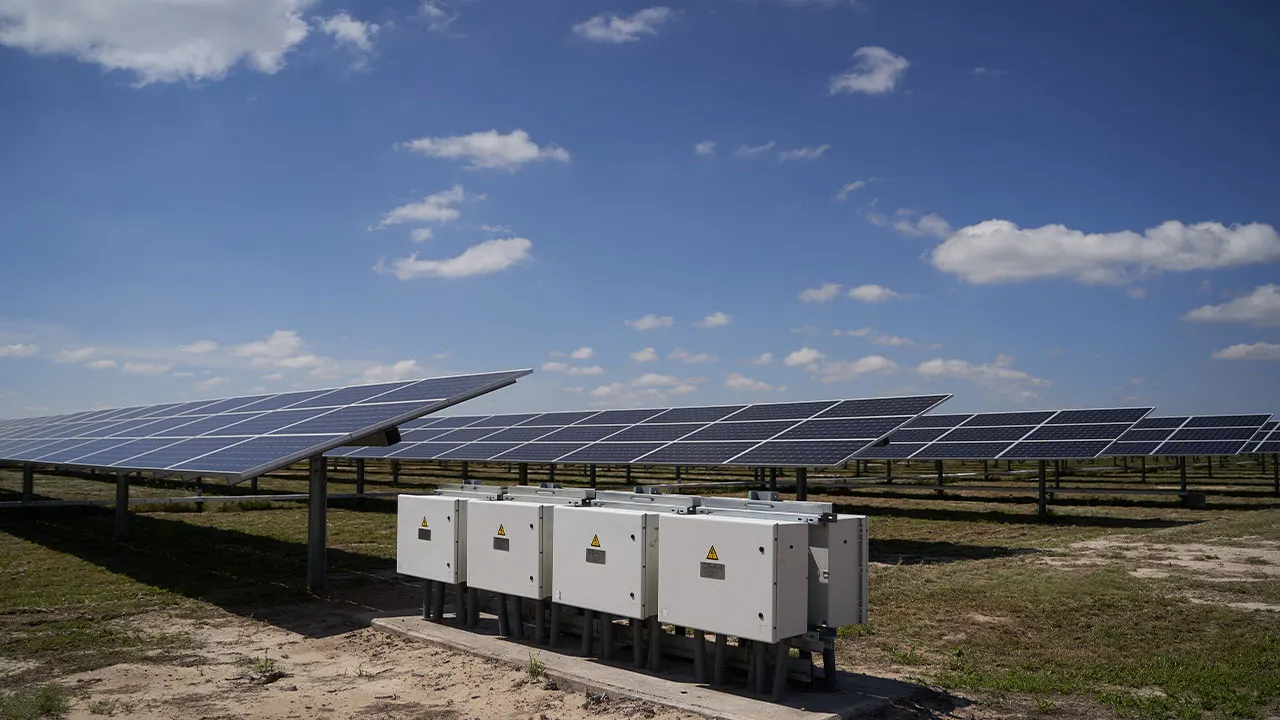
At the heart of the energy transition, power inverters are indispensable components, converting direct current (DC) electricity from sources like solar panels and battery storage facilities into the alternating current (AC) used by the grid. The national security determination explicitly warned that the remote connectivity inherent in these devices could be exploited by foreign entities. Potential threats range from the ability to remotely shut down inverters, exfiltrate sensitive operational data, facilitate surveillance, or even launch cyberattacks capable of disrupting the U.S. power grid. For utilities and renewable energy developers, this highlights an acute vulnerability, translating into a heightened risk premium for projects reliant on potentially compromised hardware.
FCC CHAIRMAN CLIMBS 2,000-FOOT CELL TOWER TO SPOTLIGHT ONE OF AMERICA’S TOUGHEST TRADES
Electrical equipment is seen at a utility-scale solar farm. The FCC on Tuesday expanded its Covered List to include foreign-produced power inverters and advanced robotic devices.(Mauricio Palos/Bloomberg via Getty Images / Getty Images)
Simultaneously, the addition of foreign-produced advanced robotic devices—encompassing everything from mobile humanoids to quadrupeds—signals a broader concern over the future of automation. These robots, with their sophisticated networking capabilities and onboard sensors, are increasingly integral to manufacturing, logistics, healthcare, and even defense. National security officials flagged risks that these machines could expose critical infrastructure and sensitive data, or be remotely commandeered, thereby compromising operational integrity and intellectual property. For industries heavily investing in automation, this mandate forces a re-evaluation of their technological partnerships and supply chain strategies, potentially favoring domestic or “friend-shored” alternatives despite potential cost increases.
Under the FCC’s stringent rules, equipment placed on the Covered List is generally barred from receiving the new equipment authorizations essential for importation, marketing, and sale within the United States. It’s crucial for market participants to understand that these restrictions target *new product models* seeking authorization, leaving existing devices already in consumer hands or previously approved untouched. This forward-looking approach aims to shape future market development rather than retroactively disrupting current operations, though the ripple effects on future procurement and investment decisions are undeniable.
Manufacturers are not entirely without recourse. A “Conditional Approval” process allows for exemptions, contingent on a positive determination from the Department of War – or the Department of Homeland Security in the case of power inverters – that a specific device or class of devices poses no national security risks. This creates a high hurdle, indicating that only truly secure and rigorously vetted alternatives will gain market entry, emphasizing the government’s prioritization of security over unchecked market access.
US BANS NEW FOREIGN-MADE CONSUMER INTERNET ROUTERS OVER SECURITY CONCERNS
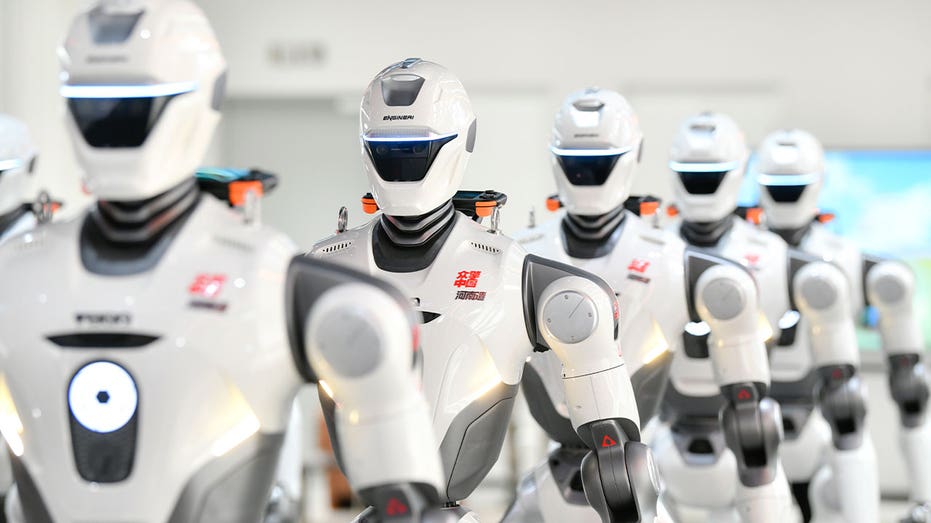
Advanced humanoid robots are displayed at a robotics exhibition. The FCC on Tuesday added foreign-produced advanced robotic devices to its Covered List after U.S. national security agencies cited cybersecurity and supply chain concerns.(VCG/VCG via Getty Images / Getty Images)
“I welcome these Executive Branch national security determinations, and I am pleased that the FCC has now added foreign produced advanced robotics and power inverters to the FCC’s Covered List,” FCC Chairman Brendan Carr affirmed, emphasizing the continuity of policy initiated under the previous administration. “Following President Trump’s leadership, the FCC will continue to do our part to secure America’s critical supply chains and, with today’s action, the FCC is acting in lock step with our national security agencies to do just that.”
This expansion broadens the FCC’s existing Covered List, which already includes products and services from prominent Chinese firms like Huawei, ZTE, Hikvision, Dahua, and Kaspersky, alongside certain foreign-produced routers and drones. The significant distinction in this latest move is the targeting of product *categories* based on their country of manufacture rather than specific corporate entities. This signals a systemic shift towards “de-risking” critical supply chains on a broader geographic basis, intensifying the ongoing technological and economic competition with nations deemed adversaries.
For investors, this policy signals an undeniable trend: the era of purely cost-driven global sourcing is yielding to a new paradigm where national security and supply chain resilience command a premium. Companies with diversified supply chains, a strong domestic manufacturing footprint, or strategic alliances with trusted partners are likely to fare better. Conversely, firms heavily reliant on restricted foreign technology face significant operational and financial headwinds, including potential redesigns, increased procurement costs, and project delays.
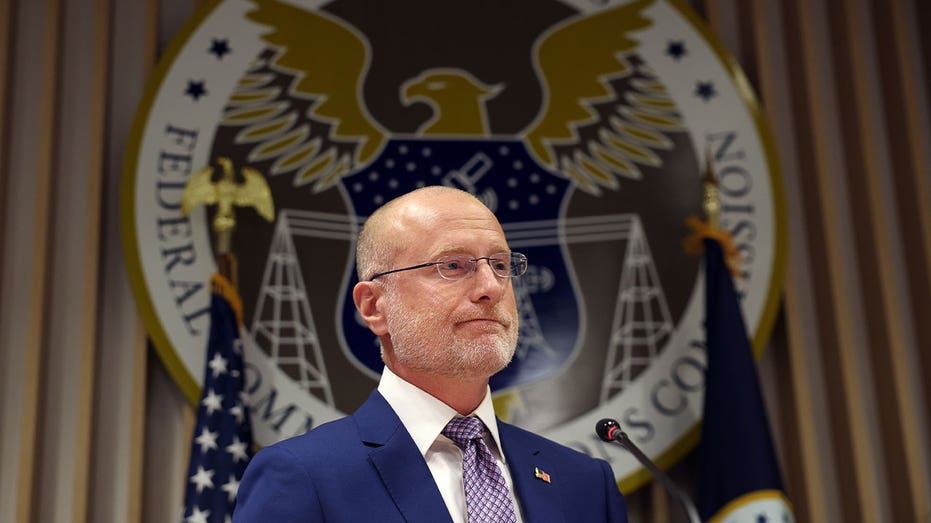
FCC Chairman Brendan Carr speaks at Federal Communications Commission headquarters. The FCC on Tuesday expanded its Covered List to include foreign-produced power inverters and advanced robotic devices.(Kevin Dietsch/Getty Images / Getty Images)
CLICK HERE TO GET FOX BUSINESS ON THE GO
Market Impact:
The immediate market impact is likely to be felt across several sectors. Renewable energy developers, particularly those in solar and battery storage, could face higher equipment costs and longer lead times as they pivot to approved suppliers. This may pressure profit margins for independent power producers (IPPs) and could marginally increase the levelized cost of energy (LCOE) for new projects. Shares of domestic or allied power inverter manufacturers (e.g., Enphase Energy, SolarEdge Technologies, SMA Solar Technology AG) could see increased demand and investor interest, while those of firms with significant exposure to restricted foreign sources may face headwinds. In the robotics and industrial automation space, companies heavily reliant on foreign-produced advanced robotics will need to accelerate their search for new suppliers, potentially driving up capital expenditures. This could benefit specialized domestic robotics firms and systems integrators. Broader macroeconomic implications include potential inflationary pressures on capital goods and energy costs, and a further push towards friend-shoring or reshoring of manufacturing capabilities, creating opportunities for industrial real estate and domestic manufacturing ETFs. Investors should closely monitor corporate earnings calls for commentary on supply chain adjustments and procurement strategies, as these restrictions will undoubtedly reshape competitive landscapes in critical technology sectors for years to come.