

Sen. Bernie Sanders said artificial intelligence and robotics should benefit workers — not billionaires — while warning that AI bots could worsen loneliness and replace human relationships among young people. (Credit: @SenatorSanders via YouTube)
**Key Takeaways:**
1. **AI’s Dual Market Impact**: Senator Sanders’s warnings underscore the growing tension between AI’s immense potential for corporate efficiency and productivity gains, and the severe risks of widespread job displacement and exacerbated economic inequality, challenging the prevailing bullish market narrative for tech.
2. **Escalating Regulatory Headwinds**: Influential political figures advocating for strict AI regulation signal increasing legislative scrutiny for tech giants. This could translate into significant operational costs, impact R&D budgets, and introduce uncertainty for investors betting on unchecked growth in the AI sector.
3. **ESG Integration & Social Risk**: Sanders’s focus on AI’s societal ramifications – from potential mental health crises to the spread of misinformation – highlights emerging Environmental, Social, and Governance (ESG) considerations. Companies perceived as failing to address these ethical responsibilities could face reputational damage, regulatory penalties, and a shifting investment landscape favoring more socially responsible AI development.
Sen. Bernie Sanders, I-Vt., a persistent critic of corporate power and wealth concentration, issued a stark warning Sunday regarding artificial intelligence (AI) and robotics. Speaking at a “Fight Oligarchy” rally in Maine, Sanders articulated a vision of AI’s future that sharply diverges from the prevailing optimistic narrative often driving tech sector valuations, suggesting the technology could replace American workers en masse and even damage children’s social development if left unchecked and controlled by billionaires prioritizing profits over people.
The Vermont independent’s comments resonate across financial markets, where AI is largely seen as the next frontier for unprecedented growth and efficiency. Yet, Sanders’s perspective injects a critical dose of reality regarding the potential for significant societal disruption and the inevitable demand for regulatory oversight, factors that could temper investor enthusiasm if not adequately addressed. His warnings about AI deepening economic inequality and worsening a mental health crisis among young people present a profound challenge to the “move fast and break things” ethos that has characterized much of Silicon Valley’s development.
“Kids are lonelier and lonelier,” Sanders said. “I do not want the next generation to have as their friends AI bots. I want them to have other kids, other human beings as their friends.” This sentiment, while seemingly far removed from quarterly earnings calls, speaks directly to the burgeoning ESG investment framework, where social impact and ethical technology use are increasingly scrutinized by institutional investors and activist shareholders.
Sanders described artificial intelligence and robotics as poised to become “the most transformative economic revolution in the history of this country,” a statement that echoes the bullish analyst reports predicting multi-trillion-dollar market opportunities. However, he swiftly pivoted to the potential downsides, warning that the technology could eliminate jobs across multiple industries, a concern that has been largely overshadowed by the excitement around AI’s productivity enhancements.
WORKERS FACE GROWING ‘AUTOMATION ANXIETY’ AS TECH LAYOFFS SURGE, AI ADOPTION ACCELERATES
Sen. Bernie Sanders speaks during a “Fight Oligarchy” rally in Orono, Maine, where he warned that artificial intelligence and robotics could replace workers and deepen economic inequality.(Fox News / Fox News)
“What is the function of AI and robotics?” Sanders asked the crowd. “It is to replace human labor.” This direct assertion highlights a fundamental tension for investors: while automation can significantly reduce labor costs and boost corporate profits – a key driver of stock performance – it also poses a systemic risk to the labor market, potentially leading to reduced consumer spending power and increased social unrest, which in turn can create macroeconomic instability.
The senator pointed to automation in manufacturing, already a well-established trend, and the future expansion of driverless vehicles as clear examples of looming disruptions to the workforce. “Truck drivers and cab drivers, Uber drivers, Lyft drivers, etc. will be losing their jobs in the not too immediate future,” Sanders said, painting a vivid picture of job displacement in the logistics and transportation sectors. This potential for widespread unemployment in blue-collar and service industries could depress wages, widen the wealth gap, and necessitate massive government retraining programs, all of which carry significant fiscal implications and could weigh on economic growth projections.
META SHIFTS 7,000 WORKERS INTO AI ROLES AS LAYOFFS, MANAGER CUTS LOOM

Sen. Bernie Sanders speaks during a “Fight Oligarchy” rally in Orono, Maine, where he warned that artificial intelligence and robotics could replace workers and deepen economic inequality.(Fox News / Fox News)
While Sanders acknowledged AI’s potential benefits, including reducing the workweek while maintaining wages, he argued unequivocally that the technology must be rigorously regulated to ensure it benefits all workers, not just the wealthy tech executives and shareholders. “What we have got to do is make sure that AI and robotics work for all of the people, not just the billionaires who are developing that technology,” he stated. This call for regulation suggests a future where tech companies, currently enjoying relatively light governmental oversight, could face significant compliance costs, new taxation models, or even antitrust actions if their market dominance or social impact is deemed detrimental.
Sanders also warned about broader societal impacts of artificial intelligence, including the proliferation of misinformation and growing social isolation among children. “If AI undermines our democracy by putting stuff on screens in which you cannot tell truth from fiction, that’s a bad thing,” Sanders said. From an investment perspective, these are not merely ethical concerns but potential vectors for significant regulatory fines, consumer backlash, and long-term brand damage, particularly for social media platforms heavily reliant on AI algorithms for content delivery.
EXPERT SAYS MASSIVE AI INVESTMENT IS ‘LAYING THE GROUNDWORK’ FOR AMERICA’S FUTURE
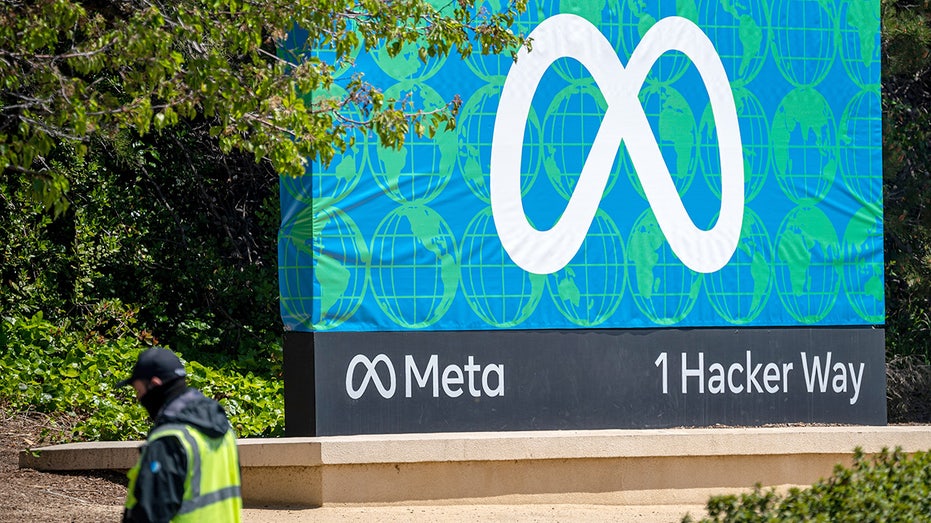
Meta is reportedly considering layoffs that could affect up to 20% of its workforce as the company invests heavily in artificial intelligence infrastructure.(David Paul Morris/Bloomberg via Getty Images / Getty Images)
The senator specifically criticized Meta CEO Mark Zuckerberg, claiming corporate leaders are prioritizing profits over workers as AI rapidly expands. “These guys are in it for the money,” Sanders said. “They want more wealth and more power, and they do not care what happens to workers.” This direct targeting of prominent tech figures and their companies signals a potential for increased public and political pressure, which could influence everything from corporate governance practices to executive compensation structures, impacting investor perception of long-term sustainability.
These remarks came during Sanders’ latest stop on his nationwide “Fight Oligarchy” tour, a consistent platform for addressing wealth inequality, corporate power, and broader critiques of the U.S. economic and political system. His consistent message serves as a reminder to investors that the political landscape around technology, especially AI, is evolving rapidly. The era of unchecked technological growth, driven primarily by private capital and minimal government intervention, may be drawing to a close as social and ethical concerns gain greater prominence.
During the speech, Sanders also accused billionaires and superPACs of trying to “own and control the United States Congress” and called the U.S. political system increasingly dominated by wealthy interests. This broader critique of corporate influence on policy suggests that the fight over AI’s future will not merely be technological but deeply political, with potential implications for regulatory frameworks, taxation policies, and the very structure of the digital economy.
GET FOX BUSINESS ON THE GO BY CLICKING HERE
Market Impact:
Senator Sanders’s rhetoric, while populist, carries significant implications for financial markets, particularly the technology sector. His calls for stringent regulation and a focus on equitable distribution of AI’s benefits introduce a layer of political risk that investors cannot ignore. Tech giants heavily invested in AI development, such as Nvidia, Microsoft, Google (Alphabet), and Meta, could face increased scrutiny, potential antitrust challenges, and new tax burdens if such policies gain traction. This regulatory overhang could dampen their growth trajectories and compress profit margins, leading to re-evaluation of their lofty valuations. Furthermore, the prospect of widespread job displacement, while potentially boosting corporate efficiency, could trigger a broader economic slowdown by eroding consumer purchasing power and increasing social spending. Investors should monitor legislative developments closely, consider the ESG implications of their tech holdings, and perhaps explore diversified portfolios that balance high-growth AI plays with companies demonstrating robust social responsibility and resilience against potential labor market disruptions. The political discourse around AI is moving beyond innovation to encompass profound societal questions, and market participants must adapt their strategies accordingly.