
California gubernatorial candidate Steve Hilton criticizes Democratic opponent Xavier Becerra’s ‘power hour’ electricity proposal to lower energy costs on ‘The Bottom Line.’
Key Takeaways
- **Increased Upfront Costs, Long-Term Savings:** California’s new tire regulations, phasing in from 2029, mandate higher energy efficiency for replacement tires. While consumers may face an average increase of $6.50 per tire by Phase 2 (2033), the California Energy Commission (CEC) projects significant fuel/electricity savings, potentially offsetting initial expenses and boosting consumer purchasing power over time.
- **Market Restructuring for Tire Manufacturers:** The mandate presents a substantial challenge and opportunity for tire makers. With an estimated 70% of currently sold tires potentially non-compliant by 2033, companies like Goodyear, Michelin, and Bridgestone face significant R&D, retooling, and supply chain adjustments. This could lead to market consolidation and a competitive advantage for manufacturers adept at innovating Low Rolling Resistance (LRR) technologies.
- **California’s Regulatory Influence and Investment Trends:** California continues to be a bellwether for energy and environmental regulations. This move on tires signals a broader trend towards efficiency mandates, potentially influencing other states or even federal policy. Investors should watch for shifts in capital expenditure by tire manufacturers, M&A activity, and the emergence of new technologies in the automotive aftermarket.
California regulators on Monday approved new rules that will restrict which replacement tires can be sold across the state in an effort to meet energy-efficiency standards.
The new regulations, unanimously adopted by the California Energy Commission (CEC), will phase out tires that fail to meet these standards — a move that could restrict a large portion of the tires currently available to drivers.
“This ultimately is about protecting consumers,” said David Hochschild, Chairman of the California Energy Commission, as reported by KCRA-TV. “I see this as sheltering the public from higher costs in the long run.”
TOYOTA RECALLS 655K CAMRYS GLOBALLY OVER DISPLAY DEFECT THAT CAN KNOCK OUT SAFETY INDICATORS
A tire at a manufacturing plant.(Getty Images / Getty Images)
Fox News Digital has reached out to several tire manufacturers, including Goodyear, Michelin, and Bridgestone.
The Shifting Economics of Tire Manufacturing and Consumer Choice
The core of these new rules targets rolling resistance: the amount of energy it takes for a tire to roll down a road. Lower rolling resistance translates directly into reduced fuel consumption for internal combustion engine vehicles and extended range for electric vehicles. While factory-installed tires on new vehicles typically feature low rolling resistance, drivers often replace them with cheaper, less efficient options in the aftermarket. The new rules aim to ensure that replacement tires maintain energy efficiency levels similar to those of original factory tires, thereby closing a significant gap in the state’s broader energy conservation efforts.
WAYMO RECALLS MASSIVE AUTONOMOUS FLEET AFTER INCIDENT FLAGS MAJOR SAFETY ISSUE
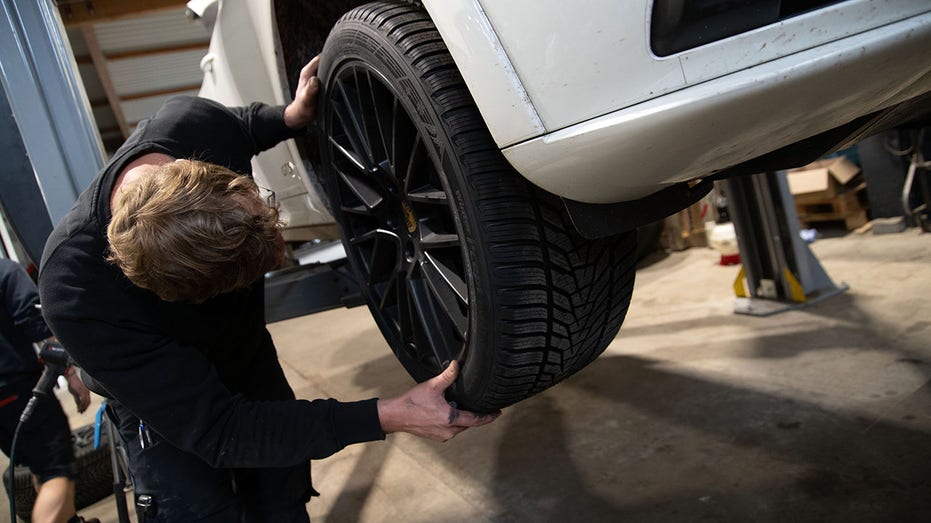
A mechanic fits a wheel on a car in Heilgersdorf, Bavaria, on Oct. 4, 2024. California regulators on Monday approved a new set of rules that would limit the kinds of replacement tires consumers could purchase.(dpa/picture alliance via Getty Images / Getty Images)
The financial implications are multifaceted. The first phase of the program begins in 2029, targeting the most inefficient replacement tires on the market. The allowable rolling-resistance threshold drops even further starting in 2033. According to the CEC, California drivers could save an estimated $79 in fuel or electricity costs over four months during Phase 1, and about $153 over seven months during Phase 2. While these savings are substantial, the CEC also estimates that Phase 2 rules will add an average of about $6.50 to the cost of each tire, as reported by the New York Post. This represents an initial capital outlay for consumers that is expected to be recouped through operational savings over the tire’s lifespan, creating a compelling long-term value proposition despite the immediate price increase.
“These regulations are a tool within our authority that can save money for every Californian,” said Commissioner Nancy Skinner, emphasizing the economic rationale behind the mandate.
Industry Adaptation and Competitive Pressures
The impact on the tire manufacturing sector will be profound. Goodyear, a major industry player, has already voiced concerns over the mandate, arguing that it would pass additional costs onto consumers. More critically, representatives noted that around 70% of tires currently sold in the state would be eliminated by 2033. This statistic alone underscores the monumental challenge and opportunity facing the industry.
For publicly traded companies like Goodyear ($GT), Michelin ($ML) and Bridgestone ($BRDCY), this regulation necessitates significant capital expenditures in research and development, retooling of manufacturing facilities, and supply chain adjustments. Companies that have already invested heavily in Low Rolling Resistance (LRR) tire technologies will find themselves at a competitive advantage, potentially expanding their market share. Conversely, manufacturers heavily reliant on traditional, less efficient tire lines will face immense pressure to innovate or risk losing access to the lucrative California market, which often serves as a proxy for national trends.
The competitive landscape is poised for restructuring. Smaller manufacturers or those with less agile R&D capabilities might struggle to meet the new standards, potentially leading to consolidation within the industry. This could also spur partnerships or acquisitions as companies seek to quickly gain access to compliant technologies and production capabilities. Investors will be closely watching quarterly earnings calls for updates on compliance strategies, R&D budgets, and projected impacts on profit margins and revenue streams.
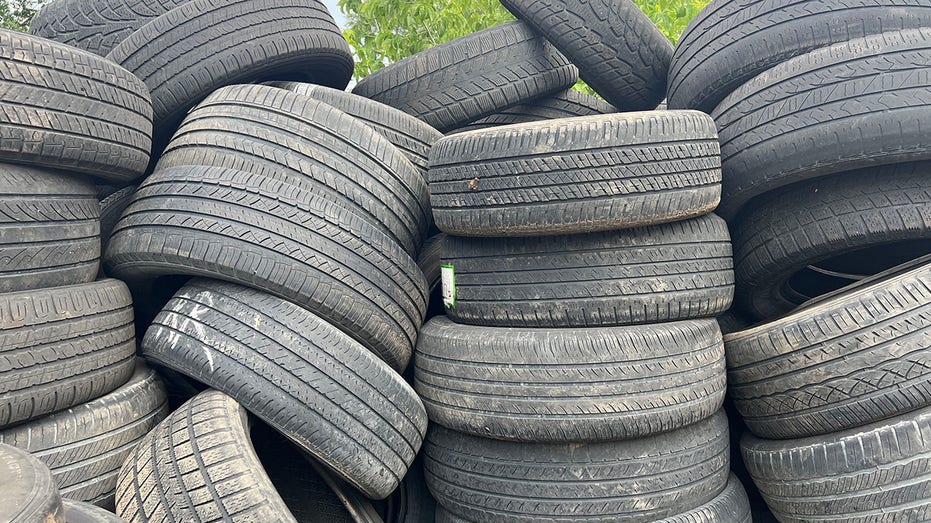
Used vehicle tires are piled outside an auto repair shop in Toronto, Ontario, Canada, on July 26, 2026.(Getty Images)
Several categories are excluded from the new rules, including snow tires, used and retreaded tires, deep-tread off-road tires, motorcycle tires, and tires sold for emergency vehicles. These exclusions acknowledge practical limitations and niche market needs, but they do not diminish the scope of the primary mandate on mainstream replacement tires.
The regulations stem from Assembly Bill 844, a 2003 California law requiring the commission to set state tire-efficiency standards, highlighting a long-term strategic vision for energy conservation in the state.
Market Impact
California’s new tire efficiency regulations are set to trigger a significant shift in the automotive aftermarket and tire manufacturing industry. For consumers, the immediate impact will be marginally higher upfront costs for replacement tires, but this is projected to be outweighed by substantial long-term fuel and electricity savings, enhancing overall vehicle operating economics. Tire manufacturers will face intense pressure to innovate and retool, leading to increased R&D spending and potentially market consolidation as companies capable of delivering advanced LRR technologies gain market share. This regulatory action reinforces California’s role as a trendsetter, likely influencing other states and potentially accelerating a nationwide transition towards more energy-efficient tire standards. Investors should anticipate increased volatility and opportunities within the tire sector, with a premium placed on companies demonstrating strong innovation in sustainable and efficient mobility solutions, signaling a broader market trend towards green automotive components.