
Check out what’s clicking on FoxBusiness.com.
**Key Takeaways:**
1. **Fiscal Scrutiny Heightened:** The termination of DOGE, coupled with disputed savings claims and the lack of a final audit, underscores persistent market skepticism regarding the U.S. government’s ability to achieve substantial, verifiable fiscal efficiency. This narrative could impact investor confidence in long-term budgetary discipline.
2. **Sectoral Realignment:** Targeted cuts by DOGE, particularly in duplicative software licenses and underutilized office space, signal a potential shift in government procurement and real estate strategies, forcing contractors and commercial landlords to adapt to evolving federal demand.
3. **Political Economy Dynamics:** The initiative’s lifecycle, from an ambitious $2 trillion savings goal to a disputed $215 billion, highlights the significant challenge of translating political mandates for efficiency into tangible, auditable financial outcomes, influencing perceptions of future government-led economic interventions.
***
**DOGE’s Sunset: A Fiscal Efficiency Initiative Terminates Amidst Market Scrutiny**
The U.S. Department of Government Efficiency (DOGE) Service Temporary Organization reached its scheduled termination date Saturday, July 4, 2026, marking the end of a high-profile, yet often contentious, federal initiative. Conceived under President Donald Trump’s executive order last year, DOGE was tasked with delivering a “smaller Government, with more efficiency and less bureaucracy” — a promise intended as “the perfect gift to America on the 250th Anniversary of The Declaration of Independence.” However, its departure leaves a legacy of disputed savings claims and unanswered questions that resonate deeply within financial markets and among fiscal policy observers.
From a market perspective, the creation of DOGE initially sparked conversations about potential shifts in federal spending patterns and their implications for various sectors. The prospect of Trillions in cuts, albeit ambitious, suggested a potential reduction in government bond issuance, which could theoretically influence interest rates and the national debt trajectory. Conversely, some market participants harbored skepticism, questioning the feasibility and political will to execute such sweeping changes without significant economic or social repercussions.
DOGE claims it saved a formidable $215 billion, a figure that, if fully realized and independently verified, would represent a notable reduction in federal outlays. The organization cited accomplishments such as slashing duplicative software licenses, canceling diversity, equity, and inclusion (DEI) grants, and terminating leases for underused office space. Each of these areas has distinct market implications. For instance, the cancellation of duplicative software licenses could impact government contractors specializing in IT solutions, potentially shifting demand towards more consolidated, efficient platforms or even open-source alternatives. Conversely, the market for enterprise software providers with robust federal contracts might face headwinds, signaling a need for greater value proposition and less vendor lock-in.
The termination of leases for underused office space carries direct implications for the commercial real estate sector, particularly in metropolitan areas with significant federal footprints. A reduction in government-occupied square footage could exacerbate existing pressures on office vacancies, potentially impacting property values and the performance of real estate investment trusts (REITs) with heavy exposure to government tenants. While the $215 billion savings figure has been disputed, and DOGE’s public receipts do not fully document the headline claim – the webpage showing these estimated savings as of Sunday has been a focal point of scrutiny – the very *attempt* to rationalize federal real estate holdings sends a clear signal to the market about future government land use.
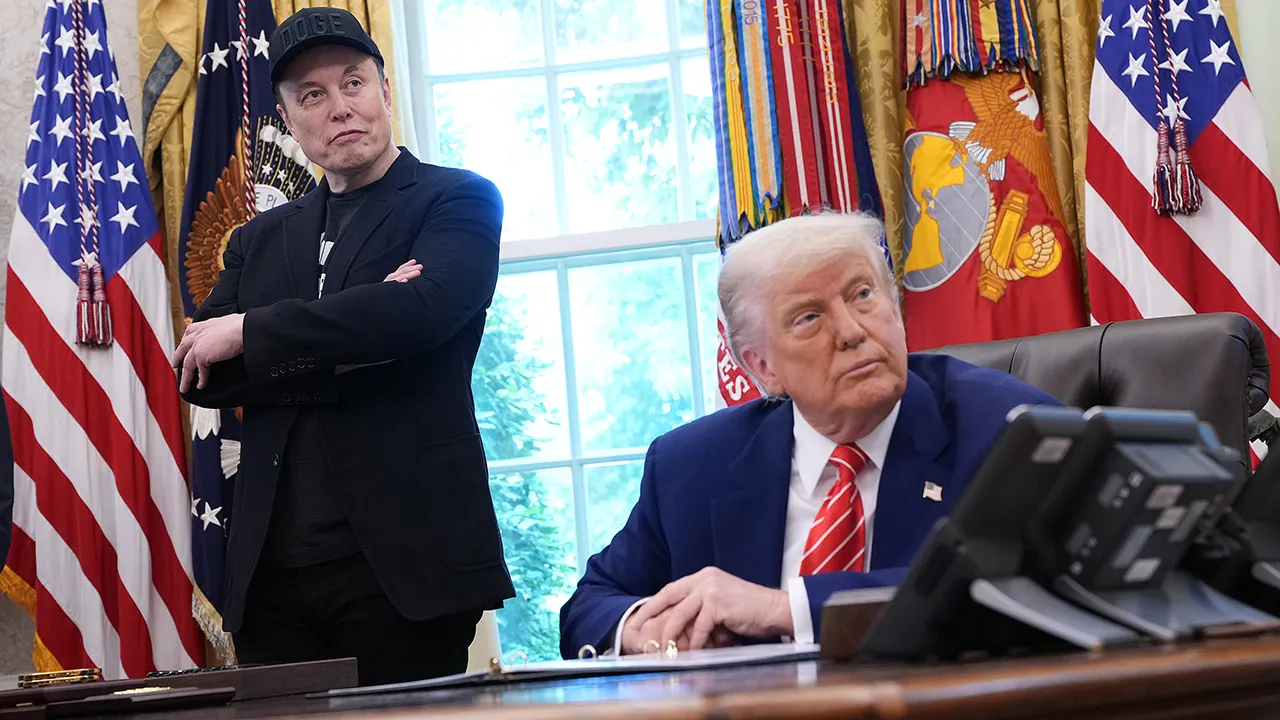
Billionaire tech executive Elon Musk, a figure whose market influence is undeniable, led DOGE’s cost-cutting efforts when Trump returned to the White House in January 2025. Musk’s involvement, known for his aggressive efficiency drives at companies like Tesla and SpaceX, initially lent a sense of credibility and ambition to the initiative. His departure from the department in May of last year, followed by his December 2024 comment, “The final step of @DOGE is to delete itself,” added to the narrative of a temporary, project-based endeavor rather than a permanent structural overhaul. The broader context of Musk’s fluctuating personal wealth, particularly the original article’s mention of him losing “trillionaire status after tech sell-off,” highlights the extreme volatility within the tech sector and underscores how even prominent figures are subject to market forces, which can, in turn, influence perceptions of their public service roles.
DOGE initially set an audacious goal of saving $2 trillion in government cuts before reducing its target to $1 trillion, and ultimately settling on the claimed $215 billion. This downward revision in objectives, while perhaps a more realistic assessment of bureaucratic inertia, can be interpreted by the market as a sign of the immense challenges in achieving profound government fiscal reform. It underscores the gap between aspirational political rhetoric and the practicalities of implementation, which often disappoints investors hoping for more aggressive deficit reduction.
In its final social media post, DOGE articulated its enduring mission: “While the formal mission of DOGE has come to an end, the mission to eliminate waste, fraud, and abuse will continue.” This sentiment, coupled with the assertion that “Good stewardship of taxpayer dollars and accountable government are not temporary initiatives,” aims to project a long-term commitment to fiscal responsibility. However, the absence of a final, independent review by the Office of Management and Budget (OMB) Director Russ Vought — “We have no plans to do kind of a closing DOGE report,” Vought stated — leaves a void for market analysts seeking comprehensive data and verification. This lack of transparency around the actual impact of DOGE’s efforts could fuel skepticism and diminish the perceived long-term benefits of the initiative.
Further complicating the narrative is the White House budget proposal released in April, which bafflingly requested $35 million for the U.S. DOGE Service, despite its imminent elimination. As Rep. Dave Joyce, R-Ohio, pointed out, DOGE “was pretty much eliminated.” Such budgetary inconsistencies can be a red flag for markets, suggesting a disconnect between stated policy goals and actual fiscal planning, potentially undermining confidence in the administration’s overall financial management. The reassignment of DOGE Service acting Administrator Amy Gleason to a new role leading a health technology office at the Centers for Medicare and Medicaid Services, while an individual career move, also signifies the complete dissolution of the temporary organization.
**Market Impact:**
The termination of DOGE carries several implications for financial markets. The lack of a conclusive, independently verified audit of its claimed $215 billion in savings means that any potential positive impact on the national debt or future fiscal projections remains largely speculative. This opacity could maintain a cautious stance among fixed-income investors regarding the U.S. government’s long-term budgetary health, potentially influencing demand for Treasury bonds and overall interest rate expectations. For government contractors, the emphasis on efficiency and the precedent of slashing duplicative software licenses signal a continued pressure to demonstrate value and innovate, possibly favoring smaller, more agile tech providers over legacy giants. The commercial real estate sector, particularly in regions with significant federal offices, may experience continued headwinds as the government reassesses its physical footprint, influencing property valuations and REIT performance. Ultimately, the DOGE initiative serves as a case study in the complex interplay between political ambition, fiscal policy, and market sentiment, leaving investors to weigh the rhetoric of efficiency against the verifiable financial outcomes.