
Airbus and Kratos Complete Milestone Flight for European Uncrewed Combat Aircraft Program
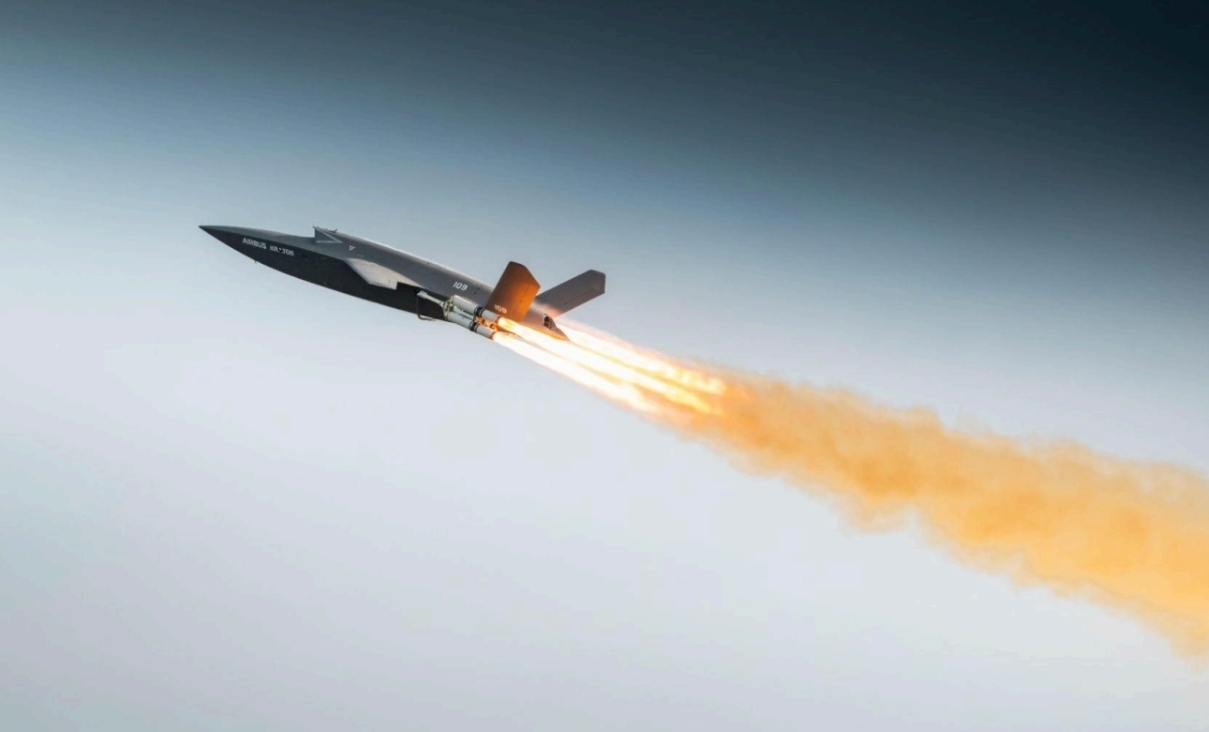
In a significant stride towards developing advanced uncrewed combat capabilities for Europe, Airbus and the U.S. firm Kratos have successfully completed the first European flight of the U740 Valkyrie uncrewed combat aircraft. The demonstrator aircraft achieved speeds of Mach 0.8 during a test campaign conducted on September 29, signaling progress for a planned European Collaborative Combat Aircraft (CCA) capability by 2029, as announced by Airbus.
The inaugural flight took place at a secure test facility in northern Europe. The comprehensive test sequence included a rocket-assisted launch, complex maneuvers at varying altitudes and speeds, and real-time adjustments to a pre-planned route while the aircraft was airborne. Airbus confirmed that all primary objectives for this crucial first flight were met, laying a robust foundation for future development phases. The successful completion of these initial tests is a pivotal step in maturing the technology required for autonomous air operations.
Providing insights into the program, Hendrik Zippel, Airbus Head of CCA Collaboration and Development, characterized the flight as “picture-perfect” during a subsequent media briefing. He detailed the meticulous preparations that commenced at 6:00 AM, culminating in the aircraft’s transfer from its hangar to the launch position. The U740 Valkyrie, a variant based on Kratos’ proven XQ-58A Valkyrie platform, initiated its ascent around 10:30 AM, propelled by rocket boosters that detached approximately two seconds into the flight, once sufficient thrust was generated. This method of launch provides significant operational flexibility.
Zippel elaborated on the flight profile, stating, “The aircraft initially flew a diamond-shaped pattern before entering a longer racetrack profile used to test different flight conditions.” He continued, “We then entered into a longer racetrack pattern where we flew at several flight levels, 10,000, 20,000, 30,000 feet, with several acceleration and deceleration phases. We went up to 0.8 Mach, and also tried out the reconfiguration of a pre-planned route, and all of this went very successfully.” The ability to dynamically alter the flight path and test performance across multiple altitudes and speeds are critical functions for a combat aircraft designed to operate in complex, contested environments, requiring advanced navigation and control systems.
Beyond aerial performance, the flight also rigorously tested the procedures essential for the safe recovery of the aircraft at the conclusion of its mission. Airbus reported that the vehicle landed precisely within the designated recovery area, with Zippel noting that the actual touchdown point was “substantially inside the boundary established before the test.” This precision in recovery is vital for reusability, minimizing operational costs, and ensuring the efficient deployment of uncrewed systems in future combat scenarios.
The U740 Valkyrie platform, derived from Kratos’ XQ-58A Valkyrie, is intended to be integrated with Airbus’ proprietary Multi-platform Autonomous Reconfigurable and Secure mission system, known as MARS. This strategic combination aims to leverage Kratos’ established airframe expertise, which has undergone extensive testing in the United States, with Airbus’s advancements in autonomous flight management, secure data handling, and European-centric defense requirements.
Airbus describes MARS as a sophisticated mission-system layer designed to provide comprehensive control over mission applications, software, data, and hardware. Crucially, it will incorporate advanced autonomous functions and the capability to coordinate multiple aircraft in a synchronized manner, a concept often referred to as “swarming.” While the system is engineered for high levels of autonomy, Airbus emphasizes that a human operator will maintain ultimate authority within the command hierarchy for all critical decisions, ensuring ethical oversight and strategic control over sensitive combat operations.
The development roadmap includes further flight-test campaigns, with the next significant phase scheduled for mid-2027. This upcoming campaign is expected to feature the initial integration of the MARS mission system into the U740 Valkyrie aircraft. Zippel underscored the continuous nature of the development process, stating, “After flight test is before the flight test. The next flight tests are planned mid of next year. We plan to then have already integrated into the birds, into the aircrafts, the first increment of our MARS mission system.” This iterative approach allows for gradual system maturation, progressive risk reduction, and the incorporation of lessons learned from each testing phase.
Ultimately, Airbus aims to position the resulting integrated system as a combat-ready Collaborative Combat Aircraft. These CCAs are envisioned to operate either fully autonomously on specific tasks or under the direct command of crewed fighter jets, such as the Eurofighter. This “loyal wingman” concept would significantly augment the capabilities of existing manned platforms, increasing their reach, survivability, and combat mass by offloading dangerous or routine tasks to uncrewed assets.
In an update from Airbus, Mike Schoellhorn, CEO of Airbus Defence and Space, articulated the strategic imperative behind the program. “In an increasingly complex and contested threat environment, air forces require affordable combat mass,” Schoellhorn stated. He further added, “By pairing Kratos’ proven airframe as a ‘program of record’ with Airbus’ sovereign European mission system, we are able to offer a robust, sovereign, affordable, and combat-ready CCA system by the end of the decade.” His comments highlight the dual goals of cost-effectiveness and strategic independence, particularly pertinent given current geopolitical tensions.
The U740 Valkyrie boasts impressive specifications: it is 9.1 meters long, with an 8.2-meter wingspan, and a maximum take-off weight of approximately three tonnes. The aircraft design includes an internal weapons bay, providing stealth capabilities and flexibility for various payloads, alongside external payload stations beneath the wings for additional ordnance or sensors. Its operational parameters include a formidable range exceeding 5,000 kilometers and a service ceiling of 45,000 feet, enabling long-endurance missions, high-altitude operations, and significant tactical reach.
A key operational advantage of the Valkyrie is its versatile launch and recovery system. While capable of conventional runway take-off and landing, it can also utilize rocket-assisted launch equipment, eliminating reliance on lengthy runways. This flexibility is critical for strategic dispersal, allowing uncrewed combat aircraft to operate from austere, dispersed locations away from vulnerable, established airbases, enhancing survivability and operational reach in a conflict scenario where traditional airfields might be targeted or inaccessible.
Eric DeMarco, President and CEO of Kratos, expressed satisfaction with the outcome, commenting, “First flights typically include plenty of learning opportunities, but with the maturity of the Valkyrie system and the well-integrated Airbus and Kratos team, this flight was an amazing success.” This successful collaboration between a major European aerospace firm and a specialized American defense technology company underscores the international nature of advanced defense development, combining distinct areas of expertise for a common strategic goal.
With the initial flight tests successfully concluded, Airbus and Kratos are now progressing towards more intricate flight testing phases, which will progressively introduce the sophisticated European mission system into the aircraft. Both companies remain committed to their ambitious target of delivering a combat-ready Collaborative Combat Aircraft capability by 2029, potentially reshaping the landscape of future air warfare and strengthening Europe’s defense posture.
Why This Matters
The successful first European flight of the U740 Valkyrie uncrewed combat aircraft represents a critical milestone with far-reaching implications for global defense strategy, technological sovereignty, and the future of air warfare. It signals Europe’s accelerating commitment to developing advanced autonomous combat capabilities, crucial in an increasingly complex and contested geopolitical landscape.
Firstly, this program directly addresses Europe’s strategic imperative for greater defense autonomy. By developing a “sovereign European mission system” through Airbus’s MARS technology, the continent aims to reduce reliance on external powers for critical defense technologies. This independence is vital for ensuring that European nations can act decisively and effectively to protect their interests, without being constrained by the technological limitations or political agendas of non-European suppliers. In an era where technological control equates to strategic leverage, this initiative strengthens Europe’s position on the global stage and supports the broader goal of European strategic independence.
Secondly, the U740 Valkyrie and the broader Collaborative Combat Aircraft (CCA) concept herald a paradigm shift in military doctrine. The idea of “loyal wingmen” – uncrewed aircraft operating alongside and supporting manned fighter jets – promises to significantly enhance combat effectiveness. These CCAs can perform dangerous missions, extend sensor ranges, carry additional weapons, act as decoys, or provide electronic warfare support, all while keeping human pilots out of harm’s way. This approach offers “affordable combat mass,” meaning militaries can deploy more assets into a fight at a lower cost than traditional manned aircraft, potentially offsetting numerical disadvantages against peer adversaries and increasing attrition capability.
Furthermore, the U740 Valkyrie’s design, featuring rocket-assisted launch and landing flexibility, enhances operational resilience. The ability to launch and recover from austere, dispersed locations – rather than relying solely on vulnerable, fixed airbases – dramatically improves survivability in a high-intensity conflict. This distributed operations capability complicates adversary targeting and ensures that air power can be projected even when traditional infrastructure is compromised, thereby increasing strategic flexibility and deterrence.
Finally, this development underscores the rapid advancement of artificial intelligence and autonomous systems in military applications. The integration of Airbus’s MARS system, with its emphasis on autonomous functions and multi-aircraft coordination, pushes the boundaries of human-machine teaming. While human oversight for critical decisions remains a core principle, the increasing sophistication of autonomous capabilities will demand new ethical frameworks, operational protocols, and training regimes for armed forces worldwide. This program, therefore, is not just about a new aircraft; it’s about defining the future architecture of air combat and ensuring that Europe remains at the forefront of this crucial technological evolution.