
Key Takeaways:
- Intensified Competition & Market Rhetoric:Elon Musk’s aggressive “pet destroyers” accusation against Waymo underscores the high-stakes, cutthroat competition in the autonomous vehicle (AV) sector, influencing investor perception and potentially shifting sentiment towards key players like Tesla and Waymo.
- Safety & Technical Hurdles as Valuation Drivers:The focus on advanced detection capabilities for niche scenarios like animals, especially in challenging conditions, highlights the immense technical and safety challenges critical for Level 4/5 autonomy. Progress (or perceived lack thereof) in these areas directly impacts regulatory approval, public trust, and, consequently, the multi-billion-dollar valuations tied to robotaxi promises.
- Regulatory Scrutiny & Public Trust:Incidents involving AVs and animals, alongside Waymo’s recent recalls and NHTSA’s ongoing oversight, demonstrate the paramount importance of safety records and public confidence. Sustaining a positive safety narrative is essential for mass adoption and scaling operations, acting as a significant barrier or accelerator for market entry and expansion.
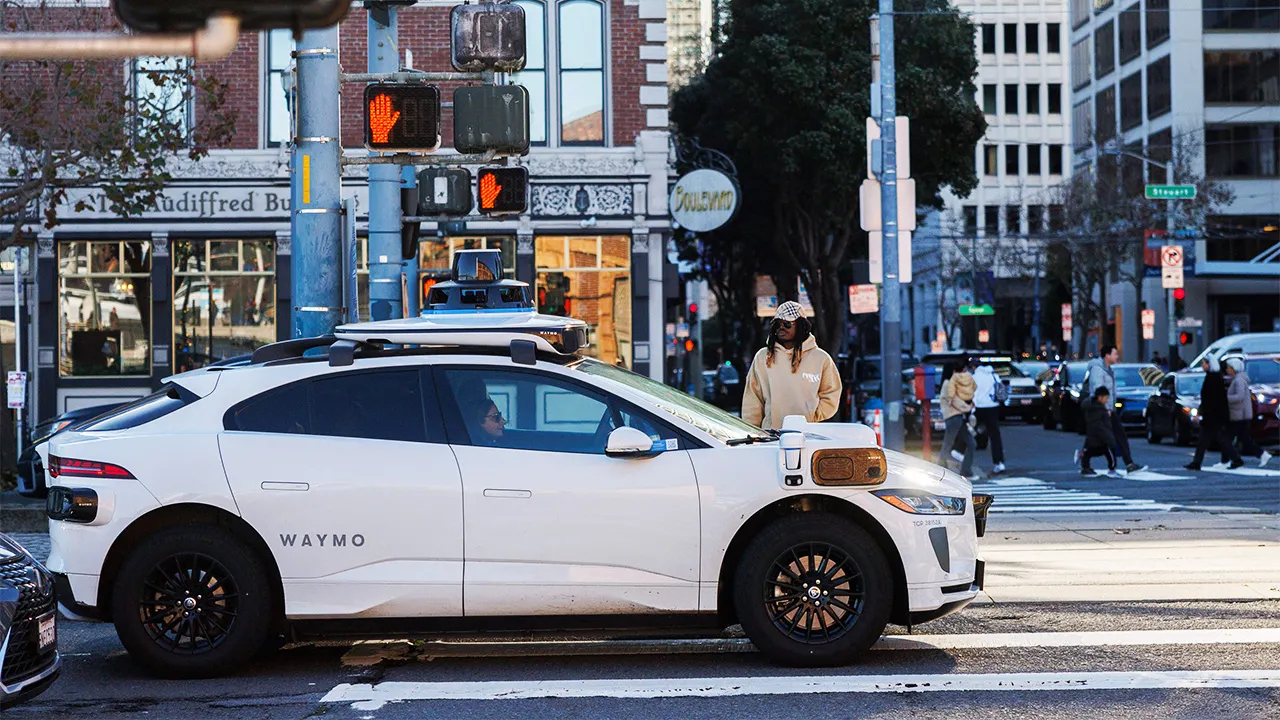
Tesla CEO Elon Musk calls rival Waymo’s vehicles “pet destroyers” and promotes a Tesla robotaxi update aimed at detecting pets at night during a Tesla Owners of Silicon Valley livestream. (Credit: Tesla Owners of Silicon Valley)
In a strategic move that amplifies the fierce competition within the burgeoning autonomous vehicle (AV) industry, Tesla CEO Elon Musk launched a pointed attack against rival Waymo, an Alphabet Inc. subsidiary, labeling its driverless cars “pet destroyers.” Musk’s remarks, delivered during a Tesla Owners of Silicon Valley livestream, coincided with his promotion of an upcoming Tesla robotaxi update specifically engineered to enhance animal detection, particularly under challenging nighttime conditions. This public jousting underscores the escalating battle for market dominance and investor confidence in the race to commercialize self-driving technology.
Musk’s direct assault on Waymo, framing it as a company whose vehicles “do run over a lot of pets,” serves multiple purposes. Firstly, it attempts to tarnish the reputation of a key competitor that has significantly more miles logged with fully driverless operations in certain cities. Secondly, it aims to position Tesla’s Full Self-Driving (FSD) system, and by extension its future robotaxi fleet, as superior in critical safety aspects, a narrative vital for Tesla’s ambitious valuation which heavily relies on the future revenue streams from autonomous services. “Maybe Waymo has made some improvements on that front, but they do run over a lot of pets, and we don’t want to run over the pets,” Musk stated, implicitly drawing a sharp contrast in ethical and technical capabilities.
TESLA ROBOTAXI MIAMI LAUNCH COMES WITH LIMITS
Elon Musk is pictured next to a Tesla Cybercab.(Chesnot/Getty Images and Sjoerd van der Wal/Getty Images / Getty Images)
Musk elaborated on the formidable engineering challenges involved in this specific safety enhancement, citing the difficulty of accurately detecting “gray kittens against gray pavement, particularly at night and in low visibility.” The CEO proudly claimed, “So that we actually did solve that, by the way,” promising an iterative process of development, testing, and deployment. While no concrete rollout date or demonstrative data was provided, the emphasis on such granular safety features is critical. In a market where public trust is paramount and regulatory bodies like the National Highway Traffic Safety Administration (NHTSA) are scrutinizing every incident, the ability to address even seemingly minor collision risks can significantly bolster a company’s standing and accelerate market acceptance.
TESLA IN AUTOPILOT MODE LEFT ROADWAY AND CRASHED INTO HOME, KILLING 76-YEAR-OLD WOMAN INSIDE, OFFICIALS SAY
The competitive barbs are not without precedent or context. Waymo indeed faced significant public backlash following an incident in October 2025, where one of its driverless vehicles struck and killed KitKat, a beloved cat at a San Francisco corner store. Local reports from KTVU highlighted the emotional impact on the community and the store’s owner. Waymo acknowledged the incident, stating the cat “darted underneath its vehicle,” and expressed sympathy, making a donation to a local animal rights organization. Such incidents, while infrequent, have a disproportionate impact on public perception, fueling skepticism about the readiness of autonomous technology for widespread deployment and influencing legislative debates around liability and regulation.
WAYMO RECALLS ROBOTAXIS OVER CONSTRUCTION-ZONE RISK
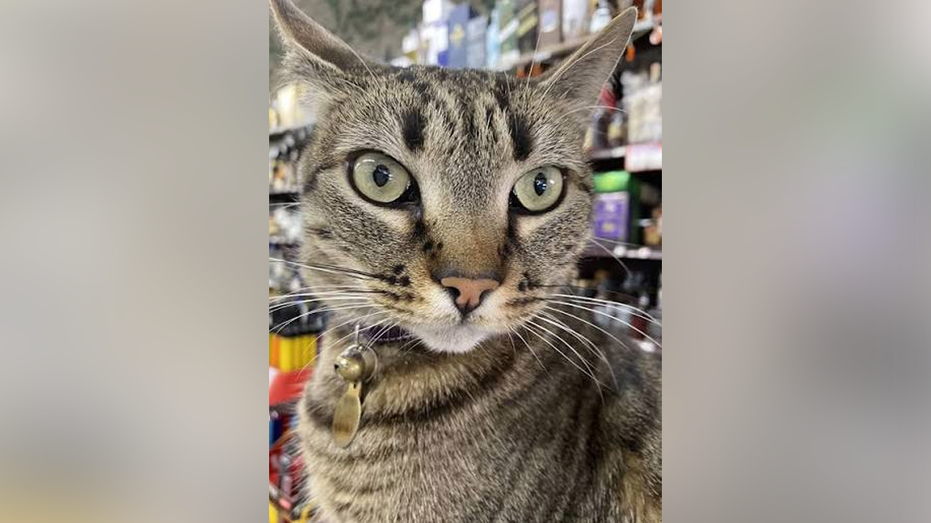
KitKat, the beloved cat at Randa’s Market in San Francisco, was killed by a Waymo vehicle in October 2025, according to KTVU.(KTVU / Fox News)
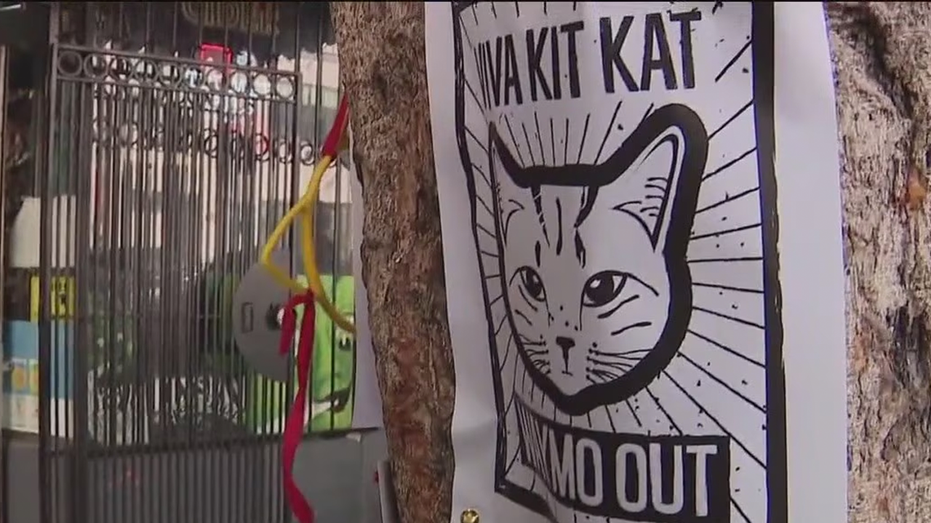
A memorial sign honors KitKat, a beloved San Francisco store cat killed by a Waymo vehicle in October 2025.(KTVU / Fox News)
NHTSA data, as reported by Business Insider, indicates that animal collisions are not exclusive to one company. Between July 2025 and July 2026, Waymo reported at least nine crashes involving animals, six of which were domestic. Tesla also reported an animal collision during the same period, though its fleet size and operational footprint were considerably smaller, primarily concentrated in Austin. NHTSA, however, cautions against direct comparisons due to varying reporting methodologies and operational scales. This highlights a broader industry challenge: ensuring the safety of all road users, including animals, which are often unpredictable and difficult for current sensor suites to consistently track and predict.
ROBOTAXI DRIVES OFF FROM AIRPORT WITH PASSENGER’S SUITCASE
Beyond animal detection, Musk also detailed Tesla’s meticulous approach to expanding its robotaxi service into new cities. He emphasized a rigorous pre-launch assessment process, focusing on identifying and mitigating risks at “dangerous or confusing intersections,” with particular attention paid to railroad crossings. “Before we go to a new city, we want to make sure that there’s not some intersection that’s problematic or risky,” he stated, adding that “we want to be particularly careful with railroad crossings.” This cautious strategy, despite Musk’s often aggressive timelines, suggests an awareness of the severe consequences of high-profile accidents and the need to build a robust system that can navigate complex urban environments reliably from day one. Avoiding problematic zones initially, or designing solutions for them, is a pragmatic approach to manage public perception and regulatory compliance.
TERRIFIED PASSENGERS FILM WAYMO AUTONOMOUS VEHICLE DRIVING INTO LIVE FIREWORKS IN SAN FRANCISCO
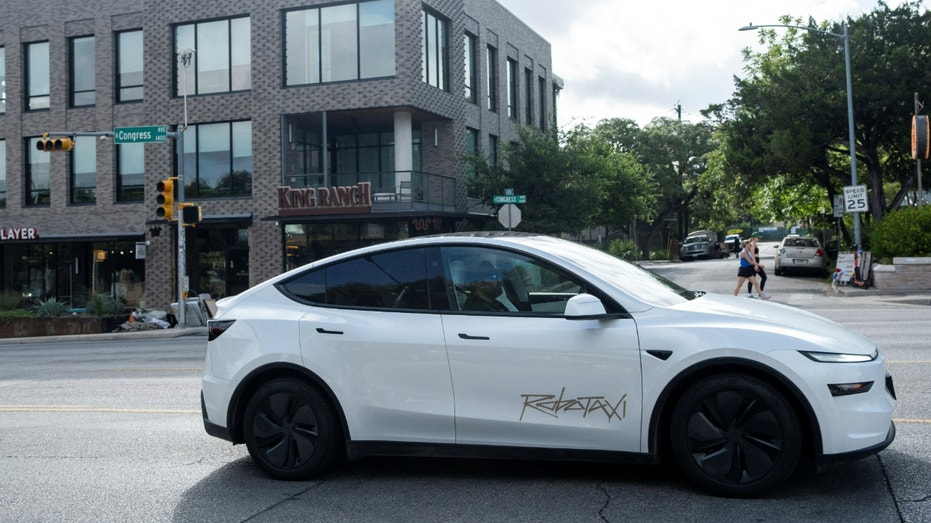
A Tesla robotaxi drives on the street along South Congress Avenue in Austin, Texas, on June 22, 2025. (Reuters/Joel Angel Juarez / Reuters)
The broader market context for these developments is one of intense investment and fluctuating investor sentiment. Companies like Tesla, Waymo, and GM’s Cruise have collectively poured billions into AV research and development, driven by the promise of transforming transportation, logistics, and ride-sharing into highly profitable, scalable services. Tesla’s valuation, in particular, has a significant “robotaxi premium” baked in, contingent on its ability to deliver on Musk’s vision of millions of autonomous vehicles generating substantial recurring revenue. Any perceived competitive advantage, safety breakthrough, or setback can send ripples through the stock market, affecting not just the companies involved but also the broader tech and automotive sectors.
WHAT HAPPENS IF THE WAYMO COMPUTER FAILS?
Waymo, for its part, has been operating fully driverless services in multiple cities for years, accumulating vast amounts of real-world data. However, it too has faced operational challenges, including recent recalls over construction-zone risks and isolated incidents that have garnered negative media attention. This highlights that even the most advanced players are navigating uncharted territory, with no clear leader having definitively “solved” Level 4/5 autonomy. The market is keenly watching for signals of scalability, reliability, and ultimately, profitability.
WAYMO TEAMS UP WITH WAZE TO SPOT POTHOLES FASTER
Musk’s latest comments serve as a reminder that the race for autonomous dominance is not just about technological prowess but also about shaping public perception, influencing regulatory narratives, and ultimately, capturing a significant share of a potentially multi-trillion-dollar market. As these companies push the boundaries of AI and robotics, every public statement, every safety incident, and every technological update becomes a data point for investors, regulators, and consumers trying to assess the future of transportation.
CLICK HERE TO DOWNLOAD THE FOX NEWS APP
FOX Business reached out to Waymo for comment on Musk’s remarks.
Market Impact:
Elon Musk’s provocative comments and the subsequent discussion around AV safety and technical capabilities have immediate and long-term market implications. For Tesla (TSLA) investors, any perceived enhancement in FSD’s safety features, particularly those addressing public concerns, could reinforce the bull case for its robotaxi future, potentially justifying its high market capitalization. Conversely, the aggressive rhetoric against Waymo, while attempting to create a competitive advantage for Tesla, could also draw increased scrutiny from regulators across the entire AV sector, potentially leading to more stringent testing requirements or slower deployment timelines for all players, including Tesla. For Alphabet (GOOGL, GOOG), the public criticism, especially concerning safety, could put pressure on Waymo’s brand reputation and potentially delay its expansion plans, despite its advanced operational experience. The overall narrative reinforces the capital-intensive and risky nature of the AV industry, where regulatory hurdles, public perception, and technological breakthroughs are paramount determinants of success and directly influence investor sentiment and valuation premiums for autonomous technology.