
NATO Outlines Three-Stage Strategy for Alliance Defense: Blocking, Blunting, and Breaking
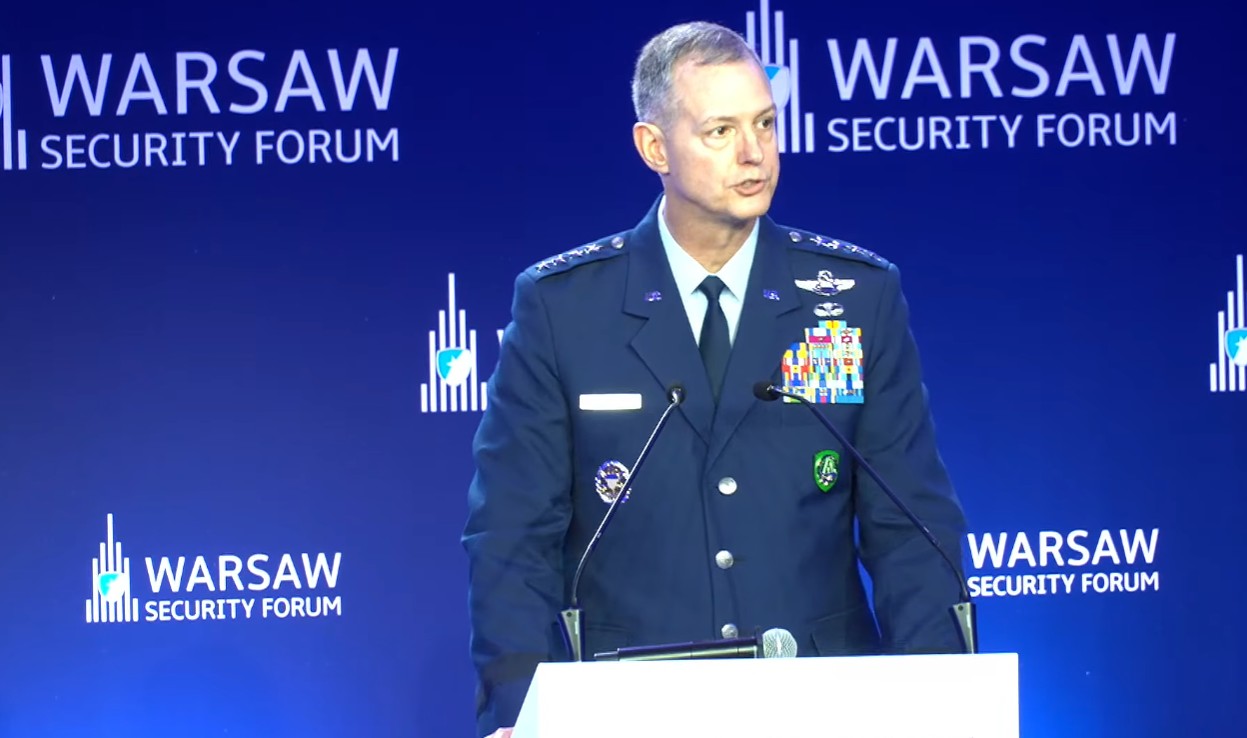
The Supreme Allied Commander Europe (SACEUR), General Alexus Grynkewich, has articulated a comprehensive three-stage framework designed to counter and defeat an attack on the North Atlantic Treaty Organization (NATO). Termed the “Theory of Victory,” this approach is predicated on a sequence of defensive actions: blocking an initial assault, blunting any persistent advance, and ultimately breaking the adversary’s warfighting capabilities.
General Grynkewich emphasized that while he referred to it as “my theory,” its foundational principles are derived from the alliance’s agreed strategy for the Deterrence and Defence of the Euro-Atlantic area. This ensures that the framework reflects the collective strategic intent of all 32 member nations. He clarified that this is not a detailed military plan in the traditional sense, but rather a unifying vision. It serves as a “commander’s intent,” providing a common strategic objective and directing NATO militaries toward key tasks essential for success in deterrence and defense operations.
Reassuringly, the SACEUR stated that he does not assess conflict as either imminent or inevitable. He underscored that the alliance actively works to avert conflict by clearly communicating its defensive intentions and by maintaining open channels of communication. These measures are crucial for resolving potential misunderstandings and fostering transparency, thereby reducing the risk of escalation.
The core of the Theory of Victory is straightforward: “We will block the initial attack. If the attack persists, we will blunt it and prevent enemy advance. And if required, we will break the enemy’s forces and the operational warfighting system that is arrayed against us,” General Grynkewich explained.
The initial stage, **”Blocking,”** is primarily assigned to NATO’s land forces positioned at the point of contact, with vital support from air and naval assets. In this phase, ground forces are tasked with maneuvering to confront and dominate any enemy assault, preventing the seizure of Alliance territory. Their objective is to fix enemy formations, thereby disrupting their advance. This ground action is not isolated; it is synergized with rapid efforts by air forces and navies, operating in conjunction with space and cyber capabilities, to swiftly achieve freedom of maneuver. By securing air and maritime superiority over the battlespace, these supporting forces can bring precision and mass to bear, denying the enemy the ability to hold ground or consolidate gains.
Should an adversary manage to penetrate the initial defenses, the second stage, **”Blunting,”** comes into effect. This phase focuses on denying the attacker momentum and the initiative. It leverages advanced sensor networks, autonomous systems, and multi-domain forces to disrupt and disorganize the enemy. Through the synchronized employment of effects across land, air, sea, space, and cyber domains, even down to the tactical level, NATO aims to overwhelm enemy formations in contact. The goal is to cause any continued enemy advance to falter and eventually cease, thereby preventing further penetration into Alliance territory.
The third and final stage, **”Breaking,”** is enacted if the adversary chooses to press the attack further or commit reserve forces. This phase is designed to dismantle the entire warfighting system deployed against NATO. This encompasses not only the immediate attacking forces but also all elements that support, sustain, or control them, including logistics, command-and-control nodes, and reinforcement capabilities. To achieve this, NATO intends to deploy a combination of high-end, highly effective precision munitions alongside an overwhelming mass of affordable and scalable systems. The strategy involves applying constant and unyielding pressure, both kinetic (through direct force) and non-kinetic (such as cyber attacks or electronic warfare), across and through all domains: land, air, sea, space, and cyberspace. This relentless pressure is intended to starve enemy formations of replenishment, incapacitate enemy commanders’ ability to control their forces, and ultimately reduce and destroy enemy forces and their supporting infrastructure.
General Grynkewich assured that NATO anticipates receiving advanced warning of any potential attack. This expectation is based on a sophisticated layering of intelligence, gathered from multi-source collection assets and interpreted using advanced algorithms. This robust intelligence framework means the Alliance is unlikely to be surprised, providing crucial time to assess the adversary’s intent and rapidly position its defensive forces.
Key investment priorities identified to support this Theory of Victory include “high-end and affordable long-range precision strike capabilities, sensor networks, and a warfighting cloud.” These capabilities are deemed essential for executing the multi-domain operations described in the three-stage approach. Furthermore, NATO plans to conduct exercises specifically designed to demonstrate these defensive capabilities. Forward Land Forces on the eastern flank will rehearse blocking tasks, while air and maritime forces will demonstrate their ability to achieve freedom of maneuver and execute multi-domain effects.
Concluding his remarks, the SACEUR reiterated NATO’s readiness, stating, “If attacked, we are ready to fight tonight.” He emphasized that this readiness is not met with complacency; rather, the Alliance commits to continuous preparation and rehearsal daily, aiming to be even more ready tomorrow and each day thereafter. This steadfast commitment sends a clear message to any potential adversary: “Today is not the day” to challenge the Alliance.
Why This Matters
General Grynkewich’s articulation of NATO’s “Theory of Victory” is profoundly significant for several reasons, impacting global security, alliance cohesion, and strategic planning:
Firstly, it serves as a powerful **deterrent signal** to potential aggressors. By clearly outlining how NATO intends to respond to and defeat an attack, the Alliance aims to dissuade any adversary from contemplating hostile action. This transparency in defensive strategy, coupled with visible readiness and continuous preparation, reinforces the credibility of NATO’s Article 5 collective defense commitment. The message is unequivocal: an attack on one Ally is an attack on all, and the response will be overwhelming and systematically designed for victory.
Secondly, this “Theory of Victory” provides crucial **strategic clarity and unity** for an alliance comprising 32 diverse nations. While member states maintain individual defense strategies, a common overarching vision for how the Alliance wins in deterrence and defense is vital for coherence. It helps align national defense planning, resource allocation, and military doctrine across the entire Alliance, ensuring that all contributions work towards a unified and effective response. This shared understanding is particularly important in an era of complex, multi-domain threats.
Thirdly, the outlined investment priorities—long-range precision strike, sensor networks, and a “warfighting cloud”—will **guide future defense spending and capability development** among NATO members. This framework provides a strategic rationale for allocating resources towards specific technologies and capacities that are deemed critical for executing the three-stage approach. It pushes for modernization and integration of cutting-edge technologies like autonomous systems and advanced algorithms, ensuring NATO remains technologically superior and adaptable to evolving threats.
Fourthly, the emphasis on **multi-domain operations** and targeting the adversary’s entire “warfighting system” reflects an understanding of modern warfare that extends beyond traditional battlefield engagements. It acknowledges that victory requires disrupting an enemy’s logistics, command-and-control, cyber infrastructure, and space assets, not just their frontline forces. This holistic approach is essential for countering sophisticated adversaries who might employ hybrid tactics or advanced conventional capabilities.
Finally, the focus on **early warning and continuous readiness** underscores NATO’s proactive stance. The reliance on advanced intelligence gathering and rapid force positioning demonstrates a commitment to preventing conflict if possible, and responding decisively if necessary. This strategy is not about initiating conflict but about ensuring the defense of Allied territory and populations, thereby contributing to regional stability and reinforcing the rules-based international order. It reassures member states of the Alliance’s unwavering commitment to their security while sending an unambiguous message of strength and resolve to any who might seek to challenge it.