
Key Takeaways
- **Geopolitical Re-alignment & Trade Diversification:** European Commission’s proposal for Canada to become an “associate member” signals a strategic re-alignment, driven by Canada’s imperative to de-risk from U.S. trade volatility and the EU’s push for enhanced economic security and supply chain resilience amidst global fragmentation.
- **Sector-Specific Opportunities & Challenges:** The proposed “Alliance for the Future” targeting advanced manufacturing, critical minerals, defense, and AI presents significant long-term investment opportunities but faces immediate hurdles related to legal definition, existing protectionist policies in Canada’s telecom and dairy sectors, and the complexities of EU member state approval.
- **Market Uncertainty & Political Will:** While the announcement has strong symbolic value, the vague nature of “associate membership” and the expressed skepticism from some EU diplomats about “overpromising” suggest a lengthy and potentially fraught negotiation process, adding a layer of uncertainty for investors evaluating the materialization of these deepened ties.
Leader of the Official Opposition of Canada Pierre Poilievre joins ‘Kudlow’ to discuss trade relations between the United States and Canada.
In a move signaling a potential tectonic shift in global trade dynamics and geopolitical alliances, European Commission President Ursula von der Leyen on Wednesday unveiled a groundbreaking proposal: opening the door for Canada to become the European Union’s first “associate member.” This pronouncement, delivered with considerable fanfare during her annual State of the European Union address in Strasbourg, marks a significant escalation in Ottawa’s efforts to diversify its economic partnerships, particularly as its intricate trade relationship with the United States continues to fray.
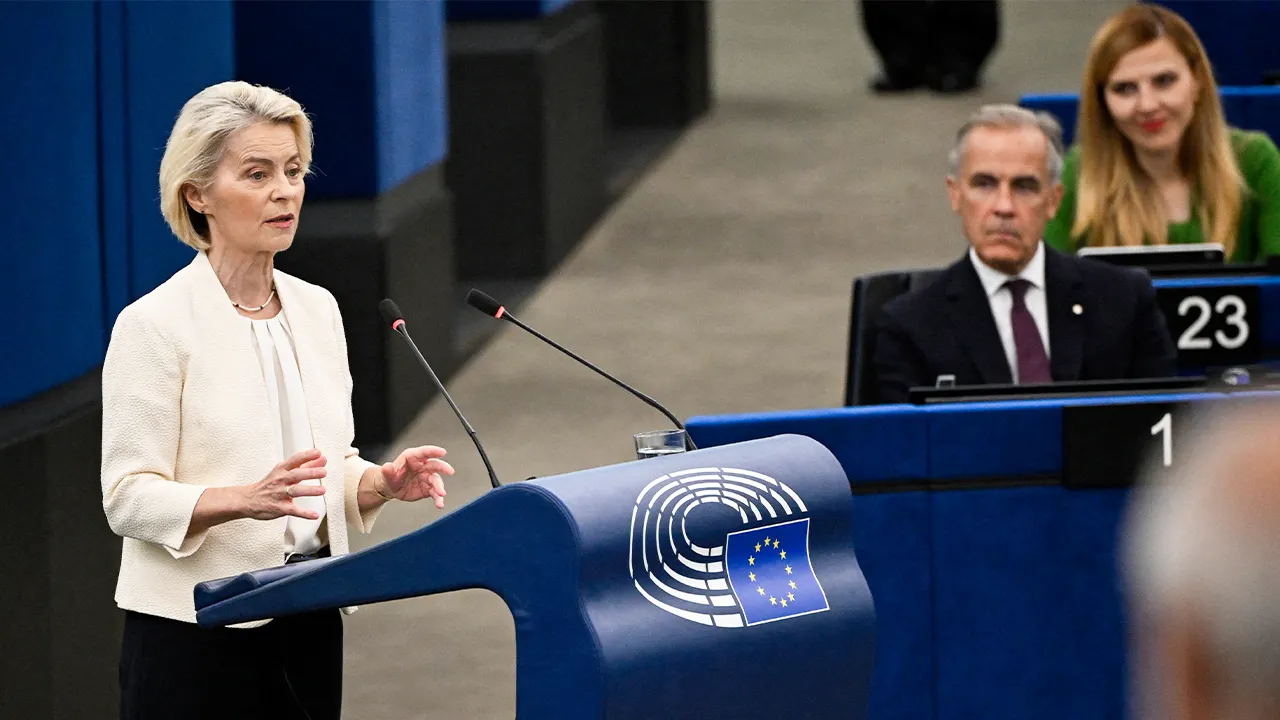
Addressing Canadian Prime Minister Mark Carney (Editor’s Note: The original source incorrectly identifies the Prime Minister as Mark Carney; Canada’s sitting Prime Minister is Justin Trudeau), who was present in the chamber, von der Leyen championed a vision for a vastly expanded scope of cooperation spanning economic, technological, and security domains. “I would like to work with you on opening the door for Canada to be the first associate member of the EU,” von der Leyen declared, a statement that was met with a standing ovation from EU lawmakers and a warm embrace between the two leaders, underscoring the political weight behind this nascent initiative.
BILLIONAIRE WARNS ‘EVIL EMPIRE’ WANTS TO ‘CRIPPLE TRUMP,’ CALLS OUT AMERICA’S NORTHERN NEIGHBOR
European Commission President Ursula von der Leyen delivers a speech near Canada’s Prime Minister Mark Carney during her annual State of the Union address at a plenary session of the European Parliament in Strasbourg, eastern France, on September 16,(Jean-Christophe VERHAEGEN / AFP via Getty Images / Getty Images)
This ambitious proposal aims to transcend the existing Comprehensive Economic and Trade Agreement (CETA), a landmark deal between the two entities, evolving it into what von der Leyen termed an “Alliance for the Future.” The strategic objective is to forge a common prosperity and economic security space, a clear signal of both the EU’s and Canada’s intent to “de-risk” their economies and build resilience in critical sectors.
The proposed partnership targets a broad spectrum of high-value and strategically vital sectors, including advanced manufacturing, defense production, energy, critical minerals, artificial intelligence, quantum technology, cybersecurity, and even Arctic governance. These areas represent not only pillars of modern economic growth but also touchpoints for national security and technological sovereignty, reflecting a shared desire to insulate their economies from geopolitical shocks and supply chain vulnerabilities.
“We see the world with the same eyes,” von der Leyen affirmed, highlighting the shared values and aligned positions on global challenges ranging from the conflict in Ukraine and defense posture to the stability of supply chains and climate change initiatives. This ideological alignment forms the bedrock of the proposed partnership, emphasizing a coalition of democracies in an increasingly fractured global order. “This is a partnership not against anyone else, but for our common strength,” she reiterated, subtly positioning the alliance as a bulwark for democratic values and open markets.
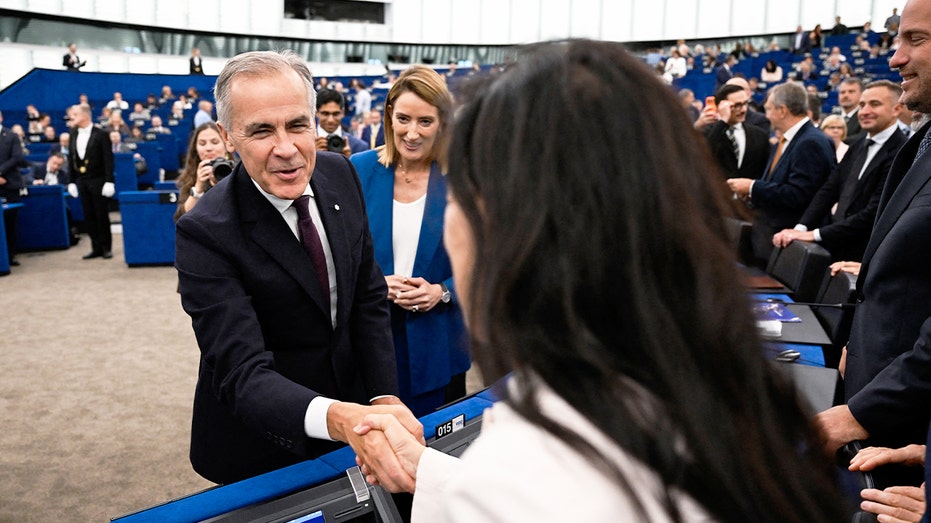
Canada’s Prime Minister Mark Carney (L) shakes hands with a MEP as he arrives near EU Parliament President Roberta Metsola (C) during the European Commission president’s annual State of the Union address at a plenary session of the European Parliamen(Jean-Christophe VERHAEGEN / AFP via Getty Images / Getty Images)
The impetus for Canada’s aggressive pursuit of trade diversification is transparent: a pressing need to lessen its disproportionate economic reliance on the United States. Following a recent breakdown in Canada-U.S. trade negotiations last month, which precipitated a volley of tit-for-tat tariff measures, Ottawa has been keenly feeling the pinch of its nearly 75% trade dependency on its southern neighbor. Prime Minister Carney (Trudeau) has publicly committed to an ambitious agenda of doubling Canada’s non-U.S. trade within the next decade, a mandate that this EU overture could significantly bolster.
While the prospect of a “unique alliance” with the EU has been on Canada’s radar, as articulated by Carney (Trudeau) earlier this week ahead of his scheduled address to the European Parliament, the explicit mention of “associate membership” by von der Leyen introduces a new, more profound dimension. Detailed discussions are anticipated to commence at the Canada-EU summit slated for late October in Montreal, where the specifics of this unprecedented arrangement will begin to take shape.
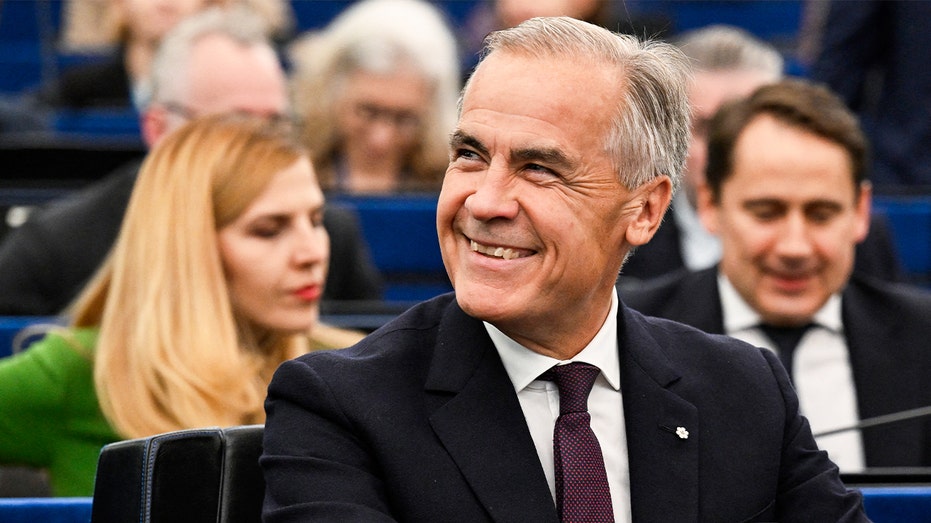
Canada’s Prime Minister Mark Carney smiles as he listens to the European Commission president delivering a speech during her annual State of the Union address at a plenary session of the European Parliament in Strasbourg, eastern France, on September(Jean-Christophe VERHAEGEN / AFP via Getty Images / Getty Images)
Despite the initial enthusiasm, the path to formalizing this “associate membership” is fraught with significant legal, political, and economic complexities. The EU, traditionally cautious about flexible alliances lacking a clearly defined legal status, faces an internal challenge in defining what “associate membership” truly entails. An EU diplomat, speaking anonymously to Reuters, expressed palpable surprise at von der Leyen’s announcement, noting its vagueness and cautioning against “overpromising” – a sentiment that could temper market expectations and inject a degree of skepticism into the proposal’s viability.
Furthermore, deeper economic integration between Canada and the EU is not without its historical impediments. Mark Manger, a professor of political economy and global affairs at the University of Toronto, highlighted longstanding frustrations among EU officials regarding Canada’s protectionist stances in key sectors, particularly telecommunications and dairy. These entrenched domestic policies could present formidable obstacles to achieving the comprehensive economic ties envisioned by the “Alliance for the Future,” potentially necessitating painful concessions from Ottawa that could face domestic political resistance. Ultimately, the fate of this groundbreaking proposal rests in the hands of the EU member states, whose unanimous approval will be required to translate von der Leyen’s ambitious vision into a concrete framework.
CLICK HERE TO GET FOX BUSINESS ON THE GO
Reuters contributed to this report.
Market Impact
The announcement of potential “associate membership” for Canada within the EU carries significant, albeit early-stage, implications for global markets. In the short term, the news could generate positive sentiment for Canadian equities, particularly those in critical minerals, defense, and advanced technology sectors, as investors anticipate increased demand and preferential access to the vast EU market. Similarly, European companies in these areas may see potential for new partnerships and supply chain diversification. The Canadian dollar could experience a modest uplift as the prospect of reduced reliance on the U.S. and expanded trade avenues improves its risk profile. However, the lack of immediate detail and the significant political and legal hurdles mean that any sustained market reaction will likely be tempered by a wait-and-see approach. For the long term, if realized, this alliance could reshape North American trade flows, potentially leading to a re-evaluation of investment strategies that have historically concentrated on the U.S.-Canada corridor. Companies involved in energy and agricultural exports (especially dairy, given current protectionism) will need to monitor negotiations closely for potential shifts in market access. The symbolic weight of such a partnership also sends a broader signal to other middle powers seeking to hedge against geopolitical risks and diversify trade relationships, potentially inspiring similar bilateral or bloc-to-bloc discussions globally. However, the “overpromising” concern articulated by some EU diplomats underscores the execution risk, suggesting investors should brace for a potentially protracted and complex negotiation rather than assuming a swift implementation.