
Toyota is recalling 314,029 Toyota and Lexus vehicles in the United States over passenger airbag inflators that could rupture, sending metal fragments toward occupants and risking serious injury or death.
**Key Takeaways for Investors:**
1. **Legacy Takata Risk Persists:** This recall underscores the persistent, long-tail financial and reputational risks associated with the industry-wide Takata airbag crisis, even years after the initial fallout and Takata’s bankruptcy.
2. **Reputational Scrutiny for Toyota:** While Toyota maintains a sterling reputation for quality, recurring recalls, particularly those involving critical safety components, can incrementally erode consumer trust and potentially impact brand premium, a key intangible asset.
3. **Manageable Financial Headwind:** For a financially robust titan like Toyota, the direct costs of this recall are likely a manageable operational expense, though the cumulative impact of ongoing safety campaigns necessitates robust risk provisioning and ongoing vigilance.
Toyota Motor Corporation (NYSE: TM), a global automotive powerhouse, finds itself in the news once again with a significant safety recall. The Japanese automaker is recalling more than 314,000 vehicles in the U.S. due to potentially faulty front passenger airbag inflators manufactured by the now-defunct Takata Corporation. The defect poses a severe risk: the inflators could rupture upon deployment, propelling dangerous metal fragments at occupants and dramatically increasing the risk of serious injury or fatality.
This latest action affects 314,029 Toyota and Lexus vehicles, spanning a wide range of model years from 2002 through 2017. The comprehensive list of affected models includes popular vehicles such as the Toyota Corolla, Tundra, Sequoia, and 4Runner, alongside luxury brand Lexus’s SC430, IS250, and GX460. The sheer breadth of models and production years highlights the lingering shadow of the Takata crisis, which has plagued the automotive industry for over a decade and resulted in the largest automotive recall in history.
Unlike some previous Takata-related recalls, Toyota reported no actual ruptures involving these specific affected inflators to the National Highway Traffic Safety Administration (NHTSA). This distinction is critical for investor sentiment, suggesting a proactive, preventative measure rather than a response to immediate failure incidents. Nevertheless, the underlying problem remains rooted in the degradation of the Takata-supplied propellant within the inflators. NHTSA’s investigation points to long-term exposure to high humidity, elevated temperatures, and significant temperature cycling as key contributors to this propellant degradation. If an airbag deploys under these compromised conditions during a crash, the structural integrity of the inflator can fail, turning a safety device into a potential projectile weapon.
FORD RECALLS 60,000 TRANSIT VANS OVER SOFTWARE GLITCH THAT SHUTS OFF LIGHTS
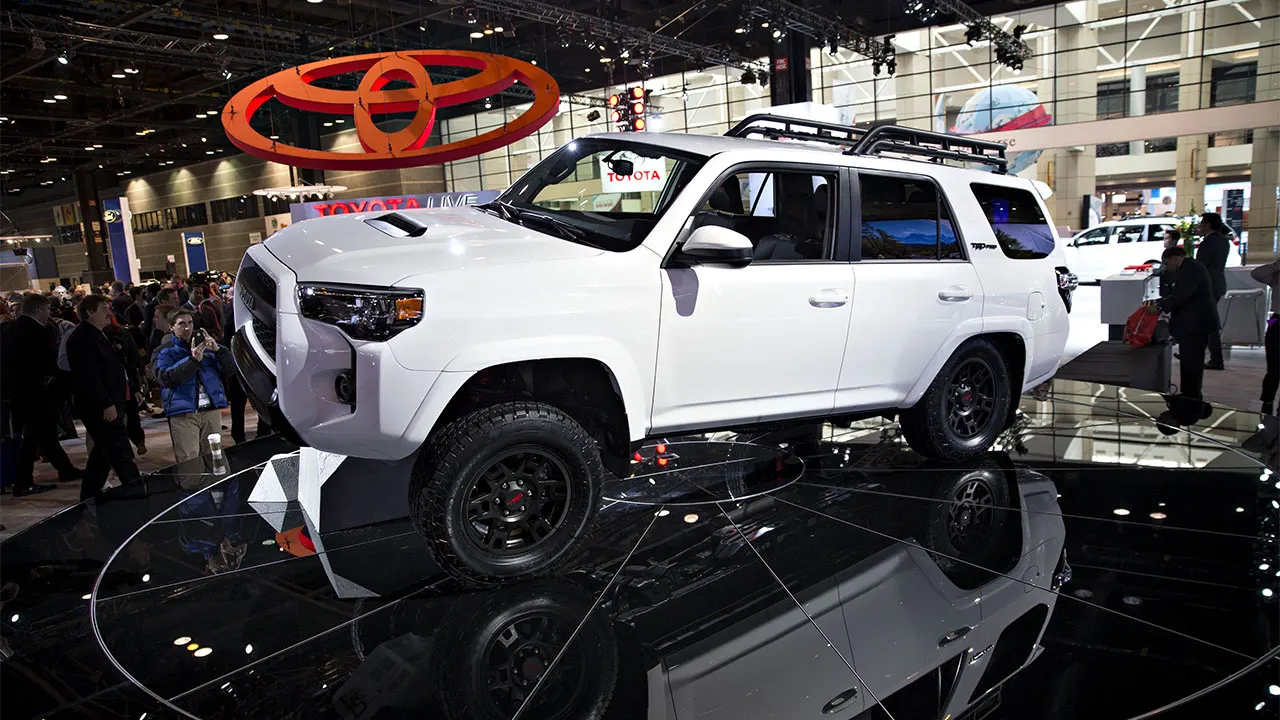
Certain Toyota 4Runner sport utility vehicles are included in Toyota’s recall of 314,029 U.S. vehicles over Takata front passenger airbag inflators that may rupture.(Daniel Acker/Bloomberg via Getty Images / Getty Images)
Toyota’s decision to conduct this recall “out of an abundance of caution,” as stated in the NHTSA recall report, reflects a strategic imperative to uphold its decades-long reputation for safety and reliability. While direct financial costs for individual recalls are often absorbed by the company’s vast resources and existing warranty provisions, the cumulative effect of such events can exert pressure on brand perception. Toyota has historically been a benchmark for quality control and manufacturing excellence, and consistent efforts to address safety concerns, even those stemming from external suppliers, are vital to maintaining investor confidence and consumer loyalty in a highly competitive global market.
The operational logistics of such a broad recall are substantial. Authorized Toyota and Lexus dealerships across the U.S. will be tasked with replacing either the front passenger airbag inflator or the entire airbag assembly, depending on the specific vehicle model and component, all free of charge to the owner. This entails managing parts inventories, scheduling repairs, and dedicating technician labor—resources that could otherwise be deployed for revenue-generating services. While the direct costs of parts and labor are significant, the indirect costs associated with communication, customer service, and potential impacts on new vehicle sales or trade-in values of affected models must also be considered.
POPULAR TIRE BRAND RECALLS TIRES OVER HIDDEN DEFECT THAT COULD CAUSE A SUDDEN CRASH WHILE DRIVING
Toyota Motor Corp’s logo at a dealership in Tokyo, Japan, April 3, 2025. (Kim Kyung-Hoon/Reuters / Reuters)
For shareholders, this recall is a reminder that even the most meticulously managed companies are not immune to supply chain risks, especially when dealing with complex, multi-component systems and long product lifecycles. The repercussions of the original Takata scandal led to the supplier’s bankruptcy and fundamentally reshaped how automakers approach supplier vetting and quality assurance, particularly for critical safety components. This ongoing recall activity serves as an industry-wide lesson in the importance of robust risk management and due diligence throughout the supply chain.
Owners of potentially affected vehicles are urged to take proactive steps. They can ascertain if their specific vehicle is included in the recall by visiting NHTSA’s recall database at nhtsa.gov/recalls and inputting their 17-digit vehicle identification number (VIN). Alternatively, contacting an authorized Toyota or Lexus dealership can provide immediate clarity. Toyota has outlined plans to dispatch owner notification letters between December 28th and January 11th, though owners are not required to await these formal communications before initiating contact with their dealer for repair scheduling.
| Ticker | Security | Last | Change | Change % |
|---|---|---|---|---|
| TM | TOYOTA MOTOR CORP. | 210.97 | +0.83 | +0.39% |
GET FOX BUSINESS ON THE GO BY CLICKING HERE
A representative for Toyota did not immediately respond to FOX Business’ request for comment, which is standard practice during the initial phases of recall announcements as logistics are finalized.
Market Impact
While an announcement of this scale could typically trigger short-term negative sentiment, Toyota’s robust financial health and strong market positioning, coupled with the fact that this is a continuation of a well-understood, legacy Takata issue, suggest the immediate impact on TM’s stock performance (currently trading at 210.97, up 0.39%) will likely be minimal and transient. Investors have largely priced in the ongoing costs associated with the Takata saga. However, the cumulative effect of such recalls reinforces the need for ongoing operational vigilance and substantial warranty provisioning. For the broader automotive sector, this recall underscores persistent regulatory scrutiny and the escalating importance of component traceability and supplier oversight. It highlights a potential long-term headwind for the industry: managing the lifecycle and potential degradation of components in increasingly complex modern vehicles, impacting not just current models but also those from prior generations, thereby extending potential liabilities well into the future.