
Major League Wrestling owner Court Bauer reflects on company’s growth in 2026.
Key Takeaways:
- Strategic Media Rights Diversification:MLW’s aggressive pursuit of media rights deals with Veeps, Tubi, and Amazon Prime dramatically broadened its distribution footprint, tapping into both live event streaming and free ad-supported streaming television (FAST) sectors to enhance brand awareness and accessibility in a fragmented media landscape.
- Agile Content and Operational Strategy:A lean, efficient front office enabled CEO Court Bauer to focus on high-level strategic partnerships, while a disciplined 60-90 minute content format for its flagship “Fusion” show directly addresses evolving consumer attention spans and positions MLW for higher engagement in the digital-first era.
- Market-Savvy Talent & Licensing Focus:By balancing established names with a diverse roster and prioritizing future licensing opportunities, MLW aims to differentiate its product and diversify revenue streams beyond traditional media deals, signaling an intent for sustained growth and brand monetization in a competitive sports entertainment market.
Major League Wrestling (MLW)experienced a significant strategic inflection point in 2026, positioning itself as a compelling case study in agile media distribution and content strategy within the competitive sports entertainment sector. In an increasingly fragmented media landscape, where established giants contend with emerging digital platforms for audience attention and revenue, MLW’s deliberate business moves underscore a savvy understanding of modern consumption patterns and the value of diversified distribution channels.
The professional wrestling promotion secured two pivotal media rights deals with Veeps and Tubi, significantly expanding the reach of its flagship show, “Fusion,” beyond its prior YouTube-centric distribution model. This multi-platform approach is not merely about wider availability but represents a calculated play for market penetration and brand validation. The year also saw a strategic reshaping of its roster, with notable talents like Shotzi Blackheart, Tessa Blanchard, Masha Slamovich, and Trevor Lee making appearances, signaling an investment in both star power and diverse in-ring presentation.
In an interview with FOX Business, MLW owner Court Bauer attributed much of this growth to a newly built-out front office, a crucial step in professionalizing operations and allowing executive leadership to focus on core strategic objectives rather than day-to-day minutiae.
CLICK HERE FOR MORE OUTKICK PRO WRESTLING COVERAGE
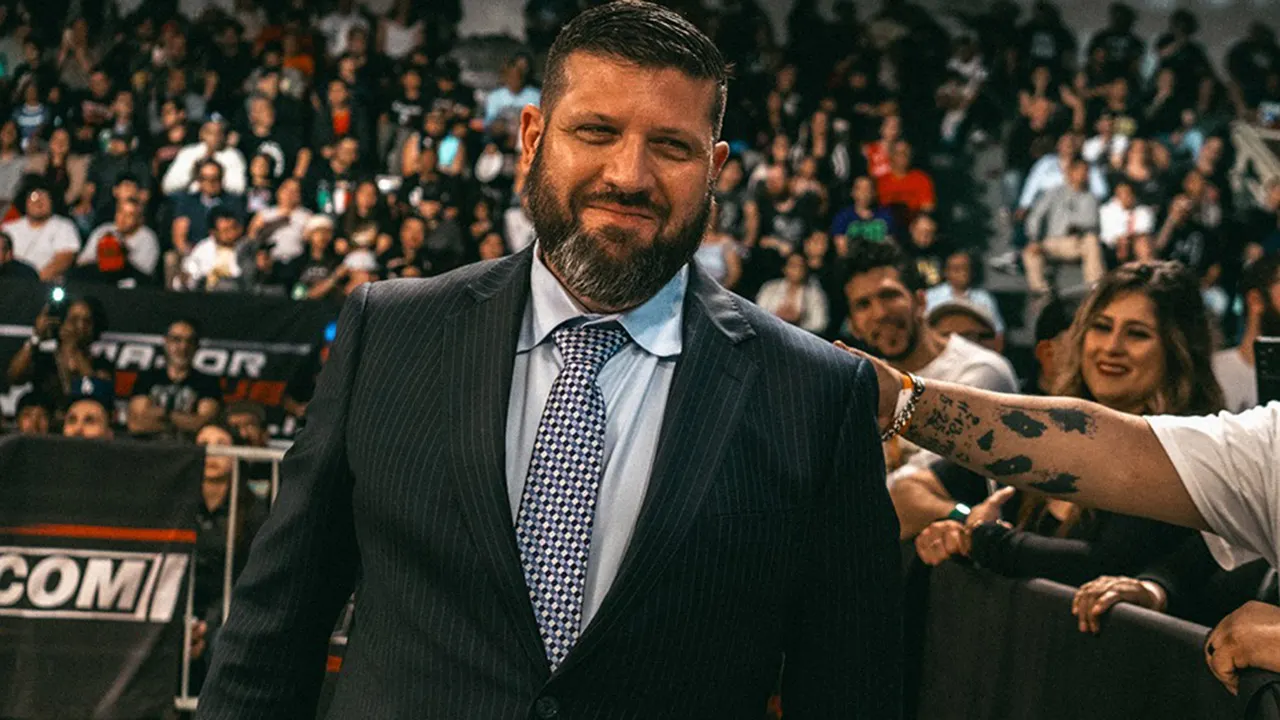
Major League Wrestling founder Court Bauer at an event.(Major League Wrestling)
“It was a huge year for us,” Bauer stated, underscoring the operational shift. “We built out our new front office which allowed me then the bandwidth to go out there and do a lot of these deals. You have great people in your department, so you can then focus on your task at hand, which is to grow the company, build it, keep that momentum going, throw more wood in that fire and just let it build, let it build. And so that’s been huge for us.”
The strategic rationale behind these media partnerships is particularly insightful. “Tubi was huge because one of the things is, ‘Oh yeah, MLW, it’s where MJF, it’s where (Jacob) Fatu, it’s where all these guys came from. I don’t know about them, what’s up?’ It’s eyes and awareness.” This highlights the challenge for challenger brands in a mature market: overcoming obscurity. The goal was clear: “get a media rights deal. Get a deal and partners that can broaden your awareness, that can get you in those places.”
MLW’s choice of partners reflects a sophisticated understanding of market segmentation. Partnering with Live Nation and its streaming arm, Veeps, leverages the world’s largest concert promoter and venue owner, creating potential synergies for live event attendance, Ticketmaster integration, and premium streaming experiences. This taps into the experiential economy, vital for pro wrestling’s live gate revenue. The Tubi deal, however, is arguably the most transformative. With over 100 million monthly active users, Tubi operates on an ad-supported video on demand (AVOD) model, making content freely accessible. Bauer’s comparison – “bigger than Paramount Plus and HBO Max combined” – succinctly positions Tubi’s immense reach, especially compelling in an economic climate where consumers are increasingly scrutinizing subscription fatigue. This strategy provides high-quality, free content, a strong value proposition as “the economy kind of goes like this,” a nod to inflationary pressures and consumer belt-tightening. Furthermore, the inclusion of MLW on Amazon Prime adds another layer of mainstream validation and access within a premium subscription ecosystem, diversifying its audience touchpoints.
Beyond distribution, Bauer emphasized a nuanced approach to talent acquisition and roster construction, harkening back to an era when pro wrestling characters presented a broader spectrum of danger and theatricality. This strategy aims for product differentiation in a landscape often criticized for homogenization. The current MLW roster features a blend of established veterans like Killer Kross, Matt Riddle, Donovan Dijak, Austin Aries, Karl Anderson, and Doc Gallows, alongside powerful super heavyweights such as Big Damo, Jumbo, and Brick Savage, and agile high-flyers like Diego Hill, Titán, Black Tiger, and Trevor Lee. This diverse talent pool is crucial for creating compelling storylines and matches that appeal to a wide demographic.
“I think it’s important to have that so you’re not just all of a sudden you look around and the product all looks like dudes that are underwear models, which is like, OK, what, what do we do with this? You got a lot of clones now,” Bauer remarked, directly addressing the need for varied character archetypes to prevent audience fatigue and maintain narrative depth.
A particularly forward-thinking aspect of MLW’s strategy is its content length. Unlike the traditional two or three-hour weekly programming prevalent in the industry, “Fusion” is typically an hour long, barring special episodes. This is a direct response to evolving consumer attention spans and digital consumption habits.

Major League Wrestling’s Court Bauer comes down the ramp.(Major League Wrestling)
CLICK HERE FOR MORE SPORTS COVERAGE ON FOXBUSINESS.COM
Bauer elaborated on this strategic decision to FOX Business: “One hour, man. I think the sweet spot is like 60-90 minutes in total run time. And that’s something I remember talking with Vince (McMahon) about. He would agree at the time. It’s like the perfect sweet spot is 90 (minutes). Sixty is great because you’re really packed, man. You’re making editorial decisions like I can’t get that in this episode. I gotta wait.” He highlighted the flexibility afforded by Tubi, allowing episodes to vary from 42 minutes to an hour and 5 minutes, avoiding the “laboring to get to that two-hour mark.”
This approach directly acknowledges the paradigm shift in media consumption. “When you think about today’s fans, not the old school fans, not the fans that are now like my age and older, but like new era fans, like, man, they’re watching some on TikTok, on YouTube, on Instagram, they’re watching for like 2-3 minutes. They’re not sitting there watching, you a two-hour ‘SportsCenter,’ even an hour of ‘SportsCenter’ like I did when I was a kid. Like that was a big thing to make sure you got your ‘SportsCenter’ time and it’s a different era. So, you gotta give them something that they can’t turn off.” This lean content model, characterized by “all gas, no brakes,” aims for maximum impact and retention in a scroll-heavy digital environment, avoiding the narrative dilution often associated with longer shows that require extensive “stunt promoting.”
MLW’s commitment to live events remains a cornerstone of its business model, with the upcoming Saturday Night SuperFight at Cicero Stadium in Chicago being a key fixture. Such events are vital not only for generating gate revenue but also for creating premium content for its media partners, building community, and maintaining a direct connection with its fanbase. The stacked card, featuring title matches and high-profile bouts, demonstrates MLW’s intent to deliver value to its audience and reinforce its brand.
Looking ahead to 2027, Bauer articulated a clear vision for continued expansion, focusing on brand promotion and strategic licensing deals. “I think the more we get noisy, rowdy, and be kind of like what we are, the better off we’ll be. But also continuing to develop and expand that roster.” With 52 weeks of content to deliver to Tubi, the need for a robust and dynamic talent roster is paramount. MLW plans to be “more and more aggressive in the free-agent market,” actively seeking talent from global promotions like New Japan Pro-Wrestling, Stardom, and CMLL, showcasing a global talent scouting strategy and leveraging international partnerships.

Black Tiger is set for a tag team match at MLW’s Saturday Night SuperFight.(MLW)
GET FOX BUSINESS ON THE GO BY CLICKING HERE
Market Impact:
MLW’s strategic pivot in 2026 positions it as an agile disruptor in the sports entertainment market, demonstrating how niche content creators can thrive by embracing diversified digital distribution and catering to modern consumer habits. Its multi-platform media rights strategy, particularly with AVOD giants like Tubi, provides a blueprint for expanding brand reach without relying solely on traditional cable or premium SVOD models, offering a compelling alternative for advertisers seeking engaged audiences. Furthermore, MLW’s disciplined content length and focused operational structure highlight the efficiency and scalability possible for leaner organizations, potentially making it an attractive target for larger media conglomerates looking to acquire established, digitally-native content libraries and a loyal fanbase. The emphasis on global talent acquisition and future licensing deals signals a clear path towards revenue diversification and increased brand equity, suggesting MLW could evolve beyond a pure content provider into a valuable intellectual property holder in the broader entertainment ecosystem.