
Key Takeaways:
- Unprecedented Market Demand:LeBron James’ move to the Philadelphia 76ers has triggered an immediate and colossal surge in ticket prices and merchandise sales, particularly for marquee matchups, underscoring his enduring economic gravitational pull even in his 24th season.
- Enhanced Franchise Valuation & Media Rights:The acquisition of two generational talents in LeBron James and Jaylen Brown profoundly elevates the 76ers’ brand equity, significantly boosting franchise valuation, attracting premium sponsorships, and optimizing media broadcast appeal for the entire league.
- Strategic Influence on League Economics:The NBA’s strategic delay in schedule release, directly attributed to James’ decision, highlights the singular influence of superstar athletes on league-wide operational planning, revenue projections, and the lucrative ecosystem of broadcast partnerships.
Check out what’s clicking on FoxBusiness.com.
The announcement of LeBron James’ unprecedented 24th NBA season, notably with the Philadelphia 76ers, has sent seismic financial ripples through the sports economy, instantly redefining market valuations, media strategies, and consumer spending patterns across the league. His decision to join the Eastern Conference powerhouse is not merely a basketball story; it’s a profound market catalyst, demonstrating the immense economic leverage of a singular superstar athlete.
From a purely financial perspective, wherever LeBron James goes, premium pricing follows. The immediate aftermath of his decision has seen the Philadelphia 76ers become the most financially compelling team in the NBA. NBA Commissioner Adam Silver’s admission of holding off on announcing each team’s schedule until James’ decision was finalized speaks volumes about the commercial weight of the league’s all-time leading scorer. This strategic delay underscored the pivotal role a player of James’ stature plays in optimizing broadcast schedules, advertising revenue, and global viewership, highlighting how a single player can dictate multi-million dollar scheduling decisions for an entire sports league.
LeBron James’ new Philadelphia 76ers jersey(Fanatics / Fox News)
The financial impact is most immediately evident in the secondary ticket market. StubHub, a bellwether for consumer demand, reported a staggering surge, identifying the Oct. 20 season opener against the New York Knicks at Madison Square Garden as the most in-demand NBA game of the entire season. With “get-in” prices soaring above $1,500, this figure eclipses even typical playoff averages, illustrating an extraordinary willingness by consumers to pay a premium for the “LeBron experience.” This isn’t just about basketball; it’s about the experiential economy, where fans are investing in a unique, once-in-a-lifetime event, driving significant revenue for the secondary market and indirectly boosting local economies through increased hospitality, tourism, and related services.
Moreover, the Sixers now dominate StubHub’s top demand metrics. Seven of the top 10 highest-demand games feature the Sixers, and the team’s overall demand has skyrocketed 12.5 times from last year’s schedule release, climbing from No. 6 to No. 1 overall. This unprecedented jump is a direct quantifiable measure of the “LeBron Effect” on a franchise’s marketability and revenue generation potential. Holiday games, traditionally premium slots for broadcasters and advertisers, are also seeing a major uplift, with Christmas Day demand nearly 50% ahead of last year. James’ return to Los Angeles for the Sixers-Lakers clash is poised to be one of the biggest draws, further cementing his cross-market appeal and ability to generate buzz irrespective of geography.
James announced his decision in a post on X, acknowledging his prior contemplation of retirement but stating, “I still truly love this game, and I have more to give.” This decision, driven by both passion and strategic foresight, allows him to potentially secure an unprecedented fourth NBA title with a different franchise, further enhancing his legacy and, by extension, his enduring personal brand equity and endorsement value. The market for his personal brand, which includes numerous high-profile endorsements and ventures, remains robust due to his continued athletic relevance and massive global following.
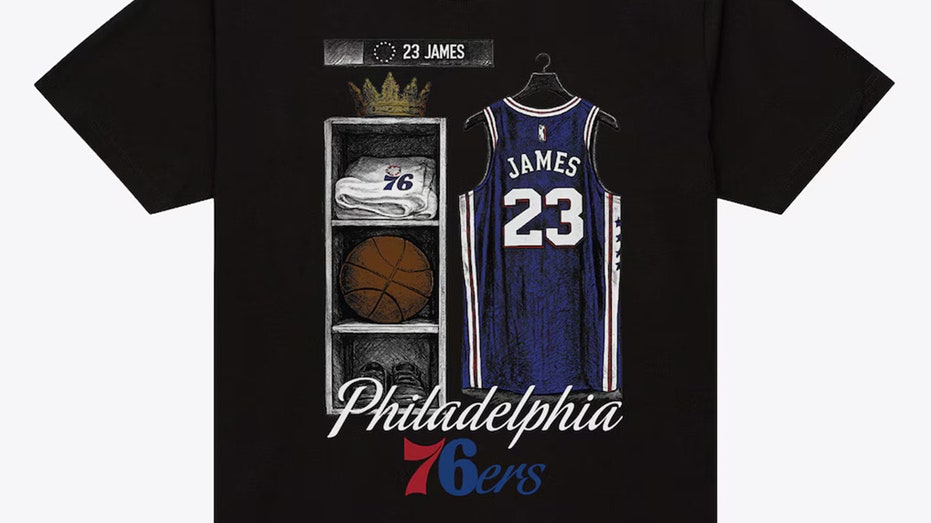
A LeBron James Philadelphia 76ers T-shirt made by Mitchell & Ness.(Fanatics / Fox News)
LEBRON JAMES’ 76ERS DEBUT SET FOR BLOCKBUSTER KNICKS SHOWDOWN AT MSG
For the Philadelphia 76ers, this offseason has been a masterclass in strategic asset acquisition. James, now playing for his fourth NBA team, joins Jaylen Brown, acquired in a stunning trade with the Boston Celtics. This dual acquisition represents a significant financial investment and a bold statement from ownership. The infusion of two superstar talents immediately elevates the 76ers’ franchise valuation, which Forbes last pegged in the billions. Beyond on-court performance, this move enhances the team’s attractiveness to corporate sponsors, drives up demand for season tickets and luxury suites, and provides an unparalleled boost to merchandise sales. The immediate spike in sales of new LeBron James 76ers jerseys and apparel through partners like Fanatics represents a multi-million dollar revenue stream, directly benefitting the team, the league, and the player through licensing agreements.
Last season, the 76ers were swept by the Knicks in the Eastern Conference semifinals, a costly underperformance for a franchise with championship aspirations. The additions of James and Brown are a direct response to this, a calculated risk-reward scenario designed to propel them to a championship. While the financial implications of their contracts are substantial – pushing the team potentially deep into luxury tax territory – the perceived return on investment, in terms of media exposure, fan engagement, and potential championship glory, is deemed worth the expenditure by ownership. A championship run would further amplify the team’s brand, solidify its global fanbase, and generate additional revenue streams from celebratory merchandise and potential future media content.
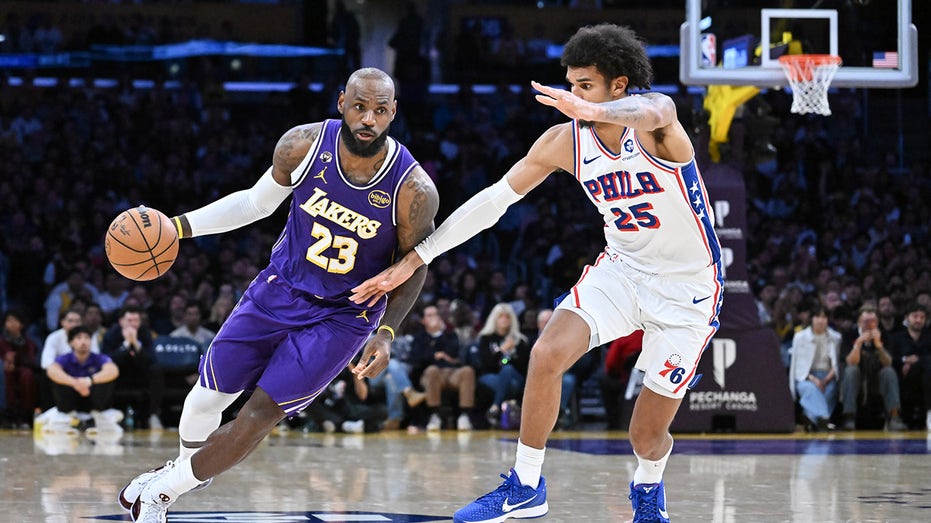
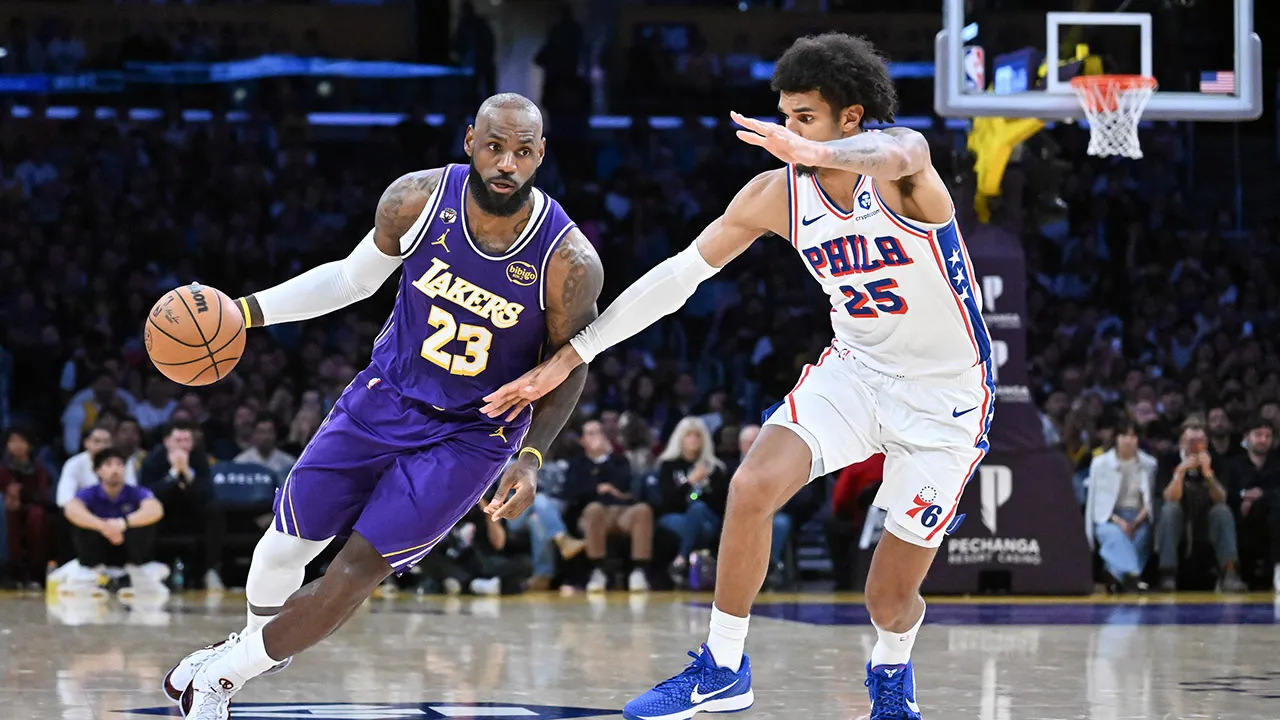
LeBron James of the Los Angeles Lakers dribbles the ball against Dominick Barlow of the Philadelphia 76ers during the second half of the game between the two teams at Crypto.com Arena Feb. 5, 2026, in Los Angeles.(Allen Berezovsky/Getty Images / Getty Images)
GET FOX BUSINESS ON THE GO BY CLICKING HERE
Despite entering his 24th season, James’ continued productivity—averaging 20.9 points, 7.2 assists, and 6.1 rebounds in 60 games with the Lakers last season, earning his 22nd All-Star selection—underscores his sustained value. This longevity at an elite level, coupled with his unparalleled marketability, makes him an anomaly in professional sports. His presence guarantees primetime television slots, robust advertising rates for broadcasters, and heightened engagement across all media platforms, from traditional sports commentary to social media analytics and sports betting markets. For the NBA, securing another season of LeBron James, especially with a high-profile contender, is a significant win for its global brand and revenue forecasts.
Fox News’ Ryan Canfield contributed to this report.
Market Impact:
LeBron James’ move to the Philadelphia 76ers represents a quintessential example of “superstar economics” driving tangible financial returns across multiple sectors of the sports industry. The immediate market impact is a significant boost in ticket revenue, both primary and secondary, amplified by dynamic pricing models. Merchandise sales are experiencing a substantial uplift, contributing to brand licensing royalties for the NBA and its partners. For the 76ers, this move elevates franchise valuation, strengthens negotiating power for future media rights and corporate sponsorships, and enhances the overall attractiveness of the Philadelphia market for related businesses like hospitality and tourism. On a league-wide scale, James’ decision has optimized broadcast scheduling, increasing viewership for national and international media partners, thereby driving higher advertising revenues. This strategic player acquisition is a robust economic engine, generating immediate cash flow and fortifying long-term brand equity for all stakeholders involved, solidifying the immense financial leverage of elite athletic talent in the global marketplace.