
**Key Takeaways:**
1. **Geopolitical Risk Premium Escalates:** The dissolution of the JCPOA and the subsequent Iran-US conflict have injected a significant and persistent risk premium into global energy markets, particularly crude oil, impacting supply chain stability and inflation forecasts.
2. **Nuclear Proliferation as an Economic Threat:** Iran’s accelerated uranium enrichment, coupled with new, less safeguarded civil nuclear agreements in the Middle East, heightens the specter of regional arms race, deterring foreign direct investment and fostering long-term market uncertainty.
3. **Erosion of Expert Authority Undermines Future Growth:** A weakening commitment to scientific research and the rise of anti-expert sentiment pose a fundamental threat to technological innovation, energy independence, and the US’s long-term economic competitiveness in a rapidly evolving global landscape.
I arrive early for my lunch at The Bombay Club, one of Washington’s power-dining establishments located just a stone’s throw from the White House. This isn’t merely a culinary experience; it’s an immersion into the very nexus of policy, power, and the profound market forces shaped by decisions made within these discreet walls. A staff member points to photographs of George HW Bush and Bill Clinton, past presidents who have eaten at what GQ India considers one of the seven best foreign-based Indian restaurants, as he steers me through a dimly lit dining room to a private area behind a glass wall. The atmosphere here, hushed yet potent, mirrors the high stakes of the global energy and security landscape we are about to discuss.
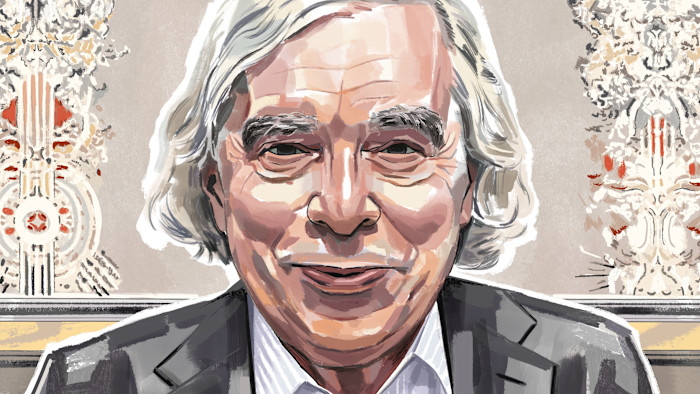
I’m here to meet Ernest Moniz, a nuclear physicist who served as US energy secretary under Barack Obama and was a key architect of the 2015 nuclear deal between Iran and world powers: the US, the UK, Russia, Germany, France, China and the EU. Moniz, a figure whose scientific gravitas often lent considerable weight to complex geopolitical negotiations, understands the intricate dance between diplomacy, energy security, and market stability.
The carefully crafted 159-page agreement, the Joint Comprehensive Plan of Action (JCPOA), which aimed to block Iran from developing a nuclear weapon, was implemented in January 2016 after nearly two years of negotiations. Its economic implications were immediate and significant. By offering sanctions relief, the deal unlocked Iranian oil exports, adding substantial barrels to global supply and initially tempering crude prices. It also opened the door, albeit briefly, for foreign investment into Iran’s vast energy infrastructure and other sectors, creating new, albeit nascent, market opportunities. Shipping costs in the Gulf region saw a temporary de-escalation, and investor confidence in regional stability received a much-needed boost.
However, this period of relative market calm and potential investment did not last. Even though international inspectors said Iran largely complied with its terms until the US withdrew, Donald Trump pulled the US out of the agreement during his first term in office in May 2018. His administration, claiming it was a “horrible, one-sided deal” that enriched Tehran and would not prevent it from developing a nuclear weapon, reimposed stringent sanctions. This decision sent immediate shockwaves through global energy markets. Oil prices, which had seen some stability post-JCPOA, surged on fears of reduced Iranian supply and escalating regional tensions. Shipping costs in the Gulf rose sharply due to increased geopolitical risk, impacting global supply chains and freight insurance premiums. International companies that had tentatively re-engaged with Iran faced the stark choice of withdrawing or incurring severe penalties, effectively stifling any nascent market growth and demonstrating the direct financial consequences of policy shifts.
That unilateral withdrawal by the US put both countries on a course towards the current war, which erupted on February 28 and has caused a global economic shock, killed thousands of Iranians and risks sparking a regional nuclear arms race. The market ramifications of this conflict are profound: a persistent geopolitical risk premium on oil and gas, threatening energy security and contributing to inflationary pressures across consumer and industrial sectors. Increased insurance costs for maritime trade through critical chokepoints like the Strait of Hormuz directly impact global shipping logistics and commodity prices. Furthermore, a flight of capital from emerging markets perceived as vulnerable to regional instability is evident, pushing defense sector stocks higher while broader equity markets grapple with persistent uncertainty and volatility.
Moniz, who plays a leading role in two Washington-based think-tanks on energy and nuclear threats, is due to outline details of a proposal for a new era of nuclear energy co-operation in the Middle East at an Aspen Institute Congressional Program in Seward, Alaska, later this month. I’m eager to learn whether this could become a blueprint for a deal to end the Iran war, given the Trump administration’s struggles in negotiating with Tehran and last month’s signing of a US-Saudi civil nuclear agreement. The latter, which some experts, including Moniz, warn lacks proper safeguards, introduces a new layer of market risk, potentially fueling a regional nuclear arms race that would further deter foreign direct investment and increase the cost of doing business in an already volatile region. Such developments could also impact the global uranium market, driving demand and prices, while raising significant concerns for investors focused on environmental, social, and governance (ESG) criteria.
As I ponder the menu, I hear a commotion as Moniz walks into the restaurant and begins chatting with staff members whom he clearly knows well from previous visits. The 81-year-old scientist is easily recognisable with his flowing silvery-grey hair, which television host Jon Stewart once joked made him look like one of America’s “actual founding fathers”.
“Over there, just by those plants, that was always my table,” he says, pointing to a corner of the restaurant where he regularly entertained Russian officials while discussing efforts to safeguard their nuclear arsenal following the dissolution of the USSR at the end of the cold war. These discussions, though decades old, underscore a fundamental truth: managing nuclear proliferation has always been, and remains, a critical factor for global stability and, by extension, market confidence. The successful disarmament efforts post-Cold War helped unlock significant economic opportunities and reduce systemic risk for investors, enabling a more predictable environment for global trade and capital flows.
Those talks occurred when Moniz was under-secretary of energy under Clinton, but when Obama appointed him as energy secretary in 2013 it was the negotiations with Iran that consumed most of his time. The Joint Comprehensive Plan of Action set limits on Iran’s nuclear programme and imposed strict monitoring to verify compliance. This diplomatic achievement was lauded by markets as a de-escalation of a major geopolitical flashpoint, briefly easing the oil supply concerns that had long kept a lid on global growth projections and encouraging cautious optimism among investors.
When asked if this year’s war would have happened if the JCPOA remained in place, Moniz is emphatic: “Oh, certainly not. It was the constraint that Iran have no more than 300 kilogrammes of enriched uranium and enriched to no more than 3.67 per cent. Instead, of course, they have 10 tonnes of enriched uranium, including almost half a tonne of 60 per cent enriched uranium . . . so [by the time of the June 2025 bombing of Iran’s nuclear sites] they had the material for several bombs already,” he says. This stark increase in Iran’s enriched uranium stockpile represents a critical market risk factor. It significantly shortens Iran’s ‘breakout time’ to a nuclear weapon, intensifying regional tensions and the probability of military intervention. For investors, this translates directly into higher risk premiums for assets in the Middle East, increased volatility in commodity markets, and a potential recalibration of global supply chain strategies away from the region, impacting long-term investment decisions.
Moniz warns that the stakes in the Iran conflict are exceptionally high for regional security, nuclear non-proliferation and American lives. For financial markets, these stakes translate into direct threats to global trade routes, potential for widespread cyber warfare impacting critical infrastructure, and the diversion of national budgets towards defense spending rather than economic development and social programs. The human cost, while immeasurable, also carries significant economic consequences through societal disruption, long-term instability, and a potential brain drain from affected regions.
To illustrate his point, he flips through his mobile phone and finds a copy of a handwritten letter sent by the mother of an American pilot in the US Navy to Obama, secretary of state John Kerry and Moniz shortly after the Iran deal was signed. She thanks the three men for making it “much safer” for her son, who had been deployed in the region, by giving “diplomacy a chance”. The current war, now in its sixth month, has so far claimed the lives of 18 US servicemen and women and wounded more than 600 personnel. This tragic toll underscores the real-world consequences of policy decisions, translating into higher defense budgets, increased national debt, and a potential drag on long-term economic prosperity through misallocated resources.
Before we dive into the detailsof the conflict, a waiter talks us through the menu. As an appetiser, Moniz suggests we share crispy kale chaat. For his main course he chooses a vegetable thali, which he explains is a complete meal served on a single platter. I plump for a seafood thali. We both order a Kingfisher beer to complement the spicy food. Moniz says that if it were after 5pm he would order a Bombay gin martini with a twist.
“After 5pm, that’s my principle and I never violate it,” he adds. This small assertion of personal principle provides a momentary contrast to the deeply complex and often unpredictable world of international relations and financial markets we are dissecting, where adherence to principles can often be a casualty of political expediency.
Menu
The Bombay Club
815 Connecticut Avenue NW, Washington DC 2006
Crispy kale $14
Samundari thali $30
Bombay thali $26
Rice kheer $14
Pista kulfi $12
Kingfisher beer x2 $18
Espresso x2 $9
Totalinc tax and tip $165.30
Moniz grew up in Fall River, Massachusetts, a city where almost half the population claims Portuguese ancestry, mainly from the Azores Islands — home to his grandparents before they migrated to the US.
At school Moniz developed a love for physics, encouraged by an enthusiastic teacher. His father, who worked at the local Firestone rubber factory, urged him to pursue a college education and become an engineer.
“I’m a Sputnik product,” says Moniz, referring to the Soviet Union’s launch of the world’s first artificial satellite in 1957 — an event that shocked US policymakers into funding a space race that opened opportunities for students. Moniz was awarded a scholarship from his father’s labour union to study physics at Boston College. This historical context highlights the importance of national strategic investment in science and education for long-term economic and technological leadership, a lesson with profound implications for today’s market competitiveness. Such investments are the bedrock of future innovation, crucial for maintaining a competitive edge in global markets.
After a doctorate in theoretical physics at Stanford University in California, he took a position at the Massachusetts Institute of Technology, where he rose to become head of the physics department in 1991. Four years later, Moniz joined the Clinton administration as an adviser on science policy to the president.
America’s scientific leadership is now being challenged by China, and critics warn Trump’s “anti-science” agenda — slashing funding, restricting research on climate change and attacking the independence of universities and academics — risks accelerating its decline. For markets, this erosion of scientific pre-eminence is a critical long-term concern. It threatens the pipeline of innovation that drives economic growth, particularly in high-tech sectors, renewable energy, and advanced manufacturing. Reduced public investment in basic research can lead to a decline in patents, a weakening of competitive advantages, and a potential shift of global innovation hubs, impacting everything from semiconductor production to climate tech investments and the future valuation of tech stocks.
Moniz points to last month’s publication ofScience: A New Golden Age, a report calling for a fundamental reform of academic funding drafted by White House science adviser Michael Kratsios. Kratsios was a controversial pick to lead the White House Office of Science and Technology Policy given his limited academic credentials — a Bachelor of Arts in political science and a certificate in Hellenic studies.
“This is very, very dangerous, and I don’t know how we get out of this . . . the undermining of the research university as an institution is very, very corrosive,” he says. This critique directly translates into market risk. The diminished role of independent academic research and expert advice can lead to suboptimal policy decisions, a loss of trust in data-driven analysis, and a more volatile economic environment as policy becomes less informed and more susceptible to ideological swings. It impacts investor confidence in long-term stability and predictability, particularly in sectors reliant on scientific advancement and sound regulatory frameworks.
Moniz says the proliferation of social media has fuelled anti-expert views as people choose to listen to what they want to hear rather than arbiters who could synthesise information. “Walter Cronkite, where are you when we need you?” he asks. In financial markets, the rise of misinformation and the decline of authoritative sources can create significant volatility, contribute to irrational exuberance or panic, and challenge the efficacy of traditional financial journalism in guiding informed investment decisions. It’s a backdrop of heightened noise and reduced signal, making genuine market insight harder to discern and increasing the risk of mispriced assets.
As we talk, the waiter delivers a bowl of crispy kale, which is topped with a colourful collection of date-tamarind chutney, onion and yoghurt.
Market Impact:
The conversation with Ernest Moniz underscores a confluence of geopolitical and domestic policy risks that are actively shaping, and will continue to define, global financial markets. The re-escalation of tensions in the Middle East, directly linked to the collapse of the JCPOA, imposes a persistent and significant risk premium on crude oil, threatening energy security and contributing to inflationary pressures across economies. This directly impacts corporate profit margins, consumer spending power, and central bank monetary policy. The specter of nuclear proliferation, exacerbated by Iran’s advanced enrichment and potentially insufficient safeguards in new regional agreements, elevates geopolitical uncertainty, likely deterring foreign direct investment in the Middle East and increasing the cost of capital for regional projects. This uncertainty can trigger ‘flight to safety’ capital movements, strengthening safe-haven assets. Domestically, the erosion of scientific leadership and the rise of anti-expert sentiment in the US pose a long-term threat to innovation, competitiveness, and the nation’s ability to address grand challenges like climate change and future energy demands, ultimately impacting the long-term growth potential and valuation of technology and green energy sectors. Investors must navigate a landscape characterized by heightened volatility, supply chain vulnerabilities, and a potential shift in global economic leadership, making prudent risk management and a keen eye on geopolitical developments paramount for portfolio resilience.
Key Takeaways:
- Geopolitical and Climate Policy Intersections Drive Market Volatility:The complex interplay between global energy transition targets, extreme weather events, and international relations creates significant uncertainty for energy markets, commodity prices, and long-term infrastructure investments.
- The “Electron Race” Shapes Future Industrial Landscapes:Intense competition, particularly between the US and China, for dominance in renewable energy, critical minerals, and advanced technologies like AI, dictates national industrial strategies, supply chain resilience, and the allocation of vast capital in the coming decades.
- Political Polarization and Trust Deficits Undermine Global Stability and Investment:Oscillatory policy shifts in major economies, particularly the US, coupled with fractured international trust, generate systemic risks for global trade, nuclear non-proliferation efforts, and impede the coordinated solutions vital for climate and security challenges.
The conversation over tangy starter quickly pivots to issues that reverberate through global financial markets: climate policy and the intricate dance of international diplomacy. Our subject, Ernest Moniz, a former cabinet member in the Obama administration, delves into the Paris Agreement on climate, a landmark accord that pledged to limit global average temperature rises. His insights offer a stark, market-oriented view of the challenges ahead.
“I think it’s the extreme weather that is eventually going to be the tipping point for the United States actually to get a coherent policy,” Moniz asserts, referencing the devastating wildfires that have swept across continents this summer. For investors, these events are not merely environmental tragedies but direct threats to asset values. Rising insurance premiums for properties in vulnerable regions, increased agricultural commodity price volatility due to disrupted harvests, and the escalating costs of infrastructure repair and reinforcement (think utility grids, transportation networks) are already impacting corporate earnings and municipal budgets. The consensus among financial analysts is that climate risk, once a peripheral concern, is now a core component of enterprise valuation and sovereign debt ratings. Moniz’s grim prediction – “I think we’re going to overshoot those [Paris] targets dramatically” – suggests that the market’s pricing of transition risk may still be too optimistic, potentially leading to further devaluations of fossil fuel assets and underestimation of climate adaptation costs.
Moniz then ventures into the controversial realm of geoengineering, suggesting solutions like firing aerosols into the atmosphere to reflect sunlight may become necessary. While speculative, the mere discussion of such technologies signals a potential future market for advanced climate intervention, complete with the need for significant government funding for research and, crucially, international regulation. For investors, this could represent a new frontier of clean technology, but it also introduces profound ethical, environmental liability, and governance risks. “Who decides? Does some rich guy like Elon Musk decide he is going to shoot some aerosols up and to hell with you? Or does the US decide and then Europe says it thinks that is a bad idea? We think these decisions require co-ordinated international programmes,” he stresses, highlighting the regulatory arbitrage and geopolitical tensions that could arise, creating immense uncertainty for any private sector involvement.
Moniz’s own pro-climate credentials are not without market-relevant controversy. Labeled a “frackademic” by green campaigners for accepting funding from the oil industry and advocating for natural gas as a transitional fuel, his perspective underscores a key market debate. “No one is going to deny the fact that most of the progress the US has made on the climate side has come from the switch from coal to gas,” he argues. This position is critical for energy investors. Natural gas, particularly Liquefied Natural Gas (LNG), remains a vital bridging fuel, offering energy security and lower emissions compared to coal. Investments in LNG export terminals and gas infrastructure hinge on this “transition fuel” narrative. Policy swings, such as former President Joe Biden’s halt on new LNG terminal approvals, directly impact the valuation and future prospects of major energy companies, leading to significant market volatility in the sector based on electoral outcomes.
His scathing critique of the current Trump administration’s policies towards renewable energy, including “paying companies billions of dollars to halt offshore wind farms,” is a direct commentary on market intervention and its distorting effects. Such policies create regulatory uncertainty, deter investment in nascent renewable sectors, and can lead to stranded assets. This failure to adopt a comprehensive energy strategy encompassing renewables, gas, and nuclear, Moniz warns, risks ceding the future of energy and artificial intelligence to China. “The administration is making a terrible mistake . . . I can’t think of a single metric by which you would say that the US is ahead of China in the electron race,” he declares. This “electron race” is not just about environmental leadership; it’s a strategic economic battle for dominance in critical technologies, supply chains for batteries and rare earth minerals, and the intellectual property that will drive future industries, impacting everything from tech giants to automotive manufacturers.
The partisan divide on energy policy, exemplified by the fear among companies that a Democratic victory in the 2028 presidential election could revive attacks on the fossil fuel industry, highlights the policy uncertainty crippling long-term capital investment. Moniz’s call for an “all of the above” strategy – rather than ideological purity – is an appeal for market stability. “The reality is we are the biggest oil and gas producers in the world. And furthermore, as closure of the Strait of Hormuz has shown . . . the world needs what we can deliver.” This underscores the geopolitical premium on global energy supply, where US production plays a critical role in mitigating price shocks and ensuring market stability, directly influencing the profitability of multinational corporations and the inflationary pressures faced by consumers.
As our main courses arrive, the discussion shifts to another flashpoint with profound market implications: the Iran nuclear deal. Moniz’s personal anecdote about his interaction with then-aspiring presidential contender Trump in 2015, where Trump playfully signed his book with “Dear Ernest, better luck next time” concerning the Iran deal, foreshadows the market turbulence to come. Trump’s subsequent decision to pursue an “all-out war” with Iran, in Moniz’s view, was “a big mistake,” placing the US in a geopolitical cul-de-sac. The market impact of this approach has been significant: heightened oil price volatility due to perceived supply risks in the Middle East, increased defense spending, and a chilling effect on foreign direct investment in the region. The Strait of Hormuz, a critical chokepoint for global oil shipments, remains a constant concern, with any disruption immediately translating into higher crude prices and increased maritime insurance costs.
Rising petrol prices, a perennial political and market concern, have historically impacted consumer sentiment and presidential approval ratings. Moniz believes the odds are stacked against the current Trump administration in securing a better deal. “Trust is going to be a big issue and that’s one reason why I think it’s going to be very, very difficult to even get back to many of the provisions in the 2015 agreement, like verification,” he states. A lack of trust translates into a higher geopolitical risk premium across energy markets and impacts the creditworthiness of states in the region. The breakdown of the 2015 Joint Comprehensive Plan of Action (JCPOA) directly led to Iran enriching uranium to near weapons-grade levels, triggering a “surgical strike” by the US and Israel in 2025 – an event that, while limited, sent shockwaves through global markets, momentarily spiking oil prices and increasing investor demand for safe-haven assets.
Moniz, drawing on his deep expertise, proposes a novel solution to the proliferation threat: a regional nuclear energy fuel cycle involving Iran, Saudi Arabia, and the UAE, managed by a corporate entity akin to Urenco. This “distributed fuel cycle” model, where states jointly manage supply rather than individually, aims to limit proliferation concerns while still providing access to nuclear power. For investors, this represents a potential new model for international energy infrastructure projects, blending geopolitical risk management with commercial opportunity. It addresses critical concerns with existing deals, such as the recent US-Saudi nuclear deal, which critics argue lacks the stringent independent verification rules of the 2015 Iran deal. “Frankly, an agreement of no enrichment without verification is kind of meaningless,” Moniz points out, underscoring the market’s need for robust, verifiable commitments to de-risk investment in sensitive regions.
As a board member of the Nuclear Threat Initiative, Moniz’s warning that the threat of nuclear war or an incident is now higher than at any time since the Cuban missile crisis is a somber note for global markets. Geopolitical hotspots like Russia-Ukraine, the Middle East, India-Pakistan, and North Korea contribute to a pervasive sense of instability, translating into increased defense spending (benefiting defense contractors), demand for gold and other safe-haven assets, and an overall dampening effect on long-term capital investment due to heightened uncertainty.
The recurring theme is the vital importance of international collaboration in solving non-proliferation and climate issues, yet the “huge shifts in policy under the Trump administration and the growing trend towards partisan politics” make finding solutions exceedingly difficult. “Now we’re on a rollercoaster and the rollercoaster and the uncertainty it breeds is killing us in so many ways,” Moniz concludes. This “rollercoaster” directly translates to market volatility, unpredictable regulatory environments, and a reduced capacity for global institutions to address systemic risks, ultimately impacting the cost of capital and the predictability of global trade flows.
As the bill arrives, the question of US leadership and global trust is paramount. A Democratic victory in the 2028 presidential election might not, in Moniz’s view, immediately restore trust or forge consensus. “I don’t think it’ll be possible . . . no matter who wins in 2028, because you still don’t know if it’s just going to be an oscillatory behavior. You need two, three presidents in a row who have stable views,” he states. This “yo-yo” effect, which began with Trump’s 2016 win, is projected to persist until at least 2040. Such long-term policy instability forces businesses and investors to adopt more cautious strategies, prioritize short-term returns, and hedge against political risk, ultimately hindering the massive, sustained investments required to tackle global challenges like climate change and nuclear proliferation.
Market Impact:
The insights from Ernest Moniz paint a clear picture of a global market grappling with profound instability. Persistent geopolitical tensions, particularly regarding Iran and nuclear proliferation, will continue to embed a risk premium in energy prices and disrupt international trade routes. The ongoing “electron race” between the US and China mandates adaptive investment strategies, as national industrial policies heavily influence winners and losers in critical technology sectors and supply chains. Furthermore, the exacerbation of climate change, manifested through extreme weather, necessitates significant capital allocation towards resilient infrastructure and climate adaptation, alongside a re-evaluation of asset risks for insurers and real estate investors. Crucially, the “oscillatory behavior” of US policy, driven by deep partisan divides, creates a volatile and unpredictable environment for long-term capital allocation, discouraging foreign direct investment, impeding consensus on global challenges, and making strategic planning a high-stakes gamble for multinational corporations and financial institutions alike. Investors must prepare for sustained volatility and integrate geopolitical, climate, and policy uncertainty as core elements of their risk management and portfolio construction strategies.
Jamie Smyth is the FT’s US energy editor
Find out about our latest stories first —follow FT Weekend onInstagram,BlueskyandX, andsign upto receive the FT Weekend newsletter every Saturday morning