
Discover the latest stories on FoxBusiness.com.
The magnate Elon Musk announced that Tesla and SpaceX plan to construct an advanced microchip facility in Austin, Texas, aiming to bolster the burgeoning technologies of both companies amidst a scarcity of semiconductors.
“Terafab will, in essence, comprise two fabrication plants, each dedicated to a singular chip design,” Musk shared on Sunday in a post on X.
One of Terafab’s units will specialize in AI processors for Tesla’s electric vehicles and Optimus human-like robots, while the other will concentrate on AI semiconductors for space-based data centers developed by SpaceX.
Musk articulated that these Terafab chips are indispensable for meeting his companies’ escalating demand for computational power, which currently surpasses what can be acquired from external suppliers.
AMD CEO STATES AI DEMAND IS ‘SKYROCKETING’ AS EXPENSES CLIMB
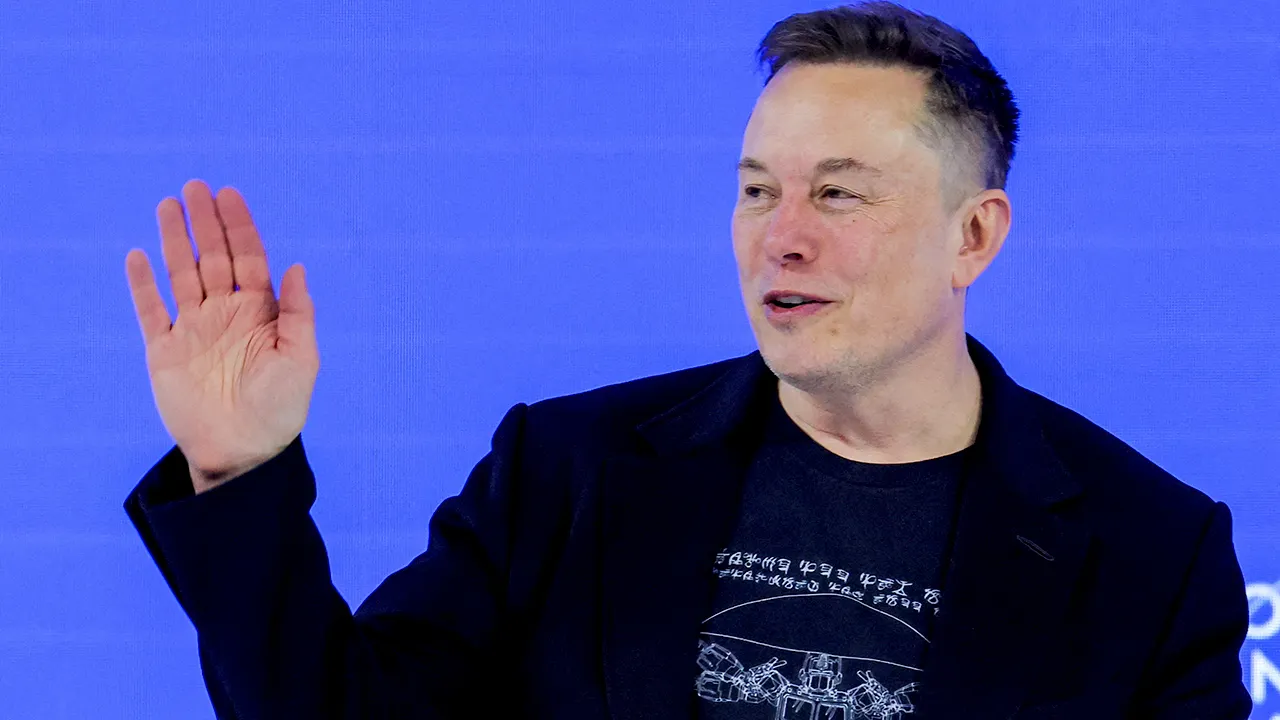
Elon Musk indicated that Terafab will focus on two chip architectures: one for Tesla’s EVs and Optimus humanoid robots, and another for SpaceX’s extraterrestrial data centers.(Aly Song/Reuters)
“We either erect Terafab or we lack the necessary chips,” Musk declared during a presentation at an Austin site on Saturday, adding that the present global chip production would only satisfy a mere fraction of his companies’ projected future requirements.
Musk extended his appreciation to the firms’ current chip providers, including Samsung, TSMC, and Micron, but noted that the demand from his enterprises would eventually outstrip total worldwide chip output, thus prompting the necessity for this new AI chip manufacturing plant.
ALTMAN DEEMS MUSK’S SPACE DATA CENTER PROPOSALS ‘ABSURD’ FOR CURRENT AI COMPUTING NEEDS
| Ticker | Security | Last | Change | Change % |
|---|---|---|---|---|
| TSLA | TESLA INC. | 380.85 | +12.89 | +3.50% |
Musk also mentioned that SpaceX’s AI chip, intended for space-based data centers, will require unique attributes to withstand the extraterrestrial environment and perform its designated functions.
“We need a high‑performance chip engineered for space that accounts for the more severe conditions in orbit, where you encounter high power, energetic ions, photons, and electron accumulation,” Musk explained, further stating that it would need to operate at elevated temperatures.
“It’s a hostile environment beyond Earth,” Musk clarified. “The objective is to optimize it for space, and typically, you want to run it somewhat hotter than an Earth-bound chip would to minimize the radiator’s mass.”
NVIDIA FRONTS AMERICA’S AI ‘INDUSTRIAL REVOLUTION’ WITH SIGNIFICANT MANUFACTURING SHIFT
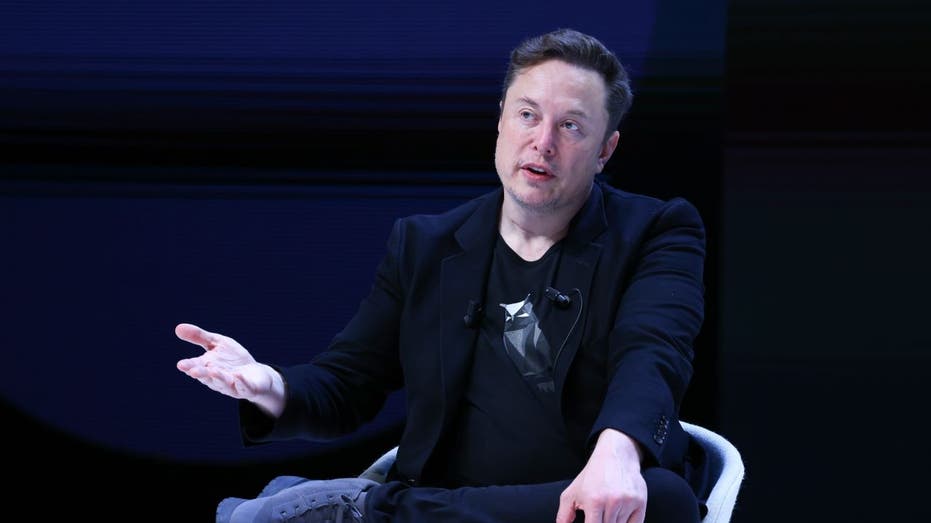
Musk anticipates Terafab will substantially boost the output of AI semiconductors and computational power.(Marc Piasecki/Getty Images)
Musk refrained from providing a specific timeframe for this novel undertaking. Musk has a consistent history of announcing exceedingly ambitious ventures, though several have experienced delays or been discontinued.
Ultimately, Terafab is projected to generate one terawatt of computational capacity annually, a figure that contrasts with the approximately half terawatt presently produced throughout the United States, according to Musk.
GET FOX BUSINESS ON THE GO
This article includes contributions from Reuters.