
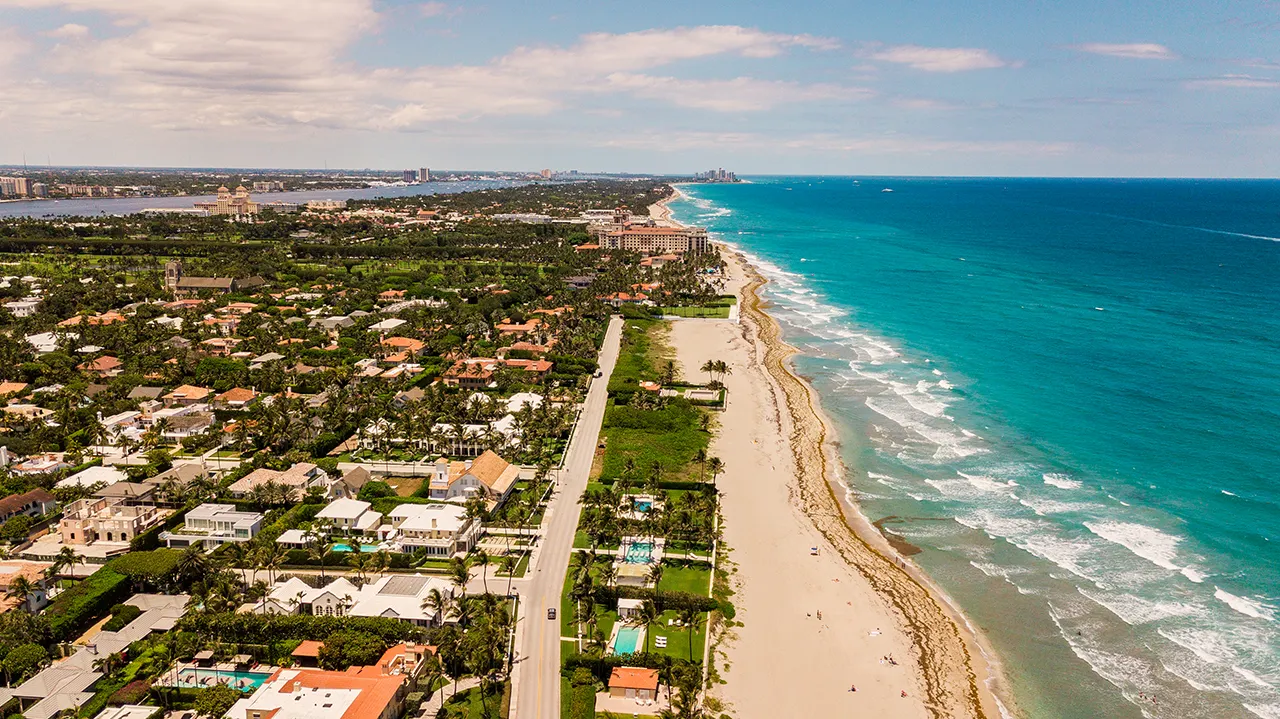
Margit Brandt, a real estate agent specializing in luxury properties, told Fox News Digital Florida has been an alluring destination for billionaires.
**Key Takeaways:**
* **Wealth Migration Accelerates:** Florida’s rapid ascent in billionaire residency, now challenging New York for second place nationally, is driven primarily by favorable tax policies and an enhanced luxury lifestyle ecosystem.
* **Fiscal Implications for States:** The ongoing exodus of high-net-worth individuals from states like New York poses significant fiscal headwinds, potentially impacting state budgets, bond ratings, and the funding of public services, while Florida reaps substantial economic benefits.
* **Luxury Real Estate as a Bellwether:** The sustained demand in Florida’s ultra-luxury real estate market reflects a broader reallocation of capital and influence, signaling long-term demographic and economic shifts that reshape regional investment landscapes.
—
**Florida Emerges as a Magnet for Billionaires, Reshaping National Wealth Dynamics**
Florida is rapidly asserting its dominance as a premier destination for the nation’s wealthiest individuals, intensifying a socio-economic and fiscal competition with traditional bastions of wealth like New York. The Sunshine State is now on the cusp of surpassing New York in the sheer number of billionaire residents, a trend with profound implications for state economies, tax revenues, and luxury markets nationwide. This isn’t merely a geographic shift; it represents a significant reallocation of capital and influence, driven by a confluence of tax advantages, lifestyle allure, and a perceived divergence in governance quality.
Margit Brandt, a prominent real estate agent specializing in Palm Beach’s exclusive luxury properties, offers an on-the-ground perspective on this escalating trend. “We’re one of the top brokerages on Palm Beach Island, holding approximately 30% of the listings here, including many of the grand waterfront estates,” Brandt told Fox News Digital. “We’ve witnessed an unprecedented movement of billionaires flocking to Florida, and we fully anticipate this momentum will continue.” Her observations underscore the robust demand signals emanating from the ultra-high-net-worth (UHNW) segment, where prime assets are rapidly changing hands.
Brandt’s insights align with recent data that places Florida firmly in third place nationally for billionaire residents, behind only California and New York. According to Forbes, California leads with 255 billionaires, followed by New York with 153. Florida, however, has rapidly closed the gap, boasting 138 billionaires—a remarkable increase of 47 individuals since 2022. This exponential growth rate suggests a powerful underlying economic current drawing immense wealth southward.
**The Allure: Tax Arbitrage and Lifestyle Infrastructure**
The primary catalyst for this migration, as Brandt highlights, is undoubtedly the fiscal environment. “I think the biggest thing is taxes, but it’s also a lifestyle,” she explained. Florida’s lack of a state income tax, coupled with its absence of estate and inheritance taxes, offers substantial savings for high-income earners and those with significant capital gains, particularly when contrasted with high-tax states like New York. This “tax arbitrage” strategy allows billionaires to retain a larger portion of their wealth, making the move economically rational.
Beyond tax incentives, the Sunshine State, and particularly exclusive enclaves like Palm Beach, has strategically invested in and cultivated a luxury lifestyle infrastructure that caters specifically to this demographic. “Palm Beach is Palm Beach; it’s not [just] Florida,” Brandt emphasized, distinguishing the unique appeal of the island. “We have superior infrastructure, top-tier schools, a vibrant nightlife, and exceptional dining experiences. Palm Beach is genuinely a fun and sophisticated place to live.” This isn’t just anecdotal; it reflects a deliberate enhancement of amenities and services designed to meet the exacting standards of the global elite.
Brandt further elaborated on the expansion of high-end infrastructure and healthcare options, which have significantly bolstered the region’s appeal. “I think that’s something people often overlook,” Brandt added. “Our medical care has been substantially upgraded with the arrival of institutions like the Cleveland Clinic. When you blend world-class medical facilities and excellent schools with premier hospitality — exemplified by Hotel Vineta, brought in by the team behind Hotel Du Cap — it becomes an obvious choice for many of these individuals.” These investments represent a critical component of attracting and retaining wealth, offering comprehensive support for both personal well-being and social engagement. The region’s emergence as “Silicon Valley South” also points to a burgeoning tech and financial ecosystem, attracting entrepreneurs and venture capitalists seeking favorable business climates.
**New York’s Fiscal Headwinds and the Price of Outmigration**
The narrative of Florida’s gain is inextricably linked to the challenges faced by traditional wealth centers, most notably New York City. Major U.S. cities have grappled with domestic population losses, struggling to rebound to pre-pandemic levels. New York City, in particular, has experienced significant renewed outmigration, with a Citizens Budget Commission (CBC) analysis indicating a net loss of approximately 114,000 domestic residents to other parts of the U.S. in 2025, following only marginal growth in prior years.
This demographic shift has prompted New York Governor Kathy Hochul to publicly appeal to high-net-worth individuals, urging them to remain in or return to the state. Hochul has candidly warned that the continued loss of wealthy taxpayers could severely jeopardize funding for critical social programs and state services. Acknowledging the fierce inter-state competition, she previously noted New York is “in competition with other states who have less of a tax burden,” specifically citing “Wall Street businesses looking at Texas” as a significant concern. The fiscal implications are stark: a handful of billionaires contribute disproportionately to state tax revenues, and their departure creates substantial revenue gaps that are difficult to fill.
Brandt, having grown up in New York, drew a stark contrast between the city’s current trajectory and her memories of the 1990s under former Mayor Rudy Giuliani. “I grew up in New York in the ’90s. New York in the ’90s was amazing because we had Giuliani as mayor,” Brandt recalled. “In terms of crime and quality of life, I specifically remember when I was little that Giuliani kept the streets clean.” Her commentary speaks to a broader sentiment among some HNWIs that deteriorating quality of life, increasing crime rates, and perceived governance issues in New York are contributing factors to their decision to relocate.
“I think the combination of [former Mayor Bill] de Blasio, mixed with [Mayor Zohran] Mamdani now, it’s a total disaster,” Brandt concluded, expressing strong concern about the city’s current leadership. “You can just see when a city is run well versus when a city is run poorly. And I can say with certainty that New York City is being run extremely poorly right now.” While subjective, such perceptions significantly influence the decisions of individuals who have the financial freedom to choose their domiciles, impacting both residential patterns and the location of their businesses and philanthropic endeavors.
The spokespersons for Governor Hochul, Mayor Mamdani, and Florida Governor Ron DeSantis did not immediately respond to Fox News Digital’s requests for comment, underscoring the sensitive nature of this ongoing inter-state fiscal and economic battle.
**Market Impact:**
The accelerating migration of billionaires to Florida has multifaceted implications for financial markets and regional economies. For **real estate**, it signals continued upward pressure on luxury property values in prime Florida markets, creating a robust, albeit potentially overheated, segment. Conversely, high-end markets in New York could face sustained pricing headwinds as demand softens. **State and municipal bonds** may see a divergence in performance, with Florida’s strong fiscal outlook enhanced by increased tax revenues (e.g., sales, property) and New York facing scrutiny over its long-term revenue stability and potential for credit rating adjustments. Specific **sectoral growth** in Florida is likely to accelerate, particularly in financial services, wealth management, private equity, technology, and luxury hospitality, creating investment opportunities. Investors should monitor demographic shifts as a key indicator for regional economic growth, consumer spending patterns, and the allocation of philanthropic capital, all of which influence long-term investment strategies. This wealth migration represents not just a change of address, but a strategic reallocation of economic power.
**CLICK HERE TO DOWNLOAD THE FOX NEWS APP**