
UBS managing director and senior portfolio manager Jason Katz joins ‘Varney & Co.’ to give his outlook on the markets in the second half of the year.
Key Takeaways:
- **Real Affordability Gains:** Despite sustained high mortgage rates, projected home price growth of just 1.2% in 2026, falling below inflation, signals an effective decline in real housing costs. This offers a rare glimmer of affordability improvement for prospective buyers, though nominal prices remain elevated.
- **Stubborn Inflation Curbs Rate Relief:** A resurgence of inflation, partly attributed to the Iran war, has stalled anticipated interest rate cuts, keeping the 30-year fixed mortgage rate stubbornly at 6.3%. This macroeconomic headwind dictates the pace of housing market recovery, tempering buyer enthusiasm and keeping financing costs high.
- **Market Rebalancing Act:** The housing market is undergoing a crucial rebalancing, with sellers increasingly aligning expectations with prevailing conditions, granting buyers greater negotiating leverage. While existing home sales show only modest growth and inventory gains are slower than initially hoped, this shift towards a more normalized, albeit constrained, market environment is critical for sustainable stability.
The U.S. housing market is bracing for a period of recalibration in 2026, with a new midyear forecast from Realtor.com pointing to an unexpected deceleration in home price appreciation that could offer a crucial, albeit modest, lifeline to affordability. Amidst a backdrop of persistent inflation and geopolitical tensions, the market is demonstrating resilience through stability rather than momentum, signaling a critical shift in power dynamics between buyers and sellers.
Realtor.com’s updated 2026 housing market forecast projects home price growth will slow to a mere 1.2% this year. This figure is not only significantly lower than initial projections but, more critically, falls below the prevailing rate of inflation. For the astute market observer, this implies an effective decline in real, inflation-adjusted home prices – a development that, while subtle, could have profound implications for purchasing power and long-term investment strategies.
“Against a backdrop of both familiar and new challenges, the economy has proved resilient. As a result, the first half of 2026 delivered stability more than momentum in the housing market,” noted Realtor.com senior economist Danielle Hale. This stability, she elaborated, is largely a function of sellers adjusting their aspirations to align with current market realities, concurrently empowering buyers with greater negotiating leverage – a stark contrast to the frenzied, seller-driven markets of recent years. “The housing market is inching forward as sellers reset expectations, price growth cools, and buyers gain more negotiating power,” Hale added, expressing optimism for building momentum in the latter half of the year as more balanced terms emerge.
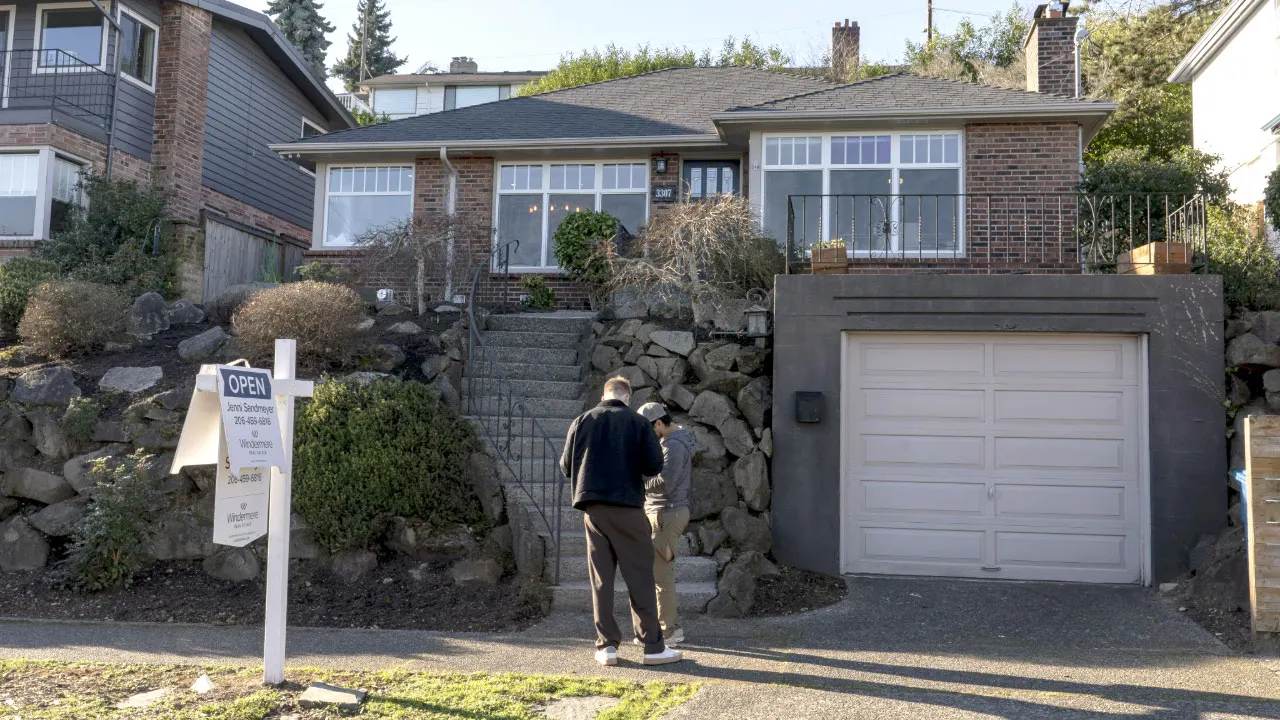
A real estate agent and a prospective buyer stand outside a home during an open house in Seattle, Washington.(David Ryder/Bloomberg via Getty Images)
Mortgage Rates Hold Firm Amid Geopolitical Inflation
A significant factor tempering the housing market’s potential for robust growth is the stubborn trajectory of mortgage rates. The forecast anticipates mortgage rates to hold steady at 6.3% throughout 2026, mirroring the level at which 2025 concluded. This stagnation is directly attributable to a resurgence of inflation, exacerbated by the geopolitical ramifications of the Iran war. The conflict has likely disrupted global energy supplies and supply chains, pushing up commodity prices and reigniting inflationary pressures across the broader economy. This macroeconomic headwind has, in turn, effectively undercut earlier prospects of interest rate cuts by central banks, which would have offered much-needed relief to borrowing costs for prospective homeowners.
The good news, however, for those navigating the market, is that the slower pace of home price appreciation is expected to translate into a reduction in monthly mortgage payments on a year-over-year basis. The updated forecast suggests a 1.9% decline in average monthly mortgage payments this year, a more substantial dip than the initial projection of 1.3%. This contrasts sharply with the 1.9% rise in monthly payments seen in 2025 and the average 7% annual increase observed between 2013 and 2019, highlighting a tangible, albeit modest, improvement in monthly housing expenses for new buyers.
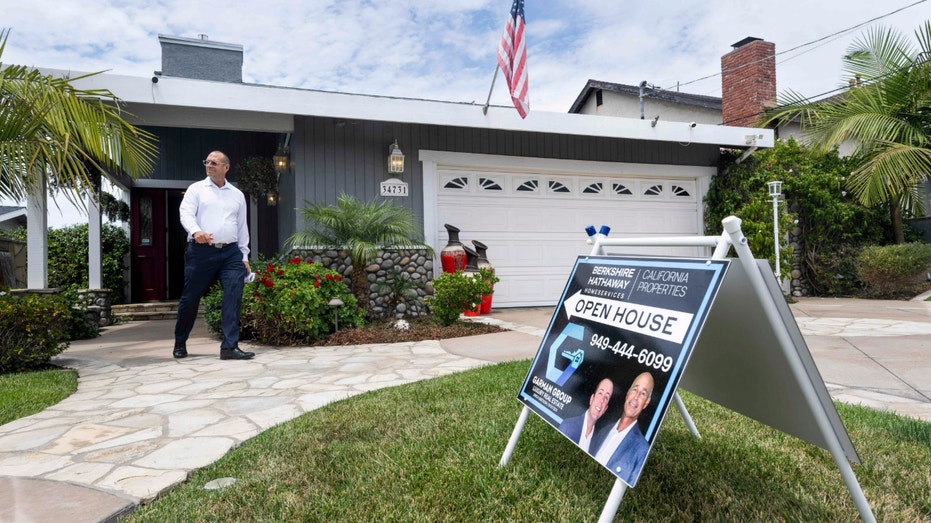
Existing home sales are expected to tick higher from a year ago.(Paul Bersebach/MediaNews Group/Orange County Register via Getty Images)
Existing Sales and Inventory Dynamics Reflect Market Rebalancing
Existing home sales are projected to see a modest uptick, rising from 4.06 million in 2025 to an estimated 4.1 million this year. While this represents a marginal improvement, it falls short of the original forecast of 4.13 million homes sold in 2026, signaling that transactional volume remains constrained by high rates and limited inventory. The slight increase, however, underscores the market’s underlying resilience and the continued necessity for housing, despite challenging conditions.
Inventory of existing homes for sale is also anticipated to grow at a slower rate than initially projected, with a 3.6% year-over-year increase, significantly less than the 8.9% gain forecast previously. This slower pace of inventory growth, while not as robust as desired, still contributes to a gradual easing of competitive pressures. “Buyers and sellers have shown a lot of staying power this year,” Hale commented, underscoring the adaptive nature of market participants. “This is a market where people are adjusting and showing up rather than giving up. Sellers are meeting the market with more realistic asking prices, which is helping deals get done.”

New home construction has pulled back in some parts of the country, though the Northeast and Midwest continue to face shortages.(Mario Tama/Getty Images)
New Construction Faces Headwinds, Long-Term Deficit Persists
The new home construction sector has also experienced a softening, as the effectiveness of incentives like mortgage rate buydowns and direct price cuts offered by builders has waned amid stabilizing market prices and persistent high mortgage rates. Builders, particularly in the historically booming South and West, have responded by pulling back on permits and new home starts, reflecting a cautious approach to investment in a less predictable demand environment. These regions, which spearheaded much of the national construction surge in previous years, have largely recovered from acute supply shortages.
However, the national housing deficit remains a critical long-term structural issue, estimated at approximately 4 million homes. The biggest opportunities for new construction lie in the Northeast and Midwest, regions that continue to grapple with the most significant housing shortages. This persistent supply-demand imbalance highlights the need for sustained investment in homebuilding, a challenge compounded by regulatory hurdles. Government regulations, according to industry builders, continue to add nearly $132,000 to the cost of a new home, further constricting supply and exacerbating affordability challenges.
The housing market’s trajectory in 2026 underscores a complex interplay of macroeconomic forces, geopolitical events, and evolving market psychology. While real affordability shows signs of improvement, the journey towards a truly balanced and accessible housing market remains long, shaped by inflation, interest rate policy, and the persistent challenge of supply constraints.
Market Impact
The revised forecast carries significant implications across the financial ecosystem. For **prospective homebuyers**, the slowing real price growth, coupled with slightly declining monthly payments, presents a cautious opening for market entry, though sustained high mortgage rates will continue to test affordability thresholds. **Existing homeowners** may see slower equity gains, but the market’s stability mitigates concerns of significant price depreciation, supporting financial planning. **Real estate investors** and **REITs** focusing on residential properties will need to recalibrate growth expectations, potentially shifting strategies towards markets with higher long-term demand imbalances (like the Northeast and Midwest) or value-add opportunities. **Homebuilders** face continued pressure to manage inventory and costs, with a greater emphasis on efficiency and targeted regional development rather than broad expansion. The persistence of the 4 million home deficit suggests long-term demand for construction, but short-term headwinds require careful navigation. Finally, the broader **economy** will benefit from a more stable, less volatile housing sector, avoiding the boom-bust cycles that can trigger wider financial instability. However, the inflationary pressures, partially linked to global conflicts like the Iran war, remain a critical watchpoint for central banks and their monetary policy decisions, indirectly shaping the cost of capital for all sectors, including housing.