
KEY TAKEAWAYS
- Regulatory Pressure Shifts Business Model:Europe’s largest airline, Ryanair, “reluctantly” cedes to regulatory pressure, ending its practice of charging families for adjacent seats, a move that directly impacts its highly optimized ancillary revenue strategy.
- Ancillary Revenue vs. Consumer Protection:The decision underscores the growing tension between low-cost carriers’ reliance on unbundled services for profitability and heightened consumer protection mandates from regulators like the UK’s CMA.
- Setting an Industry Precedent:This policy change by a dominant market player is likely to set a precedent, influencing practices across the European airline sector and potentially signaling further regulatory scrutiny on ‘add-on’ fees.
Delta Air Lines CEO Ed Bastian joins ‘Mornings with Maria’ to discuss the impact of rising fuel costs, resilient travel demand and the airline’s international expansion plans.
DUBLIN, IRELAND –Ryanair, the ubiquitous European budget carrier renowned for its aggressive cost-cutting and robust ancillary revenue generation, has announced it will “reluctantly” cease charging parents to sit with their children. This significant policy shift, prompted by an investigation from the UK’s Competition and Markets Authority (CMA), brings the airline into line with broader European industry standards, but not without reflecting the deep-seated friction between profit-driven airline strategies and evolving consumer protection mandates.
Previously, Ryanair’s model, a cornerstone of its low-cost philosophy, included a fee—typically around $10.70 per adult, each way—to guarantee up to four children aged 2 to 11 could sit next to an accompanying adult. This practice, while common among some ultra-low-cost carriers as a means to unbundle services and offer a lower headline fare, had become a point of contention for many families and, ultimately, for regulators. Moving forward, families who opt not to pay for reserved seating will be allocated random seats together for free after check-in, likely toward the rear of the aircraft, as reported by Reuters.
This development comes at a pivotal time for the airline industry. As Delta Air Lines CEO Ed Bastian recently highlighted in discussions around the impact of rising fuel costs and resilient travel demand, airlines are navigating a complex landscape of operational pressures and robust consumer appetite for travel. For a low-cost carrier like Ryanair, whose business model is predicated on maximizing efficiency and diversifying revenue streams beyond the base fare, changes to ancillary services carry direct financial implications.
THREE RYANAIR PASSENGERS REMOVED FROM FLIGHT AFTER BRAWL ERUPTS: VIDEO
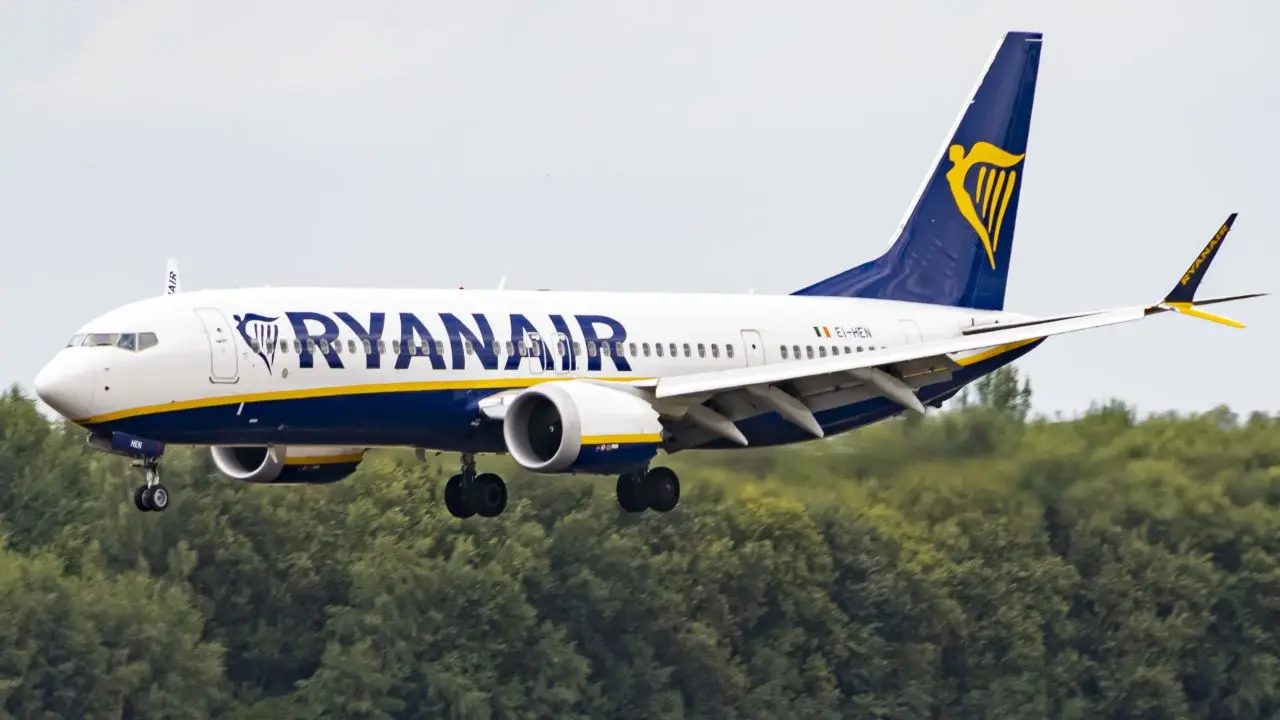
Ryanair Boeing 737 MAX aircraft flying on final approach. On Friday, the budget carrier said it would allow parents to sit with their children for free.(Photo by Nicolas Economou/NurPhoto via Getty Images / Getty Images)
Ryanair CEO Michael O’Leary, a vocal proponent of the airline’s lean operating model, articulated the company’s position with characteristic candor. “We will reluctantly adjust to this industry standard as we don’t want to waste time explaining to misguided regulators how badly they misunderstand what is in the best interest of UK and Europe’s consumers,” O’Leary stated. His comments reflect the airline’s perspective that such fees contribute to its ability to offer the lowest possible base fares, thereby benefiting consumers who prioritize price above all else. However, regulators often view such charges, particularly for essential family seating, as potentially exploitative or lacking transparency.
The Ireland-based budget carrier’s capitulation followed the Competition and Markets Authority (CMA)’s initiation of an inquiry into whether the original policy violated consumer law. The CMA’s intervention signals a broader regulatory push across Europe to ensure fair trading practices within the travel sector, particularly as post-pandemic travel rebounds and consumer complaints about airline practices have become more pronounced. For investors, such regulatory scrutiny represents an external risk factor that can directly impact revenue streams and, consequently, share price performance.
PASSENGERS SETTLE MASSIVE LAWSUIT WITH ALASKA AIRLINES AND BOEING AFTER MIDFLIGHT DOOR PLUG FAILURE
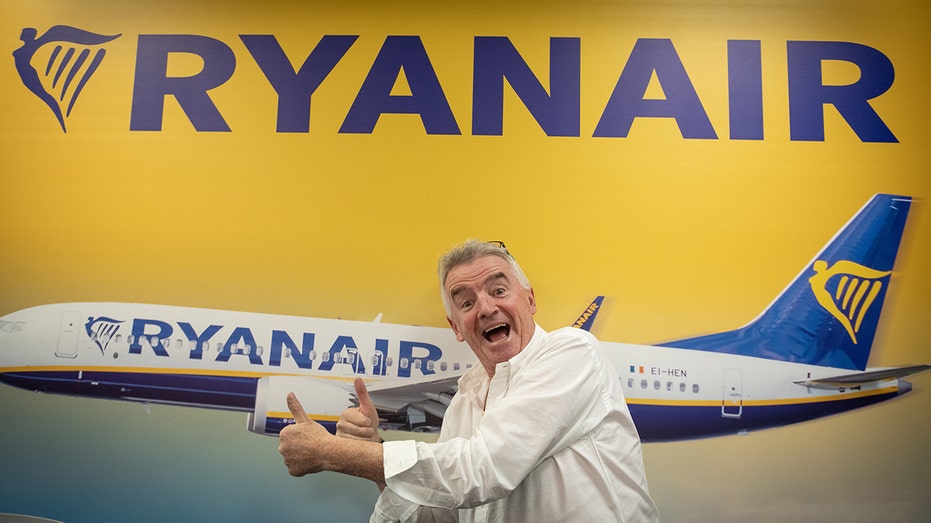
Ryanair CEO Michael O’Leary said the company will “reluctantly adjust to this industry standard.”(Fernando Sanchez/Europa Press via Getty Images / Getty Images)
A CMA spokesperson acknowledged the change as a potential “win for families” but emphasized that the investigation remains active. “It doesn’t change the fact that families have been paying for ‘mandatory family seats,'” the spokesperson noted, indicating that the regulator may still pursue remedies for past practices or seek further assurances on future compliance. This ongoing scrutiny highlights the delicate balance airlines must strike between maximizing revenue from ancillary services—which can account for a substantial portion of total revenue for LCCs—and adhering to increasingly stringent consumer protection frameworks.
The financial implications for Ryanair, while not immediately quantified by the airline, are likely to be material. Ancillary revenues are a critical component of Ryanair’s profitability, allowing it to offer highly competitive base fares. Losing this particular revenue stream for family seating means the airline will either need to absorb the cost, seek to offset it through other ancillary services (such as baggage fees or priority boarding), or re-evaluate its fare structure. In a highly competitive market, especially one contending with volatile fuel prices and labor costs, every revenue stream is closely guarded.
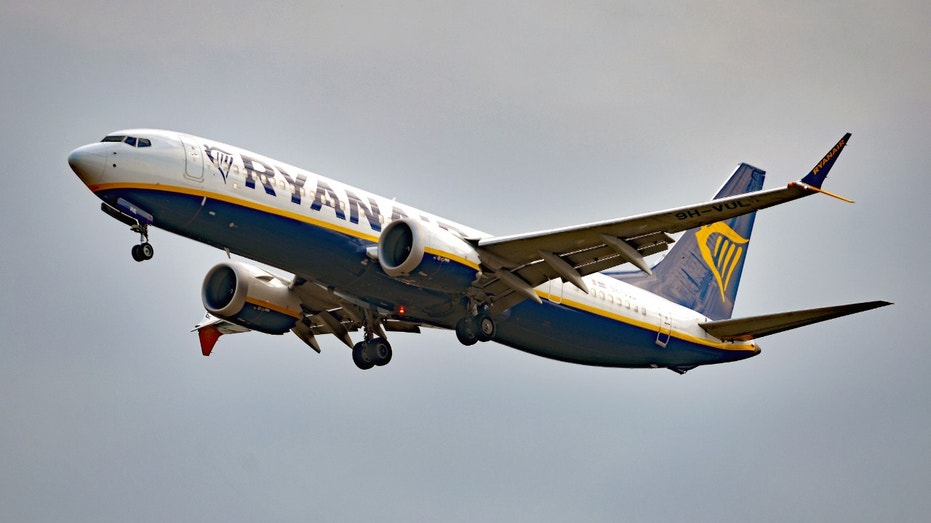
A Ryanair Boeing 737 MAX 8 passenger airliner comes in to land at Stansted Airport in Essex.(Nicholas T. Ansell/PA Images via Getty Images / Getty Images)
Furthermore, this move could reverberate across the broader low-cost carrier segment in Europe. If Ryanair, the market leader, is forced to adjust its practices, other airlines with similar ancillary charging models for family seating may face similar pressure from regulators or competitive forces. This could lead to a re-evaluation of how ‘essential’ services are unbundled, potentially reshaping the competitive landscape and influencing investor outlook on the sustainability of certain LCC revenue strategies.
GET FOX BUSINESS ON THE GO BY CLICKING HERE
FOX Business has reached out to the CMA for comment.
MARKET IMPACT
The forced policy change for Ryanair regarding family seating charges presents a multifaceted market impact. Immediately, it represents a slight but notable erosion of Ryanair’s highly optimized ancillary revenue stream, which is crucial for its profitability model as a low-cost carrier. While the airline’s strong cash position and diversified revenue base will likely absorb the direct financial hit without major disruption, investors may view it as a precedent for increased regulatory intervention into unbundled services across the airline industry. This could lead to a reassessment of valuation multiples for LCCs, as the perceived stability of ancillary revenue could be challenged. For competitors, particularly other budget airlines in the UK and EU, this signals an emboldened regulatory environment, potentially prompting pre-emptive policy reviews to avoid similar scrutiny. Longer term, while a minor negative for direct revenue, the improved consumer goodwill and avoidance of protracted legal battles could bolster Ryanair’s brand equity and reduce regulatory risk, potentially fostering more stable and predictable customer relations, which can be a positive for sustained growth in the highly competitive travel market.