
Former Trump Treasury official Christina Skinner discusses the economic impact of a potential Fed rate hike and how President Donald Trump could respond.
Key Takeaways:
- Fed Resumes Rate Hikes Amid Persistent Inflation:The Federal Reserve unanimously approved a 25-basis-point rate increase, signaling renewed urgency to combat stubborn inflation, particularly fueled by elevated energy prices, after five consecutive meetings holding rates steady. This pivot underscores the central bank’s unwavering commitment to its 2% inflation target, despite a robust economic backdrop.
- Navigating Economic Strength and Tightening:Despite the FOMC acknowledging a “solid pace” of economic activity, robust capital investment, and resilient domestic spending, the hike underscores the central bank’s commitment to its 2% inflation target, even as markets weigh the risks of overtightening against the prospect of a “soft landing.” The tension between strong growth and the need to tame price pressures remains a key concern for investors.
- Market Eyes Future Path and Warsh’s Guidance:Equity markets saw initial volatility, while Treasury yields reacted sharply to the hawkish signal, pricing in a “higher for longer” rate environment. Investor focus now pivots acutely to Fed Chair Kevin Warsh’s upcoming press conference for crucial forward guidance on the trajectory of monetary policy, the potential terminal rate, and the Fed’s nuanced assessment of geopolitical risks impacting the economic outlook.
This story about the September 2026 FOMC meeting will be updated with further details.
Fed Delivers Hawkish Hike: Unanimous 25bps Move Signals Renewed Inflation Fight Amid Resilient Economy
The financial world on Wednesday absorbed a significant recalibration from the Federal Reserve, as the central bank ended a period of cautious stasis to deliver a unanimous 25-basis-point interest rate hike. This pivotal move, the first in over three years and following five consecutive meetings where rates were held unchanged, immediately sent ripples through global markets, signaling the Fed’s renewed urgency to wrestle down persistent inflation that continues to defy expectations.
The Federal Open Market Committee (FOMC), the Fed’s policy-setting arm, voted 12-0 to elevate the benchmark federal funds rate from a range of 3.5%-3.75% to a new target of 3.75%-4%. This action marks the first tightening since July 2023, a period during which policymakers initially believed inflationary pressures were receding, only to confront their stubborn persistence, exacerbated recently by elevated energy prices and complex geopolitical developments. The unanimous vote underscores a broad consensus among policymakers regarding the need for more restrictive monetary policy.
The Inflation Conundrum: Beyond Energy
While the FOMC statement directly cited “stubborn inflation driven recently by higher energy prices,” market participants are keenly aware that the inflationary challenge extends far beyond the oil and gas pumps. Analysts have pointed to a confluence of factors, including persistent supply chain bottlenecks, robust wage growth in a tight labor market, and resilient consumer demand that has kept price pressures elevated across various sectors. The Fed’s decision suggests a growing recognition that these underlying pressures require a more decisive monetary response, even if it risks dampening an otherwise robust economic expansion.
The hike aims to cool aggregate demand by increasing the cost of borrowing for consumers and businesses, thereby reducing inflationary pressures and anchoring inflation expectations closer to the Fed’s long-term 2% target. The market will be watching closely for signs that this rate increase translates into a meaningful deceleration in inflation metrics like the Consumer Price Index (CPI) and the Personal Consumption Expenditures (PCE) price index in the coming months.
Economic Resilience Meets Monetary Tightening
Notably, the FOMC’s statement also painted a picture of an economy that, for now, appears capable of absorbing higher borrowing costs. “Economic activity is expanding at a solid pace,” the committee stated, adding that “domestic spending has been resilient. Productivity growth is strong, and capital investment is robust.” Furthermore, the Fed noted, “Job gains have kept pace with the workforce, and the unemployment rate has changed little.”
This optimistic assessment of the economy’s underlying strength provides critical context for the rate hike. It suggests the Fed believes it can tighten monetary policy without immediately tipping the economy into recession – a so-called “soft landing” scenario that many economists view with increasing skepticism. However, the juxtaposition of robust growth metrics with the necessity of a rate hike highlights the delicate balancing act facing Fed Chair Kevin Warsh and his colleagues. The question for investors is whether this resilience can endure as borrowing costs continue to climb, particularly for interest-sensitive sectors like housing, automotive, and durable goods, where demand could soften considerably.
Market Reaction: An Immediate Repricing
The announcement triggered an immediate repricing across asset classes. Equity markets, initially caught off guard by the hawkish pivot after a period of relative calm, saw a swift downturn. The tech-heavy Nasdaq, particularly sensitive to higher discount rates that erode the present value of future earnings, bore the brunt of the selling pressure. Broader indices like the S&P 500 also retreated, as investors weighed the implications of higher borrowing costs for corporate profitability and economic growth. Defensive sectors, traditionally less sensitive to economic cycles, saw some relative outperformance.
In the bond market, Treasury yields surged across the curve, with the yield on the benchmark 10-year Treasury note climbing notably, reflecting expectations of “higher for longer” interest rates. Shorter-duration yields, more directly influenced by the Fed’s policy rate, saw even more pronounced moves, leading to a further flattening, or even inversion, of certain segments of the yield curve – a phenomenon often interpreted as a recessionary signal by some market observers, though the Fed remains confident in its assessment of underlying economic strength. The U.S. Dollar index (DXY) strengthened against a basket of major currencies, as higher interest rates typically make dollar-denominated assets more attractive to international investors. Commodities, while volatile, saw crude oil prices remain elevated due to ongoing supply concerns and geopolitical tensions, while gold, often seen as an inflation hedge, faced pressure from a stronger dollar and rising real yields.
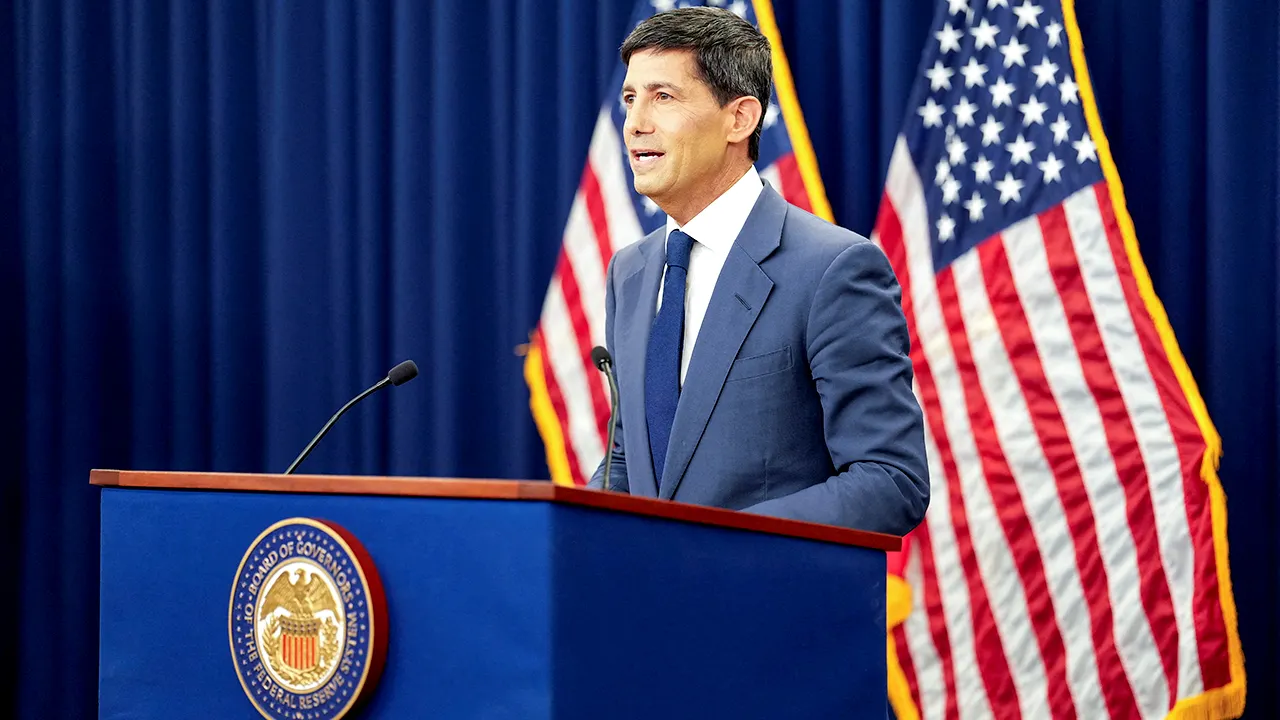
Federal Reserve Chair Kevin Warsh is expected to provide critical forward guidance on monetary policy during his press conference.(Eric Lee/Reuters)
Forward Guidance: The Path Ahead
With the September hike now implemented, the market’s attention immediately shifts to the future trajectory of monetary policy. The critical question is whether this marks a one-off adjustment or the resumption of a more sustained tightening cycle. Fed Chair Kevin Warsh’s press conference, scheduled for 2:30 p.m. ET, will be under intense scrutiny for any signals regarding the Fed’s “dot plot” projections for future rate hikes, its updated economic forecasts, and its overall assessment of the balance of risks. His tone and choice of words will be crucial in shaping market expectations for the remainder of the year and into 2027.
Analysts will be parsing every word for clues on the potential “terminal rate” – the peak interest rate in this cycle – and how committed the Fed truly is to bringing inflation back to 2%, even if it means tolerating a degree of economic slowdown. The committee’s mention of “geopolitical developments” also warrants further clarification, as these external factors continue to inject uncertainty into global supply chains and energy markets, complicating the Fed’s inflation fight. The market will be keen to understand how these external pressures factor into the Fed’s forward guidance and its potential impact on future policy decisions.
This unexpected, yet decisive, rate hike signifies a pivotal moment in the current economic cycle. The Fed has clearly demonstrated its resolve to tackle inflation head-on, even if it means challenging the market’s previous assumptions about the peak of this rate cycle. The coming months will reveal whether the economy can indeed navigate this tightening path without significant turbulence, and whether the Fed’s conviction in a “solid pace” of growth can withstand the cumulative impact of rising borrowing costs.
Market Impact:
The Federal Reserve’s 25-basis-point rate hike immediately sent a clear hawkish signal, repricing market expectations for future policy. Investors can anticipate continued volatility in equities, particularly for growth and technology stocks highly sensitive to discount rates, while financial sectors may see some benefits from wider net interest margins. Bond yields are likely to remain elevated, exerting upward pressure on corporate borrowing costs and mortgage rates, which could cool the housing market further. The strengthening U.S. dollar, a direct consequence of higher rates, could create headwinds for U.S. multinational exporters but attract capital inflows, potentially putting pressure on emerging markets. Commodities will remain influenced by a mix of supply-side constraints and demand-side cooling, with energy prices particularly vulnerable to ongoing geopolitical developments. The market’s central focus will now be on the Fed’s subsequent communications, as any hint of further tightening will intensify the debate over a potential “higher for longer” rate environment and its implications for economic growth and corporate earnings across all sectors, necessitating a careful reassessment of portfolio allocations.