
Unlock the Editor’s Digest for free
Roula Khalaf, Editor of the FT, selects her favourite stories in this weekly newsletter.
Key Takeaways
- Spain’s first general strike in 14 years signals escalating socio-economic tensions, primarily driven by soaring housing costs and stagnating wages, posing a significant risk to consumer confidence and economic stability ahead of a pivotal snap election.
- The strike introduces substantial political uncertainty into an already fractured European landscape, with markets anticipating potential shifts in fiscal policy and regulatory frameworks depending on the outcome of the November 29 vote, particularly concerning labor laws and housing reform.
- While immediate economic disruption varied, the event underscores a broader Eurozone challenge of persistent inflation, eroded purchasing power, and social unrest, potentially influencing investment decisions and the perceived risk premium of Spanish assets.
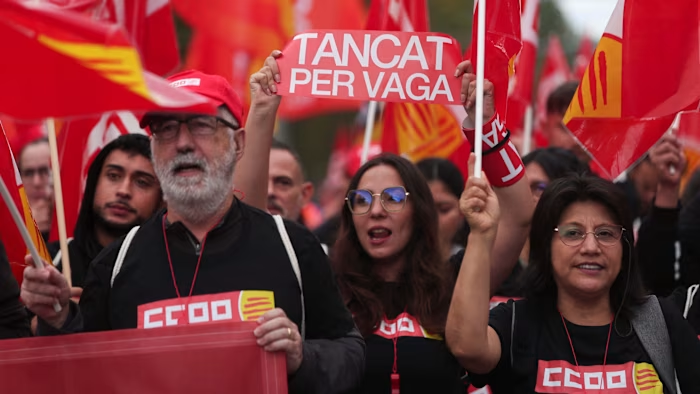
Spain’s financial landscape was momentarily clouded on Wednesday as the nation experienced its first general strike in 14 years, a stark manifestation of deep-seated socio-economic anxieties that reverberate across the Eurozone. The mass walkout, which saw significant disruption to critical infrastructure, factories, and public services, injected a fresh wave of uncertainty into capital markets already grappling with impending political change and persistent inflationary pressures.
At the heart of the industrial action were widespread grievances over soaring housing costs and stubbornly low wages, issues that have become flashpoints in numerous European economies. For investors, these are not merely social problems but direct economic indicators: rapidly rising housing expenses can depress discretionary consumer spending, while stagnant wages erode purchasing power, ultimately dampening domestic demand and corporate earnings. Spain’s year-on-year inflation rate, though easing from its peak, remains a concern, with housing and food prices disproportionately impacting household budgets. The strike highlighted the growing disconnect between official economic recovery narratives and the lived experiences of ordinary citizens, a disparity that often translates into heightened political risk for asset managers.
The timing of the strike is particularly critical, occurring just weeks before a snap general election on November 29. Current polls suggest a significant political realignment, with the incumbent left-wing Prime Minister Pedro Sánchez likely to lose power to a coalition led by the conservative People’s Party (PP) and the far-right. This anticipated shift has already introduced considerable policy uncertainty. A change in government could lead to substantial modifications in Spain’s fiscal policy, labor market regulations, and approaches to housing reform. While the PP has branded the strike as a “nonsensical” and “pre-emptive” union effort to stir opposition to a right-wing government, the demonstration itself serves as a clear signal of the electorate’s mood and the challenges any incoming administration will face. Investors will be closely watching for clues on how a new government might tackle these issues – through deregulation, increased supply-side measures, or a more interventionist approach – each having distinct implications for specific sectors like real estate, banking, and construction.
The Spanish walkout is not an isolated incident but rather the latest tremor in an increasingly fractured Europe. It follows weeks of mass protests and occasional violence in France and Italy, largely driven by similar concerns over the cost of living and declining public services, including educational standards. This broader pattern suggests a continent-wide struggle with the aftermath of post-pandemic inflation and the energy crisis, with the risk of social instability becoming a systemic factor for Eurozone economic forecasts. Such unrest can deter foreign direct investment, increase credit risk for sovereign debt, and depress overall economic sentiment.
On the ground, the strike’s immediate economic impact was tangible. Strikers effectively blocked major highways, occupied train stations, and formed picket lines outside workplaces, with video footage illustrating clashes with police using batons and pepper spray. The Confederation of Tenants’ Unions, a key organizer, claimed 4 million participants out of Spain’s 50 million population, leading to 25 arrests. While some business groups, like Spain’s main business lobby CEOE and the trade group for bars and restaurants, reported “low participation” and sectors operating “largely as normal,” unions presented a different picture. CCOO, one of the leading unions, reported “large numbers” of workers absent from morning shifts in heavily unionised sectors, claiming up to 90 per cent staff absence in critical areas such as car factories, ports, and meat processing plants. Such discrepancies create further ambiguity for market participants trying to gauge the true economic cost and the strength of the underlying discontent. A 90% absence rate in key manufacturing sectors, if sustained or widespread, would translate directly into production halts, supply chain disruptions, and potentially missed export opportunities, impacting the Q4 earnings of industrial firms operating in Spain.
In Barcelona, the blocking of Mercabarna, the city’s wholesale market, and the setting alight of tyres and pallets on access roads, highlights the potential for localised but significant disruption to food supply chains and consumer goods. Public transport, hospitals, and schools also operated at essential service levels. Aena, the country’s airport operator, reported 263 flight cancellations out of 4,529 scheduled flights by noon, a figure that, while not crippling, still represents a significant cost to airlines, tourism operators, and individual travellers. Spain’s tourism sector, a cornerstone of its economy, is particularly vulnerable to disruptions that affect travel and hospitality, even if overall participation was low in some parts of the service industry.
The political rhetoric surrounding the strike added to market uncertainty. Miguel Tellado, secretary-general of the PP, openly called it an “electoral strike” designed to bolster the Socialist Party leader Sánchez. Conversely, while Sánchez’s government implicitly backed the strikers, his former deputy prime minister María Jesús Montero nuanced the message, stating it was “not a strike against anyone” but “in defence of workers’ rights.” This mixed messaging could confuse investors seeking clarity on the government’s stance towards labor disputes and its commitment to economic stability versus social welfare. Sánchez had called the early election partly to capitalise on public anger over housing prices and evictions, yet critics accuse his government of inaction on housing during its tenure, which has also been marred by multiple corruption scandals and, more recently, a train crash that killed 69 people, highlighting alleged under-investment in infrastructure. Such governance issues raise questions about Spain’s long-term competitiveness and appeal as an investment destination.
The last general strike in Spain in late 2012 occurred under a PP government implementing painful austerity measures during the Eurozone debt crisis. While the drivers of the current strike differ, the underlying theme of public dissatisfaction with economic conditions and government policy remains a powerful force capable of shaping election outcomes and, by extension, market sentiment and policy direction for years to come.
Market Impact
The general strike and accompanying political instability are likely to introduce a discernible risk premium into Spanish assets. The IBEX 35, Spain’s benchmark stock index, may experience increased volatility, particularly for companies heavily exposed to domestic consumer spending, industrial output, or the tourism sector. Spanish government bond yields could see upward pressure, potentially widening the spread against safer German Bunds, as investors demand higher compensation for perceived political and economic uncertainty. The euro itself could face minor headwinds if the broader pattern of European social unrest is perceived to undermine the Eurozone’s overall stability and growth prospects. Long-term, the outcome of the snap election and the subsequent government’s policy agenda will be critical in determining investor confidence, influencing foreign direct investment flows, and shaping Spain’s economic trajectory in the face of ongoing inflation and social pressures.