
Key Takeaways
- Geopolitical Risk Premium Remains High:Intensive mediation efforts between the US and Iran are aimed at de-escalating tensions, but deep-seated distrust and conflicting demands mean a significant geopolitical risk premium continues to be priced into global energy markets, particularly crude oil and natural gas.
- Strait of Hormuz Critical to Global Supply Chains:The continued de facto closure of the Strait of Hormuz, a vital chokepoint for 20% of global oil and gas, is sustaining multi-year high energy prices and threatening to trigger a deeper global economic recession. Its reopening is paramount for market stability.
- Sanctions Relief and Nuclear Deal Uncertainty:Iran’s demands for sanctions relief and the unfreezing of assets represent a potential re-entry of Iranian oil into global markets. However, the wide disparity in demands regarding its nuclear program and maritime control indicates that any comprehensive deal, and thus a meaningful shift in supply, is far from certain.
Unlock the White House Watch newsletter for free
Your guide to what Trump’s second term means for Washington, business and the world
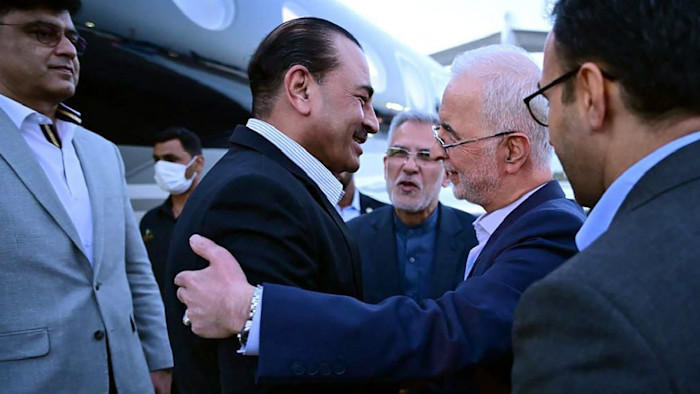
Tehran –Global financial markets are intently monitoring a flurry of diplomatic activity in Tehran, as Pakistan’s powerful military chief, Field Marshal Asim Munir, arrived on Friday amid intensified Pakistani and Qatari mediation efforts between the US and Iran. The high-stakes negotiations aim to secure a lasting deal and avert a potential resumption of full-scale hostilities that could send an already fragile global economy spiraling into deeper recession.
The push to solidify a tenuous ceasefire, agreed upon in April, comes against a backdrop of acute market anxiety. Investors and analysts fear that should mediation fail, US President Donald Trump could quickly resume military strikes on Iran. Such a move would undoubtedly reignite a broader regional conflict, exacerbating the current global energy crisis and injecting further volatility into commodity prices, shipping routes, and regional equity markets.
Field Marshal Munir’s arrival, met by Iran’s interior minister Eskandar Momeni and his Pakistani counterpart Mohsin Naqvi, was officially termed “part of ongoing mediation efforts.” This underscores the urgency perceived by regional and international actors to stabilize a situation that has direct and severe implications for global trade and energy security. Concurrently, Pakistan’s Interior Minister Naqvi, reportedly carrying Washington’s latest proposal, held a second meeting with Iranian foreign minister Abbas Araghchi, as Iranian state media confirmed.
Adding another layer to the complex diplomatic tapestry, a Qatari delegation is also engaged in separate talks in Tehran, according to sources briefed on the matter. These overlapping mediation channels signify the gravity of the crisis and the concerted international effort to de-escalate. The primary objectives are clear: negotiate an end to the current conflict, secure the reopening of the strategically vital Strait of Hormuz, and establish a foundational framework for future discussions concerning Iran’s contentious nuclear program.
Esmaeil Baghaei, Iran’s foreign ministry spokesperson, confirmed the Qatari delegation’s discussions with Araghchi but reiterated Pakistan’s role as the official primary mediator. Crucially, Baghaei clarified that the immediate focus of negotiations revolves around ending the war and resolving the critical situation in the Strait of Hormuz – a maritime artery through which an estimated one-fifth of the world’s oil and liquefied natural gas (LNG) transits. This prioritization reflects the immediate economic imperative: stabilizing global energy supply.
“We cannot necessarily say that we have reached a point where a deal is close at hand. The differences between Iran and the US are so deep and numerous,” Baghaei cautioned, tempering market expectations of a swift resolution. His words highlight the persistent chasm between the two adversaries, a factor that continues to fuel market uncertainty and maintain a geopolitical risk premium on energy prices.
President Trump’s recent statements have been closely scrutinized by investors. His Monday remarks confirming “serious negotiations” and the temporary suspension of attacks, reportedly at the behest of Saudi Arabia, Qatar, and the United Arab Emirates, offered a fleeting glimmer of hope. However, the underlying threat of renewed strikes remains. Washington’s Gulf allies, who have historically borne the brunt of retaliatory attacks from Tehran, are acutely aware that a resumption of US-Israeli military action could devastate their critical oil infrastructure, severely disrupting global supply chains and intensifying the worst global energy crisis in decades.
For weeks, the US and Iran have been locked in a complex exchange of proposals and counterproposals. Key sticking points include the reopening of the Strait, addressing Washington’s proliferation concerns over Tehran’s nuclear program, and Iran’s insistent demands for comprehensive sanctions relief. Mediators have struggled to bridge the profound gaps and deep-seated distrust, further complicated by both parties’ belief that they currently hold the upper hand, making concessions challenging.
Despite the obstacles, market sentiment saw a marginal uptick following comments from US Secretary of State Marco Rubio. On Friday, he noted “some slight progress,” adding, “I don’t want to exaggerate it, but there’s been a little bit of movement and that’s good.” Such remarks, even cautiously optimistic, can provide temporary relief to energy markets sensitive to any signs of de-escalation.
The economic ramifications of Iran’s de facto closure of the Strait of Hormuz since the war’s onset on February 28 have been profound. Oil and gas prices have surged to multi-year highs, directly contributing to inflationary pressures globally and posing a significant threat of tipping major economies into recession. The continuous disruption to this vital maritime corridor has underscored its irreplaceable role in global energy security and its direct linkage to consumer prices and industrial activity worldwide.
Iran’s demands for a deal are extensive and carry significant market implications. These include the full lifting of US sanctions, an end to the war “on all fronts”—a clear reference to Israeli strikes in Lebanon—and crucially, Tehran’s “management” of the Strait, including the imposition of transit fees for vessels. Furthermore, Iran seeks an end to the US blockade on its ports and a 30-day suspension of oil sanctions to facilitate the release of its frozen assets held overseas. A previous Pakistani-backed proposal had outlined a 30-day period for confidence-building measures, intended to precede negotiations on Iran’s nuclear program. Such measures, if agreed, could potentially lead to a gradual increase in Iranian oil supply, easing some market tightness.
Conversely, the US has laid down stringent conditions. Washington demands a 20-year moratorium on Iran’s nuclear enrichment program, the transfer of its stockpile of highly enriched uranium out of the country, and the dismantlement of its three main nuclear facilities at Natanz, Fordow, and Isfahan. The US has also vehemently rejected any tolling system for the Strait, seeing it as an unacceptable challenge to freedom of navigation and a destabilizing precedent for global maritime trade.
Iran, as a signatory to the nuclear non-proliferation treaty, maintains its right to enrich uranium, a stance that places it on a direct collision course with US demands. Publicly, Tehran has steadfastly refused to allow its enriched uranium stockpile to leave the country. President Trump’s resolute declaration on Thursday that the US would eventually seize Iran’s 440kg of highly enriched uranium – stating, “We will get it. We don’t need it, we don’t want it. We’ll probably destroy it after we get it, but we’re not going to let them have it” – further underscores the deep-seated animosity and the formidable obstacles to finding common ground.
The President’s decision to remain in Washington during this “important period,” missing his son’s wedding, highlights the critical nature of these ongoing negotiations. This personal sacrifice, publicly stated on Truth Social, serves as a potent symbol of the administration’s focus on the Iranian crisis and its potential to dramatically reshape global geopolitical and economic landscapes.
Additional reporting by Neri Zilber in Tel Aviv
Market Impact
The intense diplomatic push to de-escalate US-Iran tensions is the single most significant geopolitical factor currently influencing global markets. A successful mediation, leading to a permanent ceasefire and the guaranteed reopening of the Strait of Hormuz, would likely trigger a sharp downturn in crude oil and natural gas prices, providing much-needed relief to inflation-weary consumers and businesses worldwide. This scenario could also bolster investor confidence, leading to a rally in risk assets and regional equities, particularly in Gulf states, as the geopolitical risk premium recedes. Shipping insurance costs, which have soared due to heightened risks in the Persian Gulf, would also see a significant decline, benefiting global trade. However, should these mediation efforts falter and hostilities resume, markets would almost certainly face severe disruption. Oil prices could spike further into uncharted territory, potentially leading to widespread energy rationing and accelerating the global economy into a deep and protracted recession. Gold and other safe-haven assets would likely see significant inflows, while equities and currencies in energy-importing nations would come under immense pressure. The ongoing uncertainty, characterized by conflicting demands and deep distrust, ensures that volatility will remain a constant feature across energy, shipping, and broader financial markets until a definitive resolution or escalation occurs.