
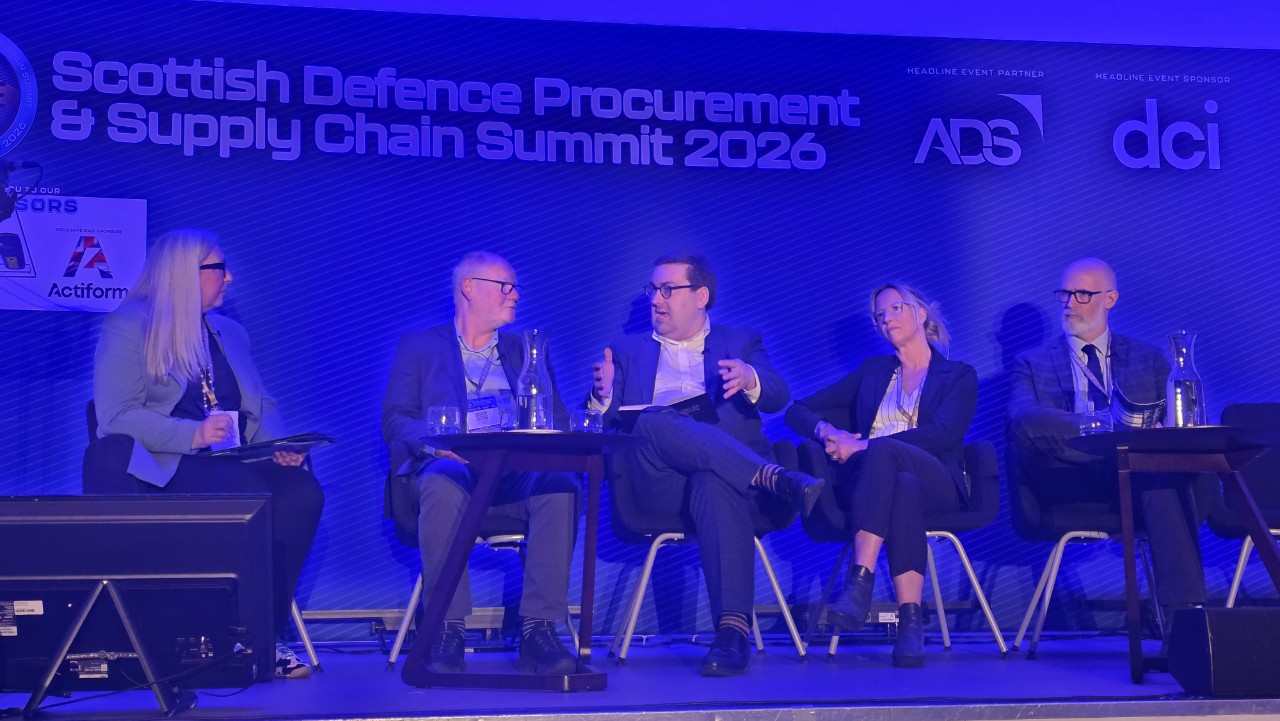
A recent panel discussion, chaired by Coreen McCubbin, Chief Technology Officer at the National Manufacturing Institute Scotland, convened leading experts to explore the evolving landscape of defence innovation and procurement in the UK. Featuring John MacSween, Managing Director of Malin Group; Mark Darvill, UKDI Command Hub Transformation and Development Lead at UK Defence Innovation; Jeremy Wimble, Senior Programme Manager for Defence at TechUK; and Leonore Frame, Domain Specialist for Maritime, Defence and Security at Scottish Enterprise, the session provided critical insights into how companies, particularly small and medium-sized enterprises (SMEs), can successfully engage with the defence sector.
The core message underscored a significant shift in how defence contracts are secured: proactive engagement and strategic relationship-building are paramount, often long before a formal tender is issued. The panel highlighted both the challenges inherent in a complex ecosystem and the emerging opportunities for businesses prepared to adapt.
The Early Bird Catches the Contract: Beyond the Tender Notice
John MacSween, drawing on 25 years of experience in the sector, delivered a stark but crucial message to delegates: relying solely on public tender notices is a strategy destined for failure. “Any business opportunity you see in the defence sector will usually have been predicated by anything up to 10 years of shaping and discussion. If the first you hear of an opportunity is when you see an advert, you’re probably too late to the table.” This insight emphasizes the long-term, strategic nature of defence procurement, where relationships, trust, and a deep understanding of customer needs are cultivated over many years.
MacSween advised companies new to the defence sector to adopt a mindset focused on national contribution rather than immediate profit. “How do you support that national endeavour? Approach it with curiosity, try to understand where you fit within that ecosystem, and bring your subject matter expertise to bear on the wider problem without an expectation of a contract initially. By doing that you’re engaging the customer, and credibility compounds over time.” He also stressed the non-negotiable importance of having defence experience within a company’s team, recommending that firms consider signing the Defence Covenant and integrating ex-service personnel or individuals with relevant defence backgrounds to bridge knowledge gaps. He noted that many current programmes are 5-10 year commitments, with foundational discussions having begun a decade prior, illustrating the extended timeline of defence projects.
A Strategic Leap: The Imminent Scottish Defence Cluster
Mark Darvill from UK Defence Innovation (UKDI) addressed a central challenge for smaller companies: gaining sufficient access to defence problems to offer meaningful solutions. He detailed UKDI’s successful model of establishing regional defence and security clusters across England, which operate on a “triple helix” principle, bringing together industry, academia, and government to collectively tackle shared problem sets. These clusters have demonstrably improved the quality of proposals and fostered greater collaboration among businesses. “It is most definitely about access. It is about us bringing our problems to you.“
In what was arguably the most significant announcement of the session, Darvill confirmed the imminent launch of a Defence and Security Cluster for Scotland. “We are probably at the point of pulling the trigger on the starting gun for a Defence and Security Cluster for Scotland.” This will be the 13th such cluster across the UK, following widespread success. The announcement was met with an emphatic show of hands from the audience, indicating strong interest from Scottish businesses. Addressing concerns about Scotland’s geographical size, Darvill clarified that the cluster model is not prescriptive or top-down. “Clusters are not owned by MOD. We work with the region to define what is best for that region. We’re not coming here trying to say one size has to fit all.” He cited the South West cluster as an example of how this model can revitalise defence spending in a region. The ambition extends to fostering “serendipitous connections” between companies that might not typically interact, aiming to deliver new capabilities to users within two years, with dual-use technology (adapting innovations from other sectors) being a core strategy.
Navigating the Ecosystem: Persistent Hurdles and Practical Pathways
Jeremy Wimble of TechUK offered a candid assessment, praising the creation of UKDI as a significant positive change in the defence innovation landscape, but also highlighting critical shortcomings. “We are 13 days away from the anniversary of the Strategic Defence Review and we still do not have a Defence Investment Plan. That is having a real negative impact on industry. We are seeing companies having contracts cancelled with no notice, putting SMEs within their supply chains at risk. Nothing helps a company scale like the customer buying things.” This lack of clarity on long-term investment creates instability and poses substantial risks to businesses, particularly SMEs reliant on defence contracts.
Despite these challenges, Wimble outlined several “front doors” for companies to engage with the defence ecosystem. These include UKDI innovation challenges, the Government Communication Centre’s (GCC) problem-based approach (which famously found a low-temperature battery solution from a frozen food manufacturer by simply articulating the problem clearly), the neutral vendor framework for innovation, industry days held at the pre-Invitation to Tender (ITT) stage, and NATO’s Diana accelerator. He humorously summarised the access points as “a number of front doors, a few windows, and a couple of cat flaps.” Regarding the Defence Office for Small Business Growth, Wimble expressed cautious optimism, stressing its crucial role not only in assisting external companies but also in driving essential cultural change within the Ministry of Defence (MoD) itself. He cited instances where tenders described as “SME friendly” still included turnover requirements exceeding the MoD’s own definition of an SME, underscoring the need for internal consistency and genuine support for smaller businesses.
Tailored Support from Scottish Enterprise
Leonore Frame from Scottish Enterprise outlined the practical support available to Scottish companies looking to engage with the defence sector. This includes enabling grants for market research and feasibility studies, investment readiness support, access to the Manufacturing Advisory Service, and various scales of capital grants. Crucially, Frame emphasised Scottish Enterprise’s active efforts to align its offerings directly with UKDI’s pathways, aiming to eliminate duplication and create a smoother, more coherent journey for businesses. “Let’s not duplicate or try to be what we’re not. Let’s do that together,” she stated, highlighting a collaborative approach to supporting the defence supply chain.
The Takeaway
The panel discussion provided a comprehensive overview of the opportunities and complexities within the UK defence sector. While the announcement of a forthcoming Scottish Defence and Security Cluster was a significant highlight, the overarching message resonated equally strongly: the necessary support infrastructure exists, doors are actively opening for new entrants, and companies that engage proactively – building relationships and demonstrating expertise before contracts are even advertised – are best positioned to succeed in this evolving landscape.
Why This Matters
The insights shared by this panel are critically important for several reasons, touching upon national security, economic development, and technological advancement. For the UK, fostering a robust and innovative defence industrial base is essential for maintaining strategic advantage and operational readiness in an increasingly complex global security environment. The shift towards early engagement, collaborative clusters, and dual-use technologies signifies a modernised approach to defence procurement, aimed at rapidly integrating cutting-edge solutions and leveraging diverse industrial capabilities.
For Scotland specifically, the impending Defence and Security Cluster represents a significant opportunity. It promises to unlock access for Scottish SMEs and academia to national defence challenges, fostering innovation, creating high-value jobs, and diversifying the region’s economy. This localised approach can harness Scotland’s existing strengths in engineering, manufacturing, and technology, translating them into tangible contributions to national defence while stimulating regional growth. Addressing the “access” problem for smaller companies is vital, as SMEs are often agile innovators capable of delivering niche, high-impact solutions. Furthermore, the panel’s frank discussion about the need for a clear Defence Investment Plan and internal MoD cultural change underscores the ongoing imperative for transparency and efficiency in government procurement, which directly impacts the stability and growth prospects of the wider defence supply chain. Ultimately, these efforts aim to ensure the UK’s armed forces are equipped with the best possible capabilities, while simultaneously strengthening the nation’s industrial and technological foundations.