
Receive complimentary notifications to keep abreast of developments
Just subscribe to the US economy myFT Digest — sent straight to your email.
This article is penned by an FT contributing editor and the chief economist at American Compass, who also authors the Understanding America newsletter
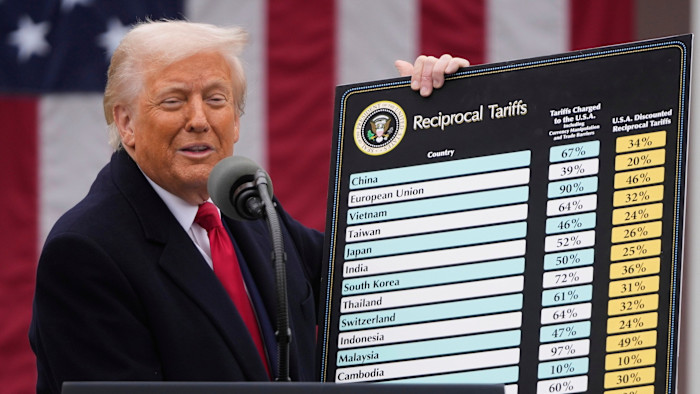
Twelve months have elapsed since President Donald Trump made an appearance in the White House Rose Garden to declare extensive duties on goods entering the US. This “liberation day” signified a pivotal shift for the global financial framework and its apparently unstoppable progression towards reduced trade obstacles and worldwide harmonization. The outcomes have proven extraordinary.
Over the last year, the field of economics and its leading experts’ excessive self-assurance have experienced as much upheaval as supply chains themselves. The unsoundness of tariffs represented one of their most ingrained convictions, embedded in their analytical frameworks, and confidently asserted in all interviews. They maintained that tariffs would result in notably elevated inflation and significantly decelerated growth, a probable economic downturn, and the loss of countless employment opportunities. Such measures, they argued, would incite retaliatory actions and cause the dollar to strengthen, thereby impairing exporters and exacerbating the decline of manufacturing.
However, none of these forecasts materialized. The US currency depreciated. Nations opted for negotiations instead of counter-measures, securing accords beneficial to the United States. Inflation decelerated, with the price level showing a rise of 2.4 percent over the last year, in contrast to 2.8 percent in the preceding year. Actual GDP expansion quickened, recording an annualized 2.9 percent over the final three quarters of 2025, in comparison to 2.5 percent during 2024.
Notably, those predicting catastrophe have not conceded their mistakes; instead, they contend that robust economic achievements would have been anticipated due to the president’s numerous adjustments to the tariff strategy. This post-hoc acceptance of substantial protectionist policies highlights how thoroughly the established conventional wisdom has crumbled, thereby creating an opportunity for novel approaches.
The industrial production sector also started to show a reaction.The needforindustrialmachineryexpanded more rapidly after “liberation day” compared to 2024, and even more swiftly over the most recent quarter. Factory production, having decreased over the last ten years and dropped 0.3 percent in 2024, has now registered a 1.6 percent increase. Polls conducted among purchasing managers by theInstitute for Supply ManagementandS&P Globalreveal growing confidence within the manufacturing industry. Anna Wong, Bloomberg’s chief US economist,validatedthe predominantly favorable figures recently, remarking that this information is “supported by compelling indicators from the most recent earnings reports” and additionally that “duties likely contributed.”
In an effort to dispute this truth, those against tariffs have fixated on the reduction in manufacturing jobs as the crucial indicator and evidence of the initiative’s failure. However, their reasoning is flawed in two ways: Firstly, the trajectory has, in reality, gotten better. While the sector experienced 167,000 job losses in the eleven months preceding “liberation day,” the comparable period thereafter saw a reduction of merely 93,000 positions.
Secondly, job figures serve as a delayed measure of re-industrialization, a transformation that demands a prolonged timeframe. It would be unreasonable to anticipate manufacturers initiating a massive recruitment drive immediately after tariff declarations. Furthermore, the labor force, following decades of oversight, is not presently equipped to rapidly occupy fresh roles. At this twelve-month milestone, the pertinent query is whether the expenses and disturbances have been controllable, whether consumption and production have risen, whether manufacturers are advancing with capital expenditure blueprints, rather than “where are the countless jobs?”
In the interim, available manufacturing positions, which had been sharply declining for numerous years, stabilized following “liberation day” and have subsequently surged, reflecting what a cessation of the sector’s downturn and initial signs of growth would entail. Combining current manufacturing jobs and vacant positions, as an indicator of prospective employment, reveals that the contraction has abated to under one-eighth of the 2024 pace, and shifted into an increase during the last three months.
Emphasizing these initial signs during this inaugural year also highlights the extensive path still to be traversed. The ludicrous unraveling of the argument against tariffs offers this approach an opportunity for success — evidently, President Bill Clintonerredwhen he pronounced, “protectionism is simply not an option because globalization is irreversible.” The United States has the option to pursue an alternative course.
Nevertheless, persisting on this trajectory into the second year will necessitate significant attention to capital deployment and the labor force. Financial outlays have remained stable until now, but they have not yet dramatically increased, and this must change. The Trump administration ought to establish a consistent duty framework and seek enduring legal provisions to enable manufacturers to invest assuredly, and to devise a clear procedure for streamlining the substantial foreign capital pledges from Japan and Korea. Additionally, it must cultivate the talent pool for proficient laborers, allocating resources for theeducational institutions, labor organizations, and businessescapable of accomplishing this task.
Economists frequently examine actual circumstances and inquire, “yet, does it function conceptually?” Globalization operated impeccably in theory, but proved unsuccessful in practice. On this initial commemoration of “liberation day,” the substitute approach demonstrates enhanced potential.